



 I want to donate
Doctrine - Studies in Christian Doctrine and Scripture
- Tom Creedy
- General
- 4 Jun 2021
-
132views
The Studies in Christian Doctrine and Scripture series, as the series introduction puts it, "attempts to reconcile two disciplines that should never have been divided: the study of Christian Scripture and the study of Christian doctrine. Old walls of disciplinary hostility are beginning to come down, a development that we hope will better serve the church. To that end, books in this series affirm the supreme authority of Scripture, seeking to read it faithfully and creatively as they develop fresh articulations of Christian doctrine."
The starting point of various volumes echoes this balance, with a slant in different cases towards Doctrine (the focus of today's post) or Scripture (the focus of a forthcoming blog post).
Theology and the Mirror of Scripture: A Mere Evangelical Account, by Kevin Vanhoozer and Daniel Treier, opened the series. This is a clarion call to reconcieve the practice of evangelical theology theologically, by reflectiong on the God of the gospel as mirrored in Scripture. The invitation is to a way of doing theology that is ultimately an exercise in Christian wisdom, for the express purpose of building up the fellowship of the saints. Theology and the Mirror of Scripture engages with the present fragmentation of evangelical theological discourse, invites us back to our biblical and historical routes, and offers a way forward. This book is a gift to the church - for thoughtful pastors, theological students, and those engaged in between ecclesial and academic contexts.
Political Church: The Local Assembly as Embassy of Christ's Rule, by Jonathan Leeman, won a Gospel Coalition award and was warmly commended by a diverse group of thinkers from across the evangelical spectrum - for example Stanley Hauerwas suggests this is "a welcome reminder that the full reality of the local church is to be found in the local congregation", whilst Michael Horton sees the volume as "an example of a new level of evangelical reflection and serious engagement". Leeman carefully examines what the church is, and what the church is called to be, engaging with vital questions such as issues of institutional identity. It is perhaps particularly pertinent in the light of evangelical collusion in political misdemeanours, and for providing a robust theological account of the church in the wake of numerous abuse scandals.
Called by Triune Grace: Divine Rhetoric and the Effectual Call by Jonathan Hoglund is a book dealing with an array of relatively under-studied Doctrines. As Doug Moo notes, "Jonathan Hoglund's book on effectual calling is very welcome for three reasons. First, it tackles a theological issue that has been relatively neglected in recent study. Second, it is a model of theological method, combining effectively careful exegesis of the Scriptures, insights from the history of discussion, and doctrinal considerations. Finally, the focus on divine speech provides a way to affirm God's initiative in the call to salvation without obscuring the personal relationships between Creator and created." From this technical study, Hoglund's pastoral and missional heart shines through, making this a book with both ecclesial and academic impact: pastors will be drawn deeper into enjoying God's grace, whilst students and scholars are invited to re-engage with an area of the theological millieu that is often neglected.
God in Himself: Scripture, Metaphysics and the Task of Christian Theology by Steven J. Duby might appear impenetrable but is remarkably relevant to pastoral concerns. It is also an important book for understanding and enlarging our vision of God. Matthew Levering suggests that "every Christian theologian should read it", and God in Himself is ultimately a tool to help believers rightly describe and adore God himself.
Related Posts
Categories
Recent Posts
3
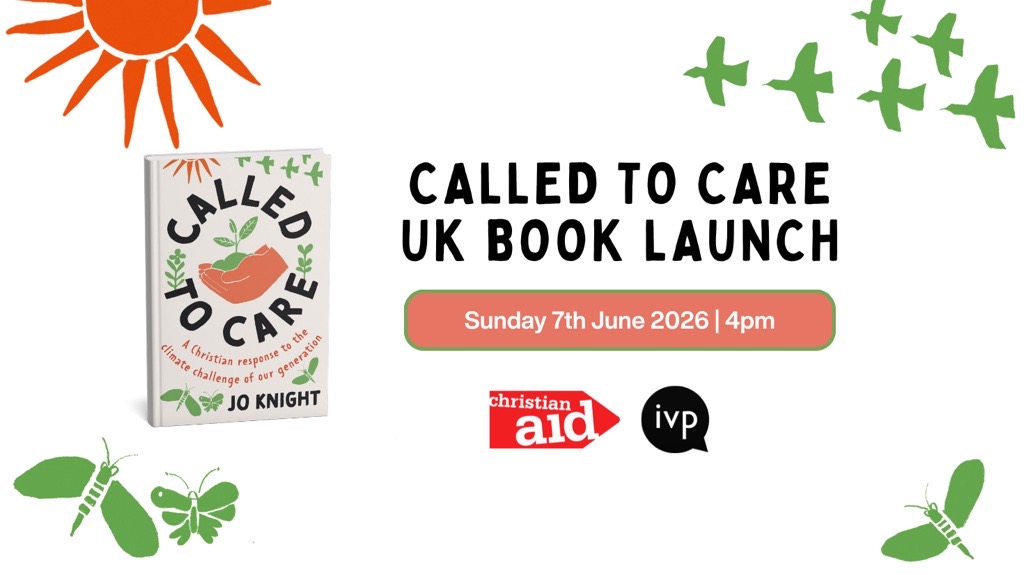
UK Launch of Called to Care by Jo Knight
28 May 2026
4
May New Releases
18 May 2026
Support IVP with your donation
Either donate with a one-off donation or subscribe monthly.
Choose a type of donation
I want to donate
 I want to donate