




 I want to donate
Great Suffering, Greater Wisdom: An Author Q&A With Dennis Tucker
- Rochelle Owusu-Antwi
- General
- 18 Mar 2026
-
112views

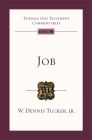
In Dennis Tucker’s new commentary on Job, he encourages us that “the God Job worships is the God who blesses and restores.” Tucker writes that “because this God is not bound by a mechanistic worldview rooted in retributive justice, this God is free to act, and even more, to bless.” A beautiful observation from a book so often associated simply with bleak suffering and rampant chaos, Tucker helps us to see God’s good character shining through. In this Q&A he reflects on the journey that led to this commentary, challenges and encouragements for readers, and the ways in which Job can draw us closer to God.
1. What is the central message or biblical truth you hope readers will take away?
In Job 1:9, the adversary asks God, “Does Job fear God for nothing?” As discussed in the commentary, that question demands some unpacking. The adversary suggests that the reason Job “fears” or worships God is because of all that God has given him (cf. 1:3); the assumption is that if Job had nothing or worse yet, lost everything, he would not worship God. Cynically, the adversary posits whether anyone would worship God if they did not receive something from God? Put differently, the adversary ponders in part, “is this God worthy of worship, even if one receives nothing in return?” By the end of the book, the answer is a resounding “Yes!” Yet the fact that this question persists throughout the book forces all of us and each of us to grapple with that same question in hopes of arriving at the same conclusion.
2. How do you hope this book will speak into the current cultural or spiritual climate?
I think contemporary Western Christianity has been reluctant to speak about suffering and chaos in our lives. When people are confronted with hardship, suffering, and chaos (and most all of us will), they struggle to make sense of it all, often looking for some causative explanation for the suffering they are enduring (i.e., “Why is this happening to me? What did I do to deserve this?”) The book of Job does not provide a simple solution, but instead an honest confession. It admits suffering and chaos are part of the world we inhabit. That confession is coupled with yet another: that God remains attentive to the world and its inhabitants, chaos notwithstanding (ch. 38-41).
"We are challenged to confront our thoughts on suffering and its cause, even as we are invited to lean into the good God who remains concerned for his beloved creation and all that inhabit it."
3. Who do you hope will pick this book up - and how do you hope it will encourage or challenge them?
Job is a long book. Often readers know something about the first two chapters and they think they know something about the divine speeches at the end. With that information in hand, they hastily craft their own theology of the book of Job, regrettably missing the meaning of the book itself and much of what the book has to offer. The length of the book invites us to settle into a lengthy reflection, a spiritual meditation of sorts, on a perplexing and painful subject: suffering. The friends are not wrong; they are just not right in this moment and on this occasion. And so we are invited to listen to their reasons, to lean into their rationale, to consider what drives them to their conclusions… and in the process, to wonder what drives us to our own conclusions. It is only after pouring over the pages and pages of arguments in the book can we rightly arrive at chapter 42, and confess with integrity what Job confesses in 42:6. We are challenged to confront our thoughts on suffering and its cause, even as we are invited to lean into the good God who remains concerned for his beloved creation and all that inhabit it.
4. What was it like writing this book - did God teach you anything unexpected during the process?
Commentary writing is a challenge unto its own, particularly in a book the size of Job. Each chapter leads to another chapter, and the end of the book always seems to be on the distant horizon. And yet, each day, I made my way to the writing chair, prayed for sufficient strength and wisdom for the day, reviewed my notes, and began pressing out words on the keyboard. Words became sentences, sentences paragraphs, and paragraphs pages—there were no shortcuts. It was a slow, intentional, and methodical march. I knew where the end of the book was and that I would get there in due time, but for that day, I had work to do, knowing full well the work of that day was somehow figuring into the work of the whole.
For me, commentary writing is akin to living life. Good living is a slow, intentional, and methodical march in a decided direction. We know how it will all end and that we will get there in due time, but each day, we are reminded that we have work to do that somehow, in God’s good graces, figures beautifully into the whole. And so when I arrive at the end of my writing, and when someday, I arrive at the end of my living, I trust what will be true of one will also be true of the other—that each day was part of something much bigger and that none of it was in vain.
5. How have you seen God use the message of this book already - perhaps in early readers or your own life?
In my classroom, students seem to particularly enjoy wrestling with the book of Job. Most of them have lived just long enough to hear a lot of bad theology and most of them are wise enough to see it for what it is. But perhaps more importantly, most of my students have lived long enough to have witnessed untold tragedies and the grief of deep brokenness. Our discussion on the book of Job is not simply an exercise in biblical theology, though it is that in part. Rather, our discussion resonates deeply with their own lived experiences and the experiences of those that they love. And for some of them, our conversations around Job are the first chance they have had to give word to the tensions that they have felt. Some process their thoughts aloud; others sit quietly, but their eyes reveal their thoughts. I have had students email me later, expressing appreciation for the space to process all of this—but even more, that this conversation drew them closer to God, even as they leaned into the mystery of it all.
The book of Job resists easy answers to real suffering, instead inviting us to earnestly wrestle with pain in a way that honours God – a God who, we learn, lovingly cares for His people even when His ways are often a mystery to us. Dennis Tucker’s new commentary provides fresh insight into the ancient wisdom of Job, for a modern world that often struggles to make sense of suffering.
Job: An Introduction and Commentary is available now here.
Related Posts

Related Products
Job
From £19.99
Categories
Recent Posts
4

UK Launch of Called to Care by Jo Knight
28 May 2026
5
May New Releases
18 May 2026
Support IVP with your donation
Either donate with a one-off donation or subscribe monthly.
Choose a type of donation
I want to donate
 I want to donate