



 I want to donate
The Five Solas - an extract from Sin and Grace by Tony Lane
- New Releases
- 23 Oct 2020
-
172views


You may have heard 'the Five Solas' discussed - you may even know what they are! Tony Lane, in his new book Sin and Grace, helpfully summarises what they are, in a way that helps us to avoid the misunderstanding that can come when they are divorced from theological context and not held in tension with other vital truths of evangelical Christianity.
The teaching of the Reformation is sometimes summarized in five ‘solas’. Some of these go back to the Reformation but others are more recent. They all have value, but are also all capable of being misunderstood unless they are held in tension with other truths.
Faith alone (sola fide)
We start with justification by faith alone, which was already a key Reformation slogan by the 1520s. As we have seen, it needs to be balanced by the truth quoted from Calvin above, that while it is faith alone that justifies, the faith that justifies is never alone.
Grace alone (sola gratia)
Salvation is by grace alone, but this also needs a balancing truth. Paul expresses the two sides in Philippians 2:12–13:Therefore, my beloved, as you have always obeyed, so now, not only as in my presence but much more in my absence, work out your own salvation with fear and trembling, for it is God who works in you, both to will and to work for his good pleasure.It is God who is at work in us, who is effecting our salvation. However, the lesson to be drawn from that is not ‘lie back and let God waft you to heaven’ but ‘work out your own salvation with fear and trembling’.
Christ alone (solus Christus)
The Reformers stressed the completeness of the work of Christ. Jesus Christ is the one way to God (John 14:6). One of the great affirmations of the Reforma-tion was the privilege of the believer to have direct access to God through Christ. We do not need the mediation of the Virgin Mary or the saints but can pproach God directly ourselves (1 Tim. 2:5). But at times this emphasis on Christ has led to a neglect of the work of the Spirit.
Scripture alone (sola scriptura)
As we saw in the introduction, sola scriptura did not become a slogan until after the Reformation. It teaches the important point that all must be tested by Scripture, but must not be misused to imply that all we need is the Bible.
To God alone be glory (soli Deo gloria)
This has been added to the list of ‘solas’ much more recently. It is less of a Prot-estant distinctive as the motto of the Jesuit order is Ad maiorem Dei gloriam – ‘To the greater glory of God’. Even this slogan can be misused. In the sixteenth century the different Protestant groups all at times executed those whom they considered heretics. They thought they were doing this for the glory of God, though we today may wish to disagree.
Finally, there are two other ‘solas’ that have been seen as describing where too many churches stand today.
Feelings alone
The satirical Babylonbee website contains a spoof news item headed ‘Progressive Evangelical Leaders Meet to Affirm Doctrine of “Sola Feels”’, the essence of the doctrine being that ‘one’s feelings are the supreme authority in all matters of theology and practice’ and ‘the infallibility of feelings’. Like all good satire, this contains more than a germ of truth. Feelings rule supreme in many quarters today. Where we once used to sing about God and Christ, many modern worship songs are all about ourselves and our feelings. There is an old story of three people walking on a wall: Faith, Facts and Feelings. While Faith followed Facts and Feeling followed Faith, all was well, but when Faith turned round to look at Feelings both fell off.
Culture alone
Christians have to live in the world and so face the question of how to relate to their surrounding culture. Over the ages the church has adopted different approaches to the relation between Christian faith and culture, and one of these is ‘the Christ of Culture’, also called ‘Culture Christianity’, where Christians simply absorb the values of the surrounding culture without any serious critique. This approach seems to be enjoying something of a revival with many Christians following culture on matters ranging from sexuality to narcissism. For more on the last of these, see chapter 26.
We hope you enjoyed this snippet from Tony's new book. Sin and Grace publishes on the 19th of November, and is one of our November 2020 Releases.
Related Posts
Categories
Recent Posts
4
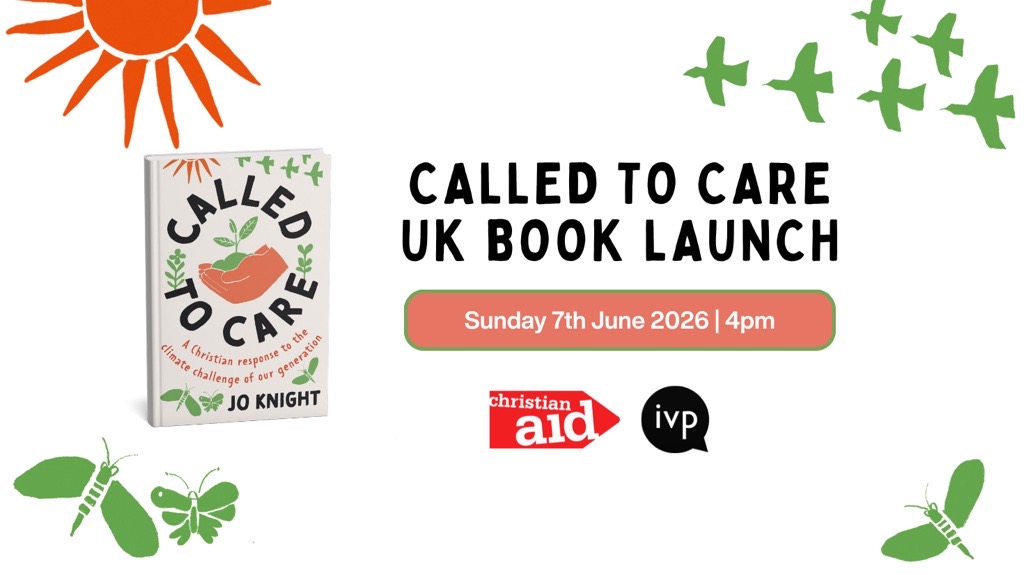
UK Launch of Called to Care by Jo Knight
28 May 2026
5
May New Releases
18 May 2026
Support IVP with your donation
Either donate with a one-off donation or subscribe monthly.
Choose a type of donation
I want to donate
 I want to donate