





 I want to donate
The Boring Place? What The Good Place misses about Heaven
- Book Recommendations
- 28 Feb 2020
-
500views

If Heaven is forever, won’t we eventually get… well… bored?
In today’s Britain, the majority of people are skeptical of Heaven and suspicious of whether eternal life would be such a great deal. A 2015 YouGov poll found that in the UK, 36% of people believe in an afterlife, 48% disbelieve and 15% are not sure.
What’s more, only 28% of people would choose to live forever if they could, with 48% rejecting the idea, and 25% being unsure. To be fair, the question didn’t specify where you would live forever - eternal life in this broken world, especially if everyone else grew old and died around you, probably wouldn’t be much fun. But it’s still striking that the majority prefer to embrace mortality.
Christians often talk about salvation in terms of “Jesus died so we can be forgiven and receive eternal life in Heaven”. If the above statistics are accurate, then this message isn’t likely to hit the mark with most people today. But what if that’s not even getting the message of the Bible right in the first place?
But before we turn to the Bible, let’s go deeper into how our culture sees the afterlife, and turn instead to Netflix.
Is Heaven boring?
Whether Heaven would really be so great is also one of the questions thrown up in The Good Place, available in the UK on Netflix and airing on NBC in the USA.
The Good Place is a classic fish out of water comedy with a high concept twist. Eleanor Shellstrop wakes up in the afterlife only to be told she is one of very small moral elite who have made it into ‘The Good Place’. The only problem is that she’s actually a self-absorbed layabout who has got there by a glitch in the system. Can she learn to be good quickly enough to avoid being found out and sent to the Bad Place?
Spoilers for The Good Place follow…
The big question that the show explores is “what does it mean to be good?” Its approach is mainly philosophical rather than theological. When Eleanor arrives in the Good Place after dying, the ‘architect’ Michael handwaves the question of which religion was right: “Hindus are a little bit right, Muslims a little bit. Jews, Christians, Buddhists, every religion guessed about 5%”. The show’s off-brand versions of Heaven and Hell are primarily a device for exploring ethics with plenty of gags rather than actually thinking about what the afterlife might be like. God in anything resembling his Biblical guise is kept firmly out of the picture.
The big twist at the end of the first season is when Eleanor twigs, with an exclamation of “holy forking shirtballs” (swearing is impossible), that they are in fact in the Bad Place. The whole scenario has been devised to put together a group of people most likely to torture one another. Hell is literally other people. But what architect Michael didn’t anticipate is that it’s these very relationships that would be the spur that would help Eleanor and friends start becoming better people.
Within its given framework, it is often insightful as well as funny. Through the unfolding relationships of the main characters, it emphasises the need for community and importance of striving to be better for our growth as moral beings. A repeated reference point is T M Scanlon’s work of contractualist moral philosophy What We Owe To Each Other, alongside a whole bunch of references to (and gags about) everyone from Aristotle to Kant to Jeremy Bentham.
And yet exploring ethics and playing with the idea of the afterlife means that The Good Place can’t help but trip over a bit of theology now and again. It reflects back to us many of our culture's ideas and misconceptions about Heaven - misconceptions that often creep into the thinking of many Christians. The final season in particular raises many important questions about justice, human flourishing and our ultimate purpose that challenge the Christian conception of Heaven and Hell.
Points vs grace
When Eleanor arrives in the Good Place, she discovers that humans are judged according to a points system - she supposedly got a ton of points for a Human Rights mission to the Ukraine, for example. This is one of the popular misconceptions about Christianity in popular culture. Getting into Heaven is seen as a matter of tipping the scales, making sure that the good you do in your life outweighs the bad.
But as the characters in The Good Life came to realise, a points-based morality is terrible news. Because motives and intentions matter, socialite Tahani’s billions raised for charity count for nothing because she was always trying to outdo her sister out of envy. Chidi’s life of moral philosophy and agonising over each moral choice made him actually a terrible person to be around.
In season 3, episode 7, The Book of Dougs, it’s revealed that no-one has actually made it to the Good Place in over 500 years - the increasing interconnectedness and complexity of life has meant that every decision is fraught with moral peril. In its own way, the show recognises the reality described in the Bible in Romans 3:10-11, where Paul sums up the teaching of Scripture, “There is no one righteous, not even one; there is no one who understands; there is no one who seeks God”. If God kept the points score we deserved, we’d all be stuffed.
The alternative that the characters come up with is simply that people try to be better than before. The Bad Place is reconfigured into a kind of Purgatory designed to put people through tests through which they can grow and become better people. And in the show it works! It seems that everyone makes it through eventually. But there are a whole bunch of questions left unanswered - how much effort is enough effort? How many people end up stuck there forever, failing to grow and make progress? And to reach the inevitable reductio ad Hitler, if a Nazi learned in the afterlife to be nice to Jews, can that really redeem and cancel out the enormity of genocide?
The new afterlife devised in The Good Place is therapeutic rather than punitive - and that’s where the problem lies. As C S Lewis argued in his essay The Humanitarian Theory of Justice , while it might sound kind to focus on ‘treatment’ rather than ‘punishment’, it loses sight of connecting how we treat someone with what their actions deserve.
Human responsibility carries with it both dignity and danger. It means the dignity of recognising our capability for true moral excellence, but also capability of evil; and the moral quality of our actions deserve reward or penalty. That by itself isn’t good news, but it is a necessary prerequisite for the greater goods of mercy and grace.
By eliminating the possibility of punishment we also abolish the possibility of forgiveness. As Lewis puts it:
The essential act of mercy was to pardon; and pardon in its very essence involves the recognition of guilt and ill-desert in the recipient. If crime is only a disease which needs cure, not sin which deserves punishment, it cannot be pardoned.
The Good Place assumes that all people need to become good is the right environment and a bit of effort. Its vision of the good life is one where in community we all strive to be better over time. It's the relationships that develop between the main characters that are the engine for their growth and development, often through the very ways their personalities clash with one another.
That’s laudable as far as it goes, but it doesn’t go nearly deep enough to address the hard problems of sin. When people have committed real, deep and deliberate wrong against one another and against God, just trying a little harder won’t cut it. The Bible shows us that we need the blood-bought forgiveness of a saviour. As Tim Keller sums up the Gospel: We are more sinful and flawed in ourselves than we ever dared believe, yet at the very same time we are more loved and accepted in Jesus Christ than we ever dared hope.
Virtual reality vs new creation
If The Good Place’s idea of how people should get into the afterlife is flawed, then so too is its depiction of what the Good Place might be like when we get there. And it’s not just that flying puppies are sickeningly sentimental…
When Eleanor and friends eventually reach the real Good Place, they are promised welcome parties tailored to their essences, such as Jason’s dream of racing against monkeys in go karts!
This is a popular idea of Heaven, and one that can even creep into the way we as Christians think of it - an individualised paradise, where we get to retire and enjoy the earthly things we love most. Eat all day and never get fat; have the time to read all the books or watch all the movies you want; hang out with your friends forever. Heaven is in effect the ultimate retirement where we can pursue our hobbies forever.
But as The Good Place recognises, wherever there is community, people have different preference and desires that often are in conflict with one another. By arriving all at the same time, Eleanor and company’s welcome party is a muddle of all their desires - philosophers and Jacksonville Jaguars and Stone Cold Steve Austin’s bedpan (don’t ask)!
This gag hints at the flaws of an individualistic heaven. If Heaven were a place where all preferences can magically be accommodated at once, it would remove a myriad of possibilities for service, sacrifice and love. Human limitations are not all restrictions to be transcended, but gifts that foster mutual dependence, care and consideration.
As they explore the ‘real’ Good Place, Eleanor and co find that the people there have had their brains turned to mush through endless pleasure without any challenge or resistance. The great philosopher Hypatia (played by Lisa Kudrow) has got to the point where her brain is a “big dumb blob” that can’t even remember what numbers are. An eternity of bliss quickly becomes boring.
I don’t think the possibility that Heaven would get boring is a worry we should be too quick to dismiss. As humans, all our most exciting stories are about the battle between good versus evil. If in Heaven (or ultimately, the New Creation, where Heaven and Earth are united), there is no evil, then how can that avoid being a lesser story than our current existence? Will a perfect world deprived us of all opportunity for sacrifice, forgiveness, heroism, and courage?
Jesus’ actions in his resurrection body walking through walls and appearing out of nowhere hint that the new creation will involve some kind of transcendence of our present physicality. But nowhere does the Bible suggest that we will be completely freed from all limitations, or that in Heaven, God will miracle up for us anything we ask for, like virtual assistant Janet in The Good Place. The Biblical focus is not on individual self-fulfilment, but a new creation filled with justice, beauty and righteousness. If we follow Christ, we will reign with him in the new creation, just as Adam and Eve were to reign over creation originally (see 2 Timothy 2:12, Genesis 1).
The closest analogy for this in The Good Place is the character of Tahani. On Earth she had been a vain socialite, but now she becomes the perfect hostess. She trains to be a Good Place architect, designing the individually-tailored afterlives to help each person transcend their selfishness and be fitted for the full Good Place experience. This stepping up into creativity and other-centred service is far closer to the Biblical vision for our eternal destiny than any pattern of eternal self-fulfilment.
Another reason we need not fear getting bored in Heaven is that a creation free from evil need not be a creation free from difficulty. Humans thrive on challenge and on growth, and being made sinless doesn’t mean becoming fixed and static. I suspect in the New Creation we’ll still have to (get to!) learn and experiment and practice new skills and experiences, with all eternity to grow into them.
Please excuse a few moments of speculation, but we need our imaginations for eternity expanded. Perhaps in the New Creation, redeemed humanity will come together to create works of worship that will take the lifetimes to rehearse and the rise and fall of mountains to perform. Maybe we will spend a billion years exploring and filling the galaxy to the glory of God, and another aeon to teach all the stars in the sky to sing his glory. The “tension” that gives life its tang will not be between good and evil, but striving - without guaranteed success - for ever greater and higher degrees of beauty in celebration of God’s glory.
Speaking of God, that brings me onto the final, and biggest thing that The Good Place misses about Heaven…
Reaching our end vs knowing the infinite God
The Good Place ’s solution to the boredom of Heaven is to give it an exit - a doorway to final death when someone has done all that they want or need to do. On the show’s telling, self-fulfilment regains a sense of meaning when it has an endpoint.
The final episode Whenever You’re Ready heartbreakingly shows the main characters reaching the point where they are done - they have lived all they want to live, helped all those they need to help, and it’s time to move on. For me, the most heartbreaking moment was between Chidi and Eleanor, who over all the craziness of the four seasons of the show came to be soul mates. Chidi reaches the point where he has a “quietude in his soul” and wants to walk away to his disintegration. Eleanor tries to persuade him to stay, but comes to recognise that forbidding him from leaving because it would make her sad is a selfish rule. It may be painful to say goodbye, but it’s worse to hold on to something good so long that it turns bad. Whether intended or not, it’s a devilishly clever apologetic for euthanasia.
But then, if created pleasures were all that we had to enjoy, wouldn’t this be true?
Expanding our vision of the good life from an individual to communal one, from one of instant gratification to hard-earned achievement, might extend how long we were happy for times beyond our current comprehension. But in the end, when every person was known, every story told, every corner of the universe explored, what would be left?
C S Lewis again: “If I find in myself desires which nothing in this world can satisfy, the only logical explanation is that I was made for another world.”
The Bible points us to that greater reality where eternal satisfaction can be found. In the Biblical vision, the New Creation will be wonderfully full of life and people and adventure, as we see glimpses of at the end of the Bible in Revelation 21. But in the end, it isn’t what we get to do in Heaven that makes it heavenly: what makes the kingdom of heaven perfect is the King.
When in the final season Chidi was tasked with the seemingly impossible task of redesigning the afterlife, he wrote a note to himself - ‘There is no “answer”. But Eleanor is the answer’. In a similar way, the Biblical answer to the problem of eternity isn’t a clever argument, but a person - the person of Jesus, the vibrant, unpredictable man who healed the sick, lambasted the self-righteous, claimed divine authority, gave his life as the sacrifice for sin on the cross, and rose again to new life.
John 17:3 says, “Now this is eternal life: that they know you, the only true God, and Jesus Christ, whom you have sent.”
This is why Heaven won’t be a Boring Place: above all else, we will know and be known by the infinite God, in the overflowing love of Father, Son and Spirit, for all eternity.
Want to find out more about what the Bible tells us about Heaven? In spring 2021, we’ll be publishing What on Earth is Heaven? by Dr Jim Paul. Sign up for our newsletter to stay updated about this and all of IVP’s other new releases.
Related Posts
Categories
Recent Posts
3
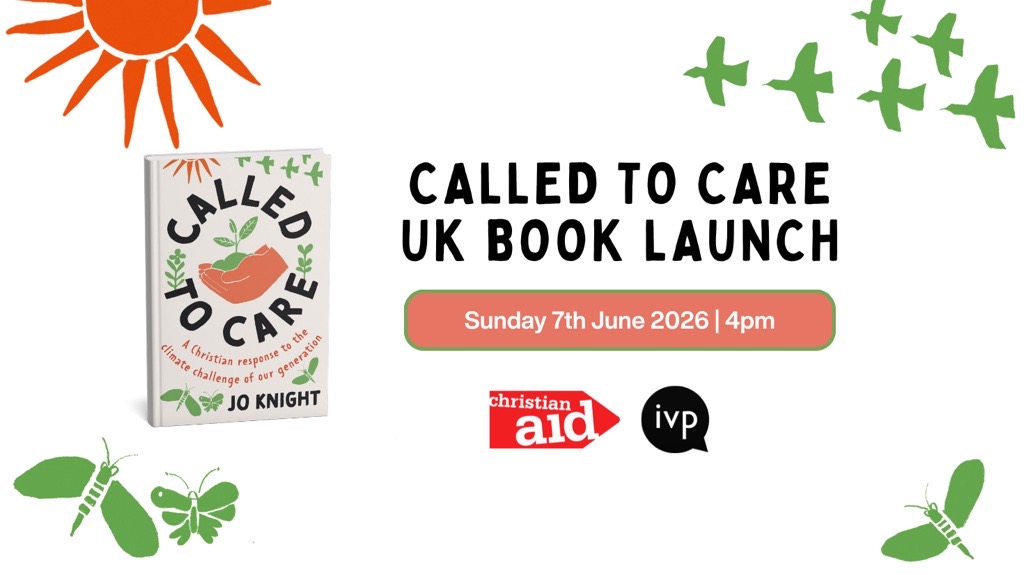
UK Launch of Called to Care by Jo Knight
28 May 2026
4
May New Releases
18 May 2026
Support IVP with your donation
Either donate with a one-off donation or subscribe monthly.
Choose a type of donation
I want to donate
 I want to donate