



 I want to donate
Speaking of Relationships...
- New Releases
- 20 Jul 2020
-
82views
Many single women and men in our churches can sometimes feel that they are ‘other’.
Single people are vital to the church, and, for many, their local church is a true family, just as Jesus taught (Matt 12:46-50). They find the friendship, support, intimacy and warmth of genuine fellowship to be a significant aspect of their discipleship, and their contribution to that family is hugely significant. But this is not the experience of everyone. In a recent survey of Christian women aged thirty-five plus ? 35+, a staggering ninety-two per cent didn’t agree with the assertion that their church offered good pastoral support for single Christian women who are childless but would like a family.
Related to this, we must also ask how our churches are responding to the needs of those who are same-sex attracted. Rebecca McClaughlin, a Christian apologist who has addressed the question of whether Christianity is homophobic, and writing as someone who experiences same-sex attraction, highlights that ‘Christians have often confused the Bible’s clear boundaries around sex with a license for unloving, superior, and judgmental attitudes towards gay and lesbian people. But while the New Testament is clear on its “no” to homosexual relationships, it leaves no room for a “them and us” approach.’This applies outside of the local church as well as within it, and it’s not all bad news. A recent report from the Universities & Colleges Christian Fellowship explained how Christian students, determined to be faithful to the gospel and to their understanding of biblical values of morality and sexuality, have sought to extend a loving welcome to fellow students on campus: ‘Despite the challenges of LGBT issues, our Christian Unions increasingly win a reputation for being the most inclusive, welcoming and loving societies on campus. The steady stream of commendations (and even awards) from Student Unions has been a recognition of this. The conditions for evangelism are as difficult as they have ever been, but there seems to be an appetite for a gospel that is demonstrated as being true, relevant and beautiful.’
As Christian believers, we are all seeking God’s grace to live as forgiven sinners, not in isolation or shame, but supported by the redeemed and reconciled family of God. I am very aware of the demanding nature of issues of sexuality within our churches. I share the view that the scriptures teach that sexual intimacy belongs exclusively within the context of heterosexual marriage. Sustaining our commitment to this truth is pastorally demanding, requiring clarity, transparency and compassion, but also true community.
So here lies our challenge. We affirm that we are all one in Christ Jesus, and that the multiple evidences of the fragmented world in which we live have been overcome within the family of God. In which case, our community life as a local church must give credible witness to that claim. If we call Christian men and women, whether gay or straight, to lives of faithful discipleship in line with orthodox biblical teaching, then our joyful responsibility must be to become a true family, a supportive community, a home which expresses friendship and warmth. ‘The church has an inherently desegregating orientation,’ says Matt Jenson. ‘To those who may never have biological children, the church issues a call to spiritual paternity and maternity.’ And Rebecca McLaughlin once more: ‘In modern society, we are led to believe we cannot live without sex. In fact, I believe we are more likely to wither without friend and family love.’ (19)
The church must become the place which calls us all to faithful Christian discipleship in the context of genuine church family life.
Related Posts
Categories
Recent Posts
3
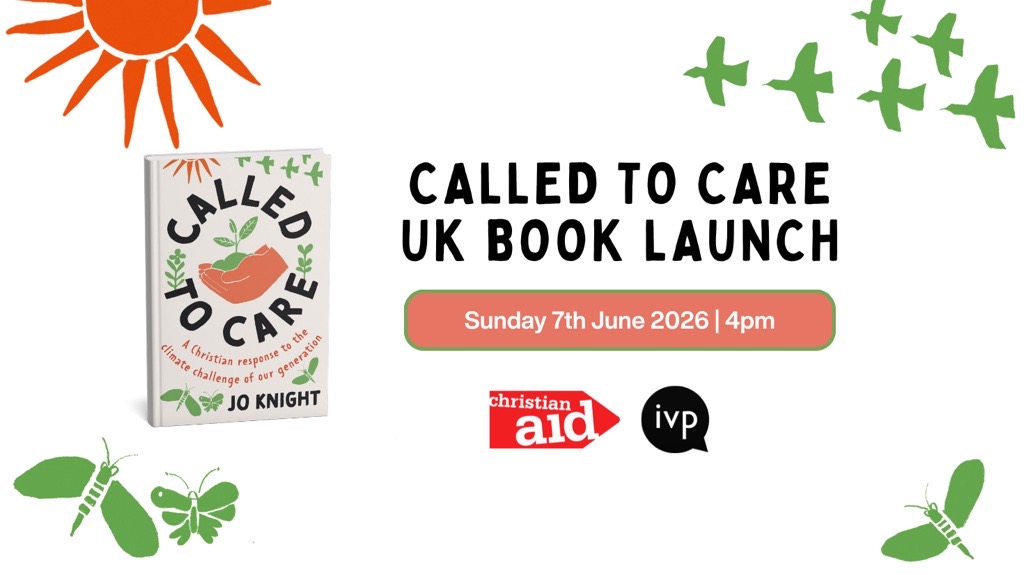
UK Launch of Called to Care by Jo Knight
28 May 2026
4
May New Releases
18 May 2026
Support IVP with your donation
Either donate with a one-off donation or subscribe monthly.
Choose a type of donation
I want to donate
 I want to donate