


 I want to donate
Scripture - Studies in Christian Doctrine and Scripture
- Tom Creedy
- General
- 15 Jun 2021
-
65views
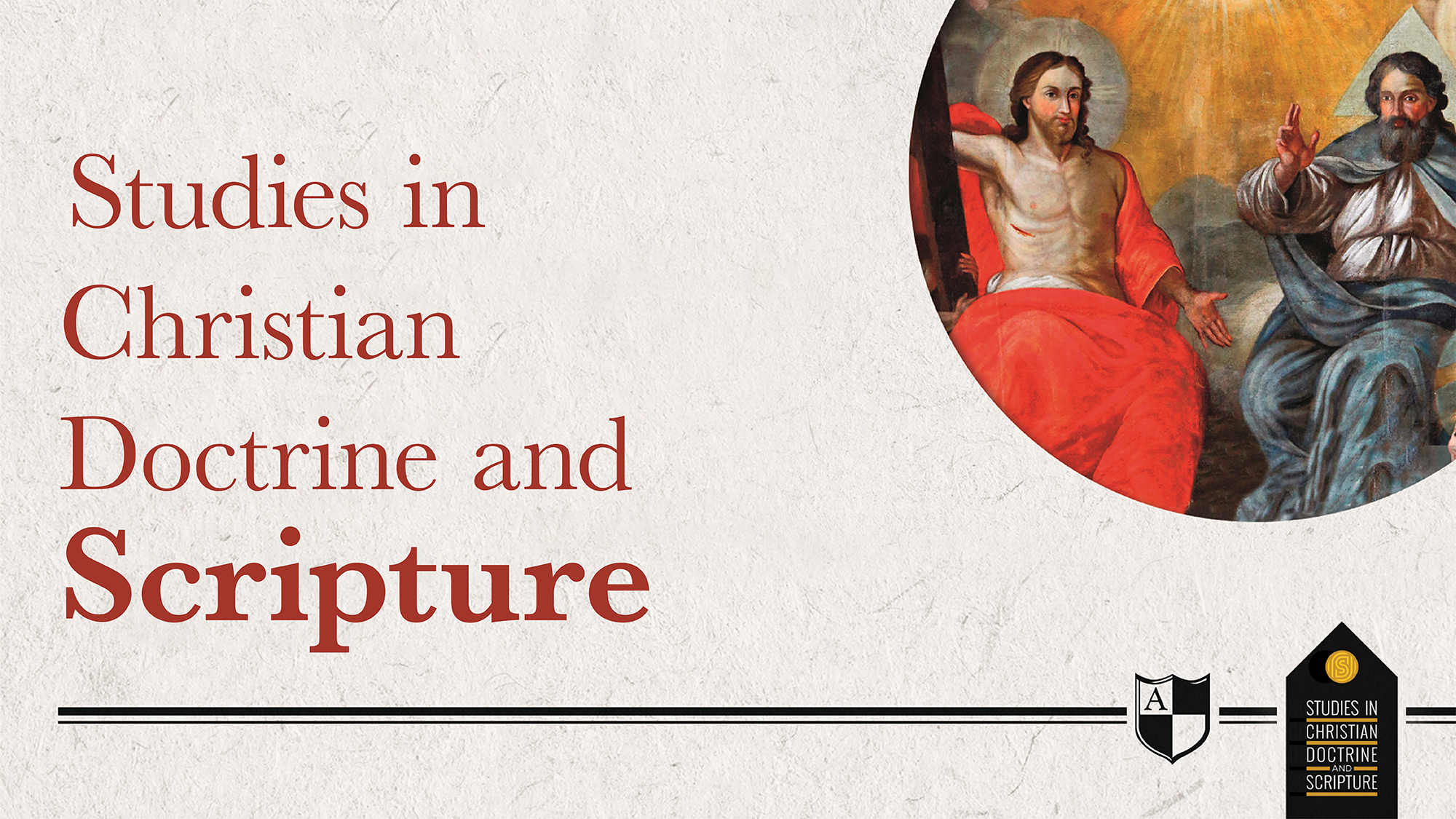
The Studies in Christian Doctrine and Scripture series, as the series introduction puts it, "attempts to reconcile two disciplines that should never have been divided: the study of Christian Scripture and the study of Christian doctrine. Old walls of disciplinary hostility are beginning to come down, a development that we hope will better serve the church. To that end, books in this series affirm the supreme authority of Scripture, seeking to read it faithfully and creatively as they develop fresh articulations of Christian doctrine."
The starting point of various volumes echoes this balance, with a slant in different cases towards Scripture (the focus of today's post) or Doctrine (the focus of a previous blog post).
Theology and the Mirror of Scripture: A Mere Evangelical Account, by Kevin Vanhoozer and Daniel Treier, opened the series. This is a clarion call to reconcieve the practice of evangelical theology theologically, by reflectiong on the God of the gospel as mirrored in Scripture. The invitation is to a way of doing theology that is ultimately an exercise in Christian wisdom, for the express purpose of building up the fellowship of the saints. Theology and the Mirror of Scripture engages with the present fragmentation of evangelical theological discourse, invites us back to our biblical and historical routes, and offers a way forward. This book is a gift to the church - for thoughtful pastors, theological students, and those engaged in between ecclesial and academic contexts. It foregrounds Scripture as the 'norming norm' of all theological thinking.
The Lord is Good: Seeking The God of The Psalter, by Christopher R J Holmes, is a doxologically rich reading of Psalms, in which contends that in the very depths ofGod's Being, God is goodness itself, and goodness is preeminent in God's nature. Derek Tidball writes that this book is "spiritually enriching and devotionally stimulating", whilst Matthew Levering suggests that "this book places Holmes among the handful of living theologians whose books should be read by anyone doing Christian theology today". As the Psalmist invites us in 34:8, "Taste and see that the Lord is good". This entry in the series shows us from Scripture that we can say that joyfully!
Seeing by the Light: Illumination in Augustine and Barth's Readings of John, by Ike Miller, offers a study of the Doctrine of Illumination that both draws on and dwells in the Johannine literature of the New Testament. Pastor and scholar Ike Miller has written what Bruce Riley Ashford calls "a methodologically sophisticated, multidisciplinary volume that makes a significant contribution to current debates about illumination, participation in Christ, interpretation of Johannine literature, and theological method. An extraordinary volume. Highly recommended." Of particular interest to some will be Miller's interaction with Barth's previously untranslated lectures on the Gospel of John.
The Paradox of Sonship: Christology in the Epistle to the Hebrews, by R. B. Jamieson, is a creative and robust reading of the christological aspects of the letter to the Hebrews. Jamieson engages with the vital question, What does the epistle to the Hebrews mean when it calls Jesus 'Son'? Tom Schreiner appreciatevely notes that "Jamieson reminds us that our ancestors in the faith are indispensable sources for understanding New Testament authors. I found Jamieson's argument to be refreshing and convincing". The tight focus of the volume on Hebrews means that as well as being an interdisciplinary challenge to both biblical and theological scholars, it is a useful tool for pastors and preachers.
Related Posts
Categories
Recent Posts
4
Support IVP with your donation
Either donate with a one-off donation or subscribe monthly.
Choose a type of donation
I want to donate
 I want to donate