




 I want to donate
New Year, New You?
- Mental Health
- 18 Jan 2020
-
118views


Getting back to the twice-weekly gym regimen. Eating less red meat. Using fewer disposable plastics. Starting a ‘read through the Bible in a year’ programme. Signing up for that evening class you’ve been considering for years…
The chances are that, as we look towards 2020, you have made some kind of New Year’s resolution. Somehow, that change in date has always presented itself as an opportunity to take stock and decide what you need to do to make your life healthier, more ethical, or more fulfilling. The old adage, ‘New year, new you’, has prompted many to start diets or get out running more.
Sometimes we stick to these resolutions; sometimes they have been forgotten by the end of January. But on New Year’s Day we feel hopeful, looking forward to new adventures.
It’s not always so simple
But what of your friends who are suffering from mental illness?
I know from experience that this can be a difficult transition for the mentally unwell. Sunrise on the first of January can magnify the suffering of depression, anxiety or psychosis. Why? Because what so many see as a hope-filled new dawn becomes an indictment of their sad situation – yet another year beginning without improvement, with no expectation of change, with feelings of desperation and overwhelming gloom.
For those with mental illness, resolutions can seem pointless. Looking back, they see nothing but pain and days of dreary exhaustion; looking forward, they see black clouds and the promise of yet more suffering. They have little energy or motivation to introduce changes. Anything requiring effort and social interaction – gym memberships, leisure classes – are entirely out of reach.
Do you have a friend in this situation? If so, you may feel powerless. How can you possibly help them to have a better 2020?
Small steps and mini-resolutions
Let me share a few ideas…
First of all, don’t be surprised if your friend doesn’t feel up to coming out to that New Year’s Eve party. Their social anxiety may make it impossible; their depression may make it hard to be amongst those who are celebrating. Instead, try visiting with them some time in early 2020. You can help them to make small changes without relating it too much to the turn of the year.
Indeed, for those who struggle with mental illness, small steps towards change are all that we can anticipate and all that is appropriate. We can’t expect a hospital inpatient to suddenly acquire the motivation to join Slimming World or Weight-Watchers. Nor can we expect a friend who’s been at home in bed for weeks to get up abruptly and go to church with us.
But that is not to say that we can’t suggest small changes – mini-resolutions – which could have big effects on mental health and wellbeing.
A little fresh air goes a long way
For that friend who is in hospital, why not visit and – instead of sitting in the dining room – bring her into the unit’s garden for some fresh air and a short stroll. Ask if she might try doing the same once or twice a day on her own. Even ten minutes of walking and getting natural light is enough to have a significant impact on mental wellbeing. And getting outside breaks up a long day on the ward.
Maybe you can keep going back every week to walk with her and bring encouragement. In time, she might feel more able to participate in Occupational Therapy groups or to take ten minutes off the ward to walk in the main hospital grounds. But it all must begin with a brave small step.
Getting out of bed is a start
For your friend who has been bed-bound at home for so long with depression, the first small step might be a little different. Could you call in and make a cup of tea? You might encourage him to sit in the kitchen with you for half an hour while you chat, or you could suggest that he help you to do some small household task or to prepare a basic meal.
His mini-resolution might be to spend a little more time simply up and about in the house, watching an episode of a favourite comedy on TV, or flicking through a magazine you’ve brought for him. In time, you might find that he will sit in the garden with you, or even go out to a quiet café.
Harnessing those endorphins
For another friend whose mental illness has been a little less debilitating, it’s possible that the first small step might be joining a stress-management group or getting out for a thirty-minute walk every evening. Could you provide some support with this, going with them to their first meeting or joining them on their walk once or twice a week? Your encouragement might be enough to help them to keep up that all-important social interaction or endorphin-boosting exercise routine.
Someone who ‘gets it’
As you can see, moral support is key to the success of any of these friends’ mini-resolutions. Only with an understanding, sympathetic friend who ‘gets’ that any change must be small and that on some days even small changes will be impossible, can a person who is suffering from mental illness succeed.
The greatest resolution of all
When Jesus spoke of his future return to earth, he said that he would tell the righteous – those blessed by God – to come and take their inheritance. He explained, ‘“For I was hungry and you gave me something to eat, I was thirsty and you gave me something to drink, I was a stranger and you invited me in, I needed clothes and you clothed me, I was sick and you looked after me, I was in prison and you came to visit me.” Then the righteous will answer him, “Lord, when did we see you hungry and feed you, or thirsty and give you something to drink? When did we see you a stranger and invite you in, or needing clothes and clothe you? When did we see you sick or in prison and go to visit you?” The King will reply, “Truly I tell you, whatever you did for the least of these brothers and sisters of mine, you did for me.”’ (Matthew 25:35-40)
In a sense, it is really your New Year’s resolution which is the most important – your resolution to stick by your friend through all their ups and downs and to support them as they implement their small changes. The rewards might not be immediate, and you may get frustrated at times, but your ultimate prize will be your heavenly inheritance, because Jesus tells you that, when you care for your friend, you care for him.
Related Posts

Categories
Recent Posts
4
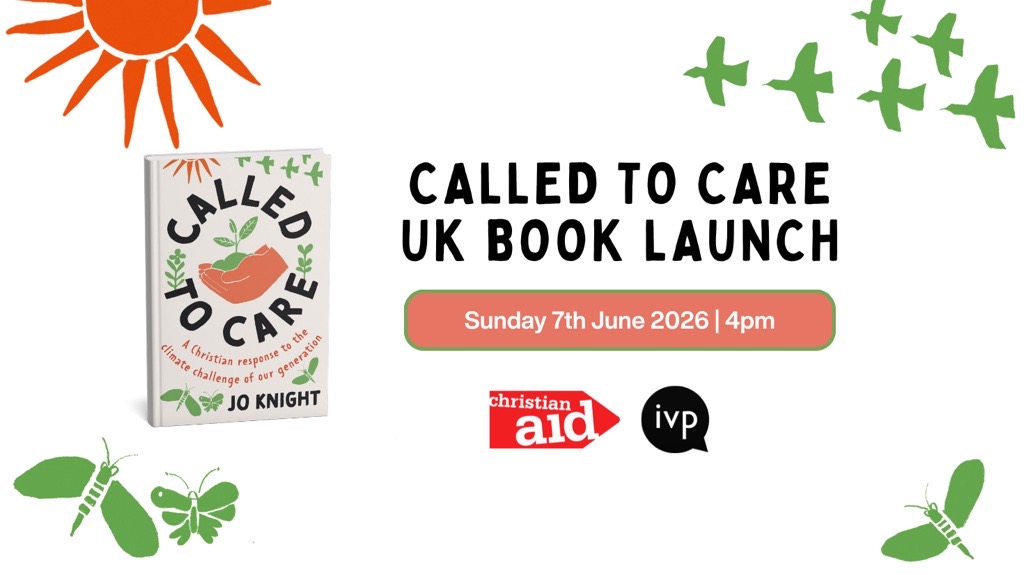
UK Launch of Called to Care by Jo Knight
28 May 2026
5
May New Releases
18 May 2026
Support IVP with your donation
Either donate with a one-off donation or subscribe monthly.
Choose a type of donation
I want to donate
 I want to donate