

 I want to donate
Guest Post: An English Literature Student's Response to Ted Turnau's Oasis of Imagination
- Tom Creedy
- General
- 9 Sept 2024
-
124views
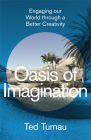
I recently finished reading Ted Turnau’s Oasis of Imagination, a fascinating and thoughtful read. As a recently graduated English Literature student and aspiring author (maybe exactly Ted’s target audience!) here are my thoughts.
______________________________
As a student who has spent the last three years trawling through different works of literature – plays and poems, Shakespeare and Charlotte Bronte and Chimamanda Ngozi Adichie – I’ve spent a lot of time imagining. Of course, there’s no real way to read without imagining, to make your way through a book without joining in with its creator in their building of a world. Whether it’s Frodo making his way through Middle Earth or Elizabeth Bennet in a ballroom, we follow the writer’s movements, mirroring their every step.
This is what Ted Turnau describes in his book, Oasis of Imagination, as he draws us a picture of the creative arts. When we read a book or watch a movie, he argues, we become a co-creator with the maker, imagining what we are told to, when we are told to. A piece of art invites us to respond to an act of creation.
In this, we see the complexity of what we consume.
On the one hand, as Christians, we have to think carefully about what we choose to read, watch or listen to, and what we want to be co-creators in. Reading can alter our minds and our thought patterns. Responding to the creative arts, then, can be like being discipled or moulded into the image of what we behold. We are changed by what we see. There is joy to be found in this: as we escape the world around us through a book, we can learn more about it, and see more of God’s goodness in it. There are dangers here too – we risk becoming numb, indifferent, and accepting of beliefs and ideas we do not hold.
However, as Turnau shows us, recognising this is not an invitation to ignore the culture around us, but to engage in it rigorously by asking the right questions. Understanding the world through art and literature can help us to engage with the stories our culture is telling, to relate to our families and friends who hold to these messages and use them to shape their self-worth.
So, we continue to co-create imperfectly, learning about the world but not letting it permeate us, or change our hearts and minds.
But Turnau also tells us that there is a greater call too for those of us who seek to create art.
As he brilliantly observes with examples from especially the Christian film and music industry, creating art as a Christian is a difficult thing. There are numerous traps people can, and do, fall into. Our art can easily become sentimental and fluffy, falsely cheerful in an effort to avoid the darkness of the world. Equally our art can be despairing, un-Christian in its belief that we are not moving towards redemption, or fulfilment.
All of these pitfalls have the potential to be damaging. They reduce the message of Jesus to a piece of propaganda which we try to cram into our artistic pursuits. This does not make use of the materials we’ve been given – the ability to tell stories, make art and create music.
But there is a different path that Turnau describes. A path of planting oases in the wilderness.
A path of telling better stories which recognise the pain of the world and don’t simplify it. Stories that signal like a flare of light towards the Gospel. Stories that thrive on tales of redemption and renewal, which give a voice to those who are disenfranchised.
Of course, this kind of creation is difficult. Still, Turnau does supply us with many examples of artists who have managed to create art that reflects their faith without being cliche. With this, he encourages creators to keep on going in their creation.
More importantly, Turnau urges creators to keep going in their faith. He suggests that they participate in ‘counter-rituals’ to recalibrate their imaginations. In this way, the Christian creative becomes a co-creator in something better, by reading the Bible and spending time with God. By reordering their desires.
To create an oasis in the wilderness, then, requires both an understanding of the wilderness and a knowledge of what refreshing can look like. It requires a good awareness of the culture around us, as well as the countercultural knowledge of a kingdom upside down, the kingdom of Jesus’ Beatitudes.
As Turnau suggests: ‘Our world needs Christian creatives who can plant true oases.’
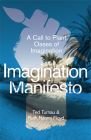
You can read more about these ideas in Ted Turnau’s Oasis of Imagination and in his joint work with Ruth Naomi Floyd, Imagination Manifesto.
Related Posts
Related Products
Categories
Recent Posts
1
5
UK Launch of Called to Care by Jo Knight
28 May 2026
Support IVP with your donation
Either donate with a one-off donation or subscribe monthly.
Choose a type of donation
I want to donate
 I want to donate