




 I want to donate
First, comes Saturday
- Tom Creedy
- Mental Health
- 28 Dec 2020
-
71views
As the October breeze picked up fallen leaves and threw them around our feet, the two of us stood arm in arm. Peering into the bowels of the earth that had just swallowed the body of our daughter, I felt angry at the world. Such a wasteland of death and decay and dirt! It felt as though we’d said to Jesus, ‘Lord, the one you love is sick – dead, even.’ And yet he hadn’t come. Or like those in the crowd, we were thinking, ‘If he can raise Lazarus from the dead, couldn’t Jesus have kept this little girl from dying?’ We were like Mary and Martha: ‘Jesus, why didn’t you act sooner to save our little one?’
We couldn’t escape the fact that Jesus had never made things right immediately. He hadn’t prevented the death of Lazarus, but rather he delayed coming and went to stand next to his grave. Just as he stood with Mary and Martha, he stood with us next to Edith’s grave, offering us the same promise: ‘I am the resurrection and the life. The one who believes in me will live, even though they die.’ While we had very few answers, this much was sure: Jesus had always allowed the grief of death to roll over his followers before reuniting them with their loved ones. And so too, Jesus was there with us, allowing the sting of death to hurt, before we’d be reunited with her, and with him in his kingdom.
We wanted Jesus to snap his fingers and make it all right now. But his delay in raising Lazarus was no spiritual anomaly. God’s victory over sin, death and hell at the cross didn’t transport his followers into an instant resurrection. On that first Good Friday, Jesus wasn’t raised victoriously the moment he died. No – between Good Friday and Easter Sunday there was Saturday, when the Light of the World had been extinguished, the Bread of Heaven had been left to spoil, and the Resurrection and the Life lay lifeless, left to decay. Jesus’ broken and bruised body was taken down from the cross and buried, like Edith, in a dirty grave. He identified with all of us with dirt on our hands, under God’s curse of death.
For years, Joanna and I had clung fast to the promise of forgiveness of sins, won for us on Good Friday. We’d praised God for the promise of resurrection life, achieved for us on the first Easter Sunday. And yet, standing next to Edith’s grave, it was that gloomy Saturday in between that brought us most comfort. We were stuck in the middle of being saved from this world of sin, death and grief and being brought into the place where our tears would be wiped dry. Lazarus was no outlier; the resurrection that Jesus brings always comes after delay. His followers must always wait patiently.
As long as we would mourn Edith’s death, sit around the dinner table with one of our children missing, look at family photographs with one of us not there, live on this side of heaven – it would be Saturday. Jesus would allow this day to continue with the promise that, while death’s dirt will surely cover us in burial, all who believe in him will be raised. Jesus’ resurrection is the promise that our Saturday’s dusk will give way to Sunday’s dawn, his voice will be heard, and we will go to be with him and with those whom we have lost in Jesus.
While the October sun cast long shadows over Edith’s grave, the question Jesus asked us was the same one he asked Martha in her grief: ‘Do you believe this?’ (John 11:26).
Did I believe that Jesus was the resurrection and the life? Did I believe that while it looked like death had had the final word, Jesus had conquered death? Did I believe that while there is no sure hope in this world, Jesus was our hope of a renewed world? Did I believe that my daughter had died so that God’s Son might be glorified through it? Did I believe that things weren’t as they seemed? Did I believe that, while everything pointed to Edith being dead, she was now more alive than I was? Did I believe that Jesus was the resurrection and the life, and that while he died for me he was now alive, waiting to bring me home? Did I believe this?
Taking Joanna’s arm, we walked slowly towards the cemetery gate. Our shadows spilled over rows of graves. More clearly than ever, I realized that death – even the death of our daughter – should never be the reason to doubt the gospel. Defeating death, once and for all, was the very reason that Jesus had lived and died. In that cemetery we were as close to understanding the heart of the good news as we’d ever been, and likely ever will be. As we walked past grave after grave, it was as if I were walking alongside the Saviour – the only One who had defeated the grave – and hearing Jesus ask me the same question that he asked his disciples after many had deserted him: ‘You don’t want to leave too, do you?’ (John 6:67).
Jesus alone is the antidote to death and decay. So my response could only echo Simon Peter’s: ‘Lord, to whom shall we go? You have the words of eternal life’ (John 6:68). We walked on, not knowing what the future might bring.
Silent Cries: experiencing God's love after losing a baby publishes on the 21st of January 2021, and is one of our first batch of releases of the year. You can find some related titles below, or order your copy now.
Related Posts

Categories
Recent Posts
3
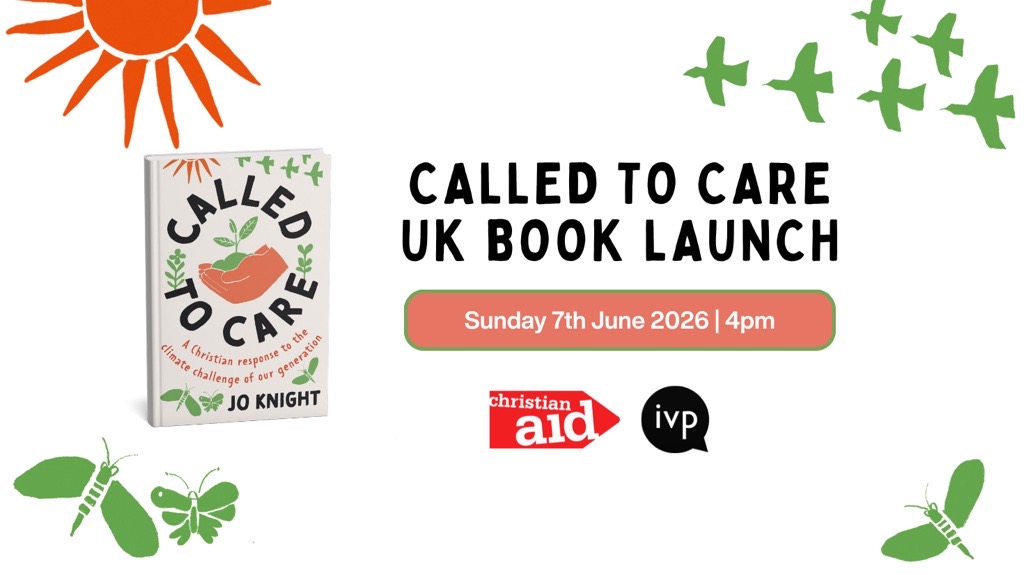
UK Launch of Called to Care by Jo Knight
28 May 2026
4
May New Releases
18 May 2026
Support IVP with your donation
Either donate with a one-off donation or subscribe monthly.
Choose a type of donation
I want to donate
 I want to donate