




 I want to donate
Ecclesiastes: Unexpected Humour
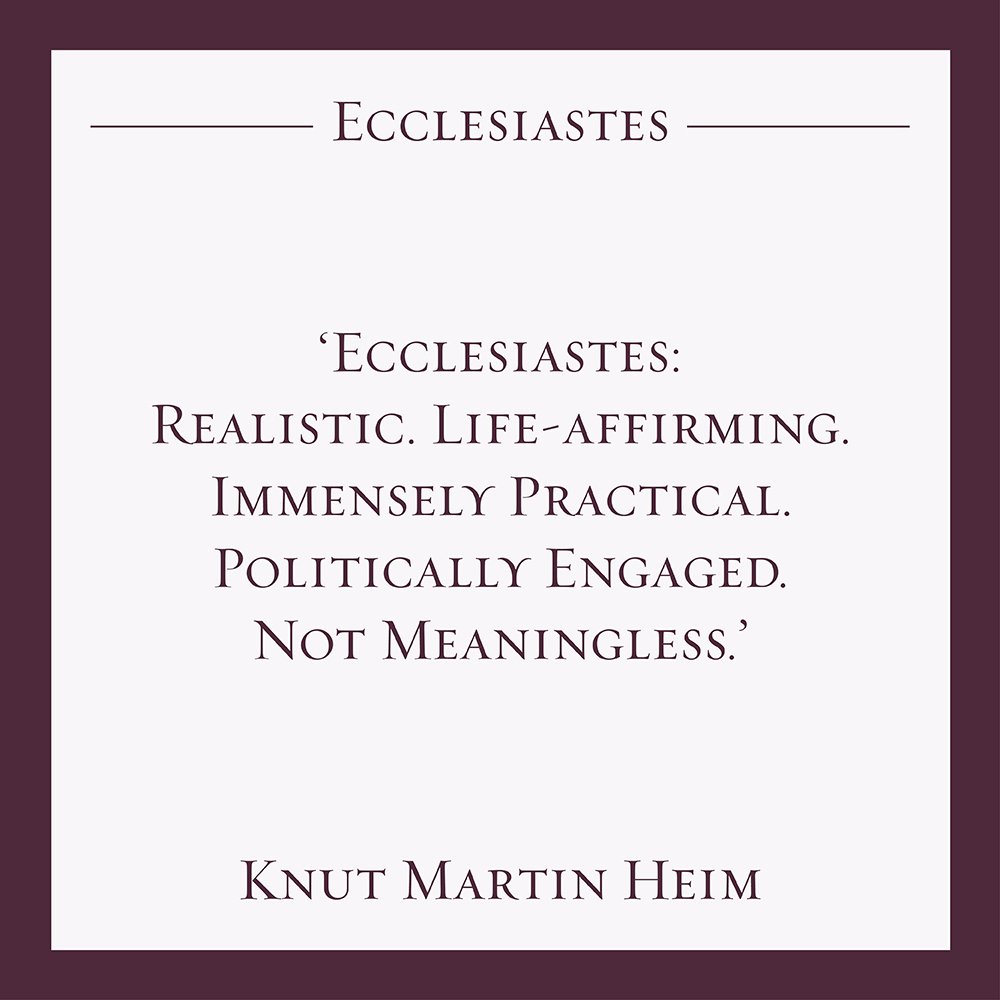
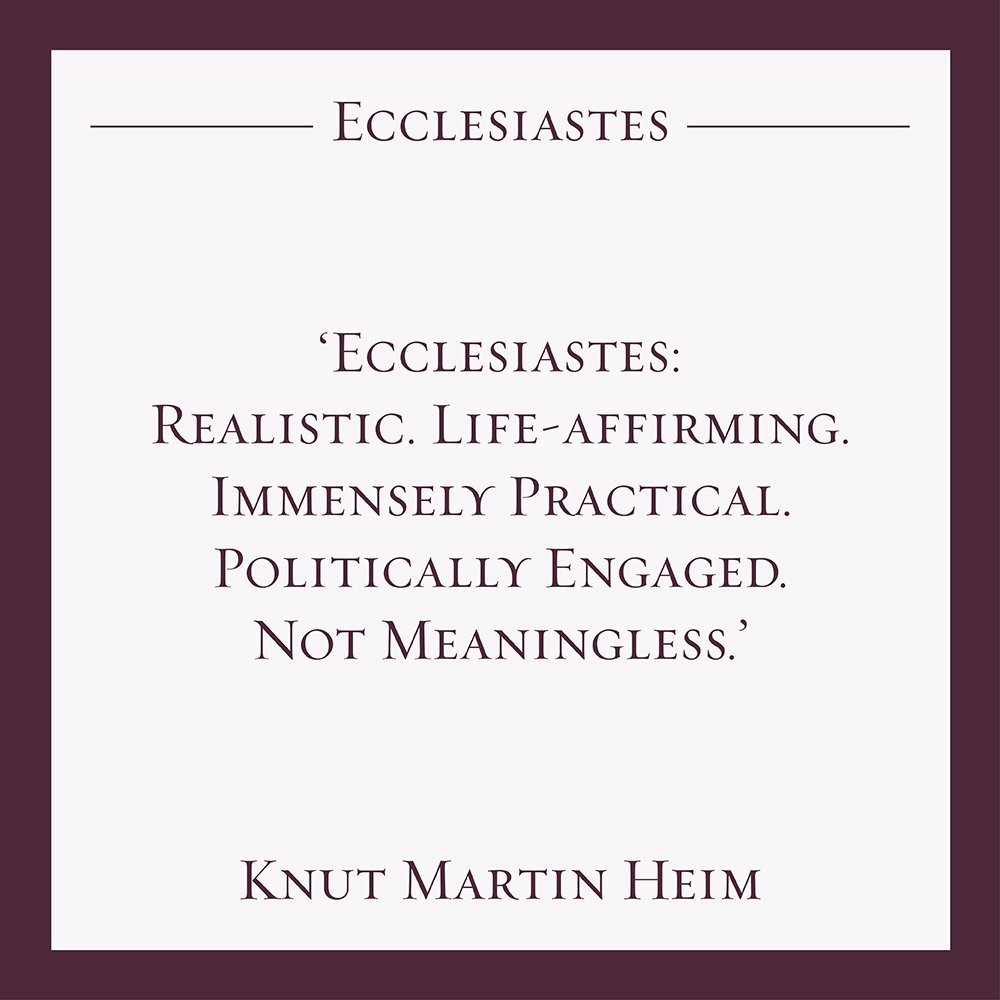
Ecclesiastes is a book best known for the refrain 'everything is meaningless', and is a part of God's Word that seems particularly appropriate for us in the UK as circular political arguments seem to occupy our news cycle.
We'd probably agree with verses 8-11 of Chapter 1:
All things are wearisome, more than one can say.
The eye never has enough of seeing, nor the ear its fill of hearing.
What has been will be again, what has been done will be done again;
there is nothing new under the sun.
Is there anything of which one can say,
“Look! This is something new”? It was here already,
long ago; it was here before our time.
No one remembers the former generations,
and even those yet to come will not be remembered by those who follow them.
However, it isn't just the uncanny resonance with today's situation and culture that makes Ecclesiastes surprisingly amusing. Pondering the place of Ecclesiastes in terms of humour in the Bible, Knut Heim, in his brand new commentary, writes:
"Much in the book is calculatedly ambiguous. The book's contents were produced during explosive sociopolitical circumstances. Hidden references to current events, a clandestine form of humour and the oral character of his composition explain the undetermined nature of Qoheleth's language and reveal the subversively sociocritical intent behind his work. The strategies of indirection which Qoheleth employs have in more recent times been most prominent among stand-up comedians active in countries with politically repressive regimes. In their routines, comedians make veiled allusions to current affairs which are specific enough for the insider audience to recognize the reference to real-life events while carefully concealing what the talk is really about behind underdetermined language. Good examples in Ecclesiastes are the phrase 'under the sun' as a cypher for Egyptian rule and the allusion to religious provocation and its violent consequences in 8:10-14"
Heim goes on, touching on the importance of humour in the Bible more generally, and it's importance for understanding the book of Ecclesiastes particularly:
"Humour in the Bible is frequent and theologically significant. Much of this humour is of a dark nature. This is also true for much of the humour in Ecclesiastes. Here, however, it is both light-hearted and serious... the use of humour to communicate challenging content. It is a summary verdict on Qoheleth's search for success, a quest that had ended in failure and frustration. This pursuit was neither purely philosophical nor purely economic, neither purely cultural nor purely political. What was at stake was the very identity and character of Qoheleth's faith community"
Knut Heim's new Tyndale Old Testament Commentary was one of the IVP September Releases, and joins IVP's growing library of resources on every book of the Bible.
Related Posts

Categories
Recent Posts
4

UK Launch of Called to Care by Jo Knight
28 May 2026
5
May New Releases
18 May 2026
Support IVP with your donation
Either donate with a one-off donation or subscribe monthly.
Choose a type of donation
I want to donate
 I want to donate