




 I want to donate
Why Systematic Theology Matters
- Tom Creedy
- New Releases
- 4 Feb 2021
-
108views
Where is Jesus? It took a child – my own son, in fact – to ask the question that nearly floored me. ‘You said just now that he’s in heaven, but the Sunday club teacher told us he’s everywhere.’ Before I even had a chance to think, he landed another unexpected punch: ‘And in our family worship time the other day, you said Jesus lives in our hearts!’
Well . . . where is Jesus? Preachers may tell us we can find Jesus in the Bible. One well-known evangelist likes to say that Jesus ‘walks off the pages’ of Scripture. Is Jesus there too? If all four are true – he’s in heaven, he’s everywhere, he’s in our hearts, and he’s in the Bible – what possible explanation can we give that makes sense of it all
Recently, I was sitting in on a youth Bible study. It was all about how God is triune: three and one. The teacher – who also seemed to be decidedly youthful – explained, ‘God is like a man who is a husband, and a dad and a friend, all at the same time. He’s always a husband and always a dad and always a friend, but he’s only ever one man. He’s three-in-one.’
Is that right?
Is that what God is like?
What do you think?
How would you explain it?
When I was a student pastor, a young man came to talk to me one day in some obvious distress. He believed in Jesus, and he understood the gospel, but he was concerned that his life didn’t seem to measure up to his profession, so he didn’t have assurance of salvation. He asked me, ‘Do I have to love other people to be a Christian? Because I don’t think I do.’ This young man was deadly serious. For him, the question was no idle speculation. It was extremely important. What was I to say to him? All of these examples concern questions of what is called ‘systematic theology’.
I study, write and teach systematic theology. As a pastor, I’ve drawn on the resources of systematic theology to inform my ministry. As a Christian believer who follows Jesus, I seek to allow systematic theology to shape my life. I think it’s important – clearly. But I can’t assume that you do. Because the reality I’ve seen is that many Christians (perhaps especially evangelical Christians) dislike systematic theology. When I tell Christian friends that I study, or teach, systematic theology, they are sometimes a bit suspicious.
Why should that be? There are three main reasons or objections that I’ve heard. First, some Christians wonder whether any sort of theology is really necessary. Isn’t theology just a distraction – they might ask – from the Bible (on the one hand) and from following Jesus (on the other hand)? Second, others might be convinced that good theology is better than no theology, but they’ll say they prefer ‘biblical’ theology to ‘systematic’ theology. (I’ll explain these terms and the thinking that’s going on here in a moment.) Third, still others are worried that theological ‘systems’ can get too big for their boots, becoming more authoritative than Scripture itself. The fear is that the theological tail might start wagging the biblical dog. These are all important objections, and so I’m going to try to deal with them first, in order to clear the way for what follows in the rest of this book.
Do we really need theology at all? The truth is: we all do theology. We all ‘have’ a theology. Some theologies are, I take it, better than others. The Lord Jesus had, and has, a theology. God has a theology. (Does that sound strange? More on this later.) There’s a sense in which even non-Christians have a theology, as I hope to show you. The question should be, therefore, not ‘Do I need theology?’ but ‘Is my theology any good?’
Isn't 'biblical' theology enough? The desire to be ‘biblical’ in our theology is a good one. But systematic theology can – and should – be just as ‘biblical’ as biblical theology. I want to suggest that when we read the Bible, we need to learn from both a chrono-logical and a theo-logical approach. Why? Because these are the two perspectives on any story (including the Bible’s story) that give us true understanding of it. If we neglect one or other of them, we can end up with serious misunderstandings. Conversely, when we allow these two complementary perspectives to inform and enrich each other, fruitful growth may follow.
What happens if the 'system' takes over? as evangelicals we should believe that the Bible itself can and must be systematized. Why? Because all Scripture is the inspired Word of God, and so it reflects God’s self-understanding. God’s own knowledge is, by definition, true and fully coherent: it is therefore systematic. And, as we’ll see in chapters 3 and 4, it’s a measure of precisely this divine knowledge that God wants to communicate to us. This is our starting point, then: the Bible can’t be full of logical contradictions, teaching one thing one day and the opposite the next. With God’s illuminating help, the Bible is able to be systematized by its readers: indeed, it demands to be systematized!
Related Posts
Categories
Recent Posts
2

UK Launch of Called to Care by Jo Knight
28 May 2026
3
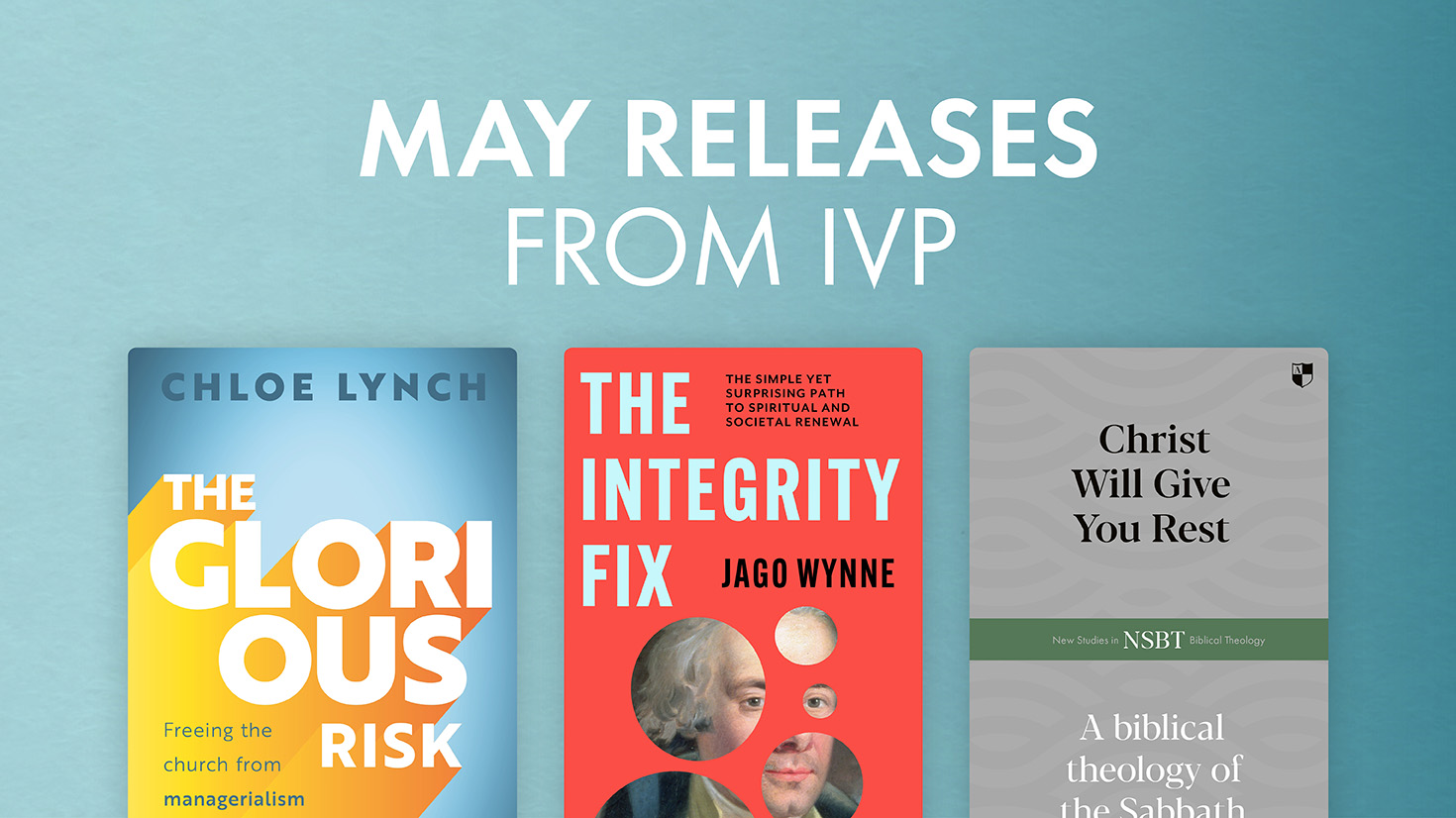
May New Releases
18 May 2026
Support IVP with your donation
Either donate with a one-off donation or subscribe monthly.
Choose a type of donation
I want to donate
 I want to donate