

 I want to donate
Systematic Theology: Why a Second Edition?
- New Releases
- 14 Sept 2020
-
856views
I am grateful to God that he has allowed the first edition of this book to have such widespread use. People have often told me that reading this book strengthened their spiritual life and walk with God, deepened their faith, and significantly increased their understanding of the teachings of the Bible.
The changes in this edition mainly consist of additional material:
1. completely updated bibliographies
2. all Scripture quotations changed from RSV to ESV
3. new sections on the differences between evangelical Protestant theology and Protestant theological liberalism (additional note to chapter 4), Mormonism (additional note to chapter 14), and Roman Catholicism (additional note to chapter 45, with extensive quotations from the 1997 edition of Catechism of the Catholic Church).
4. additional discussion of specific “problem verses” for biblical inerrancy (chapter 5)
5. a completely revised, stronger chapter on the clarity of Scripture (chapter 6)
6. updated sections on God’s atemporal eternity (chapter 11), the eternal submission of the Son to the Father in the Trinity (chapter 14), seekersensitive churches (chapter 44), the role of women in the church (chapter 47), contemporary worship music (chapter 51), and miraculous gifts of the Holy Spirit (chapters 52 and 53)
7. a more extensive critique of open theism (chapter 12)
8. a completely revised, stronger chapter on creation and evolution, including recent evidence for intelligent design, a longer critique of theistic evolution, and a summary of recent evidence regarding the age of the earth (chapter 15)
9. a new discussion and critique of middle knowledge (or Molinism) (chapter 16)
10. an extensive discussion of “Free Grace” theology (chapter 35)
11. a critique of the “new perspective on Paul” and its view of justification (chapter 36)
12. a critique of the preterist view that Christ has already returned in AD 70 (chapter 54)
13. a contemporary worship song added at the end of each chapter (while retaining the traditional hymns as well)
14. indexing of topics covered in twenty-one new systematic theology texts (including new translations of older texts by Turretin and Vos) that have been published since 1993
15. numerous smaller modifications that have been prompted by letters and emails from people around the world and by interaction with the many wonderful, insightful students as I have taught through this material over the last twenty-six years both at Trinity Evangelical Divinity School and at Phoenix Seminary
As a result of this added material, this second edition is about 16 percent longer than the first edition.
“Did you change your mind about anything?” is the question people often ask me about this second edition.
The short answer is, “Very little,” but there are a few changes: (1) I now affirm the doctrine of God’s impassibility in the sense of “incapable of suffering harm,” a meaning that I had mistakenly failed to consider in the first edition (chapter 11). (2) Because of substantial new evidence about the meaning of the Greek word monogenēs, I now think that this word should be translated as “only begotten” rather than simply “only” in John 3:16 (and elsewhere), and I now endorse the doctrine of the eternal generation of the Son by the Father (chapter 14). (3) I now think that the scientific evidence in favor of an old earth (4.5 billion years) and an old universe (13.8 billion years) has become overwhelming, with the result that I now advocate an old earth position, though I still believe that both old earth and young earth viewpoints are valid for Christian leaders to hold today (chapter 15).
There has been an explosion of systematic theology texts (along with some shorter surveys of theological topics) in the evangelical Protestant world since the publication of the first edition of this book in 1994. These new books have come from various traditions, including Anglican (Packer, Bird, Bray), Baptist (Akin, Erickson’s 3rd edition), dispensational (Geisler, MacArthur and Mayhue), charismatic/Pentecostal (Stanley Horton, Menzies and Horton, Duffield and Van Cleave), and especially Reformed (Reymond, Van Genderen and Velema, Michael Horton, Culver, Frame, Allen and Swain, Barrett, and Letham, as well as new translations of Vos, Turretin, and Bavinck). I view these books as a wonderful indication that the study of systematic theology is alive and well in the evangelical world. I have added cross-references to these 21 additional books at the end of each chapter, indicating the pages on which each book treats the topic discussed in that chapter. I hope this will be a useful resource for students seeking to compare different authors and different viewpoints on a particular theological topic.
When I was diagnosed with Parkinson’s disease in December 2015, I wrote in an online article,
Parkinson’s usually does not shorten a person’s life expectancy very much, but in any case, I’m happy to live as long as the Lord wills that I live, and to keep on being productive for as long as he enables me to do so. “In your book were written, every one of them, the days that were formed for me, when as yet there was none of them” (Psalm 139:16). But I would like, if God allows, to finish my current major writing projects: 1. a textbook on Christian ethics, which I hope will take me about one more year to finish after the first draft is done—or until January 2017 2. a revised edition of my book Systematic Theology, which should take from 2017 to 2019.
God has been exceptionally kind to me in the nearly four years since I wrote that. My Parkinson’s symptoms are still very mild, and my doctor says that the disease is progressing “very slowly.” The first book that I mentioned, Christian Ethics, was published in 2018, and now this second project is finally coming to an end. I plan to continue to teach (half-time) at Phoenix Seminary, and I have committed to preparing a revised edition of a commentary on 1 Peter that I published in 1988, but beyond that I do not know what else the Lord has in mind for me to do. I feel well, and I am thankful for good health at seventy-one years of age.
I am grateful to God for the widespread ministry of the first edition of this book (1994). The book so far has been translated into nineteen languages, with more translations in process. In addition, Jeff Purswell prepared a 528-page condensation of this book, Bible Doctrine, 3 and my son Elliot further condensed that into a 159-page book, Christian Beliefs. Finally, Erik Thoennes prepared a further condensation for a 6-page laminated study guide. With God’s blessing, these shorter publications have also proved helpful to many people and churches.
Two other volumes have directly supplemented the material in this book. I have found immensely helpful the chapter-by-chapter historical surveys for these same doctrines that are found in Gregg Allison’s Historical Theology: An Introduction to Christian Doctrine; A Companion to Wayne Grudem’s Systematic Theology. And Erik Thoennes and Brianna Smith have compiled a new companion volume, Systematic Theology Workbook, which contains study questions and practical exercises to help in learning the material in each chapter.
I commit this second edition into the Lord’s hands, asking that he may use it to inform and strengthen the faith of those who read it and to deepen their personal relationship with him.
“Not to us, O Lord, not to us, but to your name give glory” (Ps. 115:1).
You can preorder Systematic Theology (2nd edn.) and the accompanying workbook now. Or, grab one of the abridged versions of the first edition, or J. I. Packer's Concise Theology!
Related Posts
Categories
Recent Posts
2
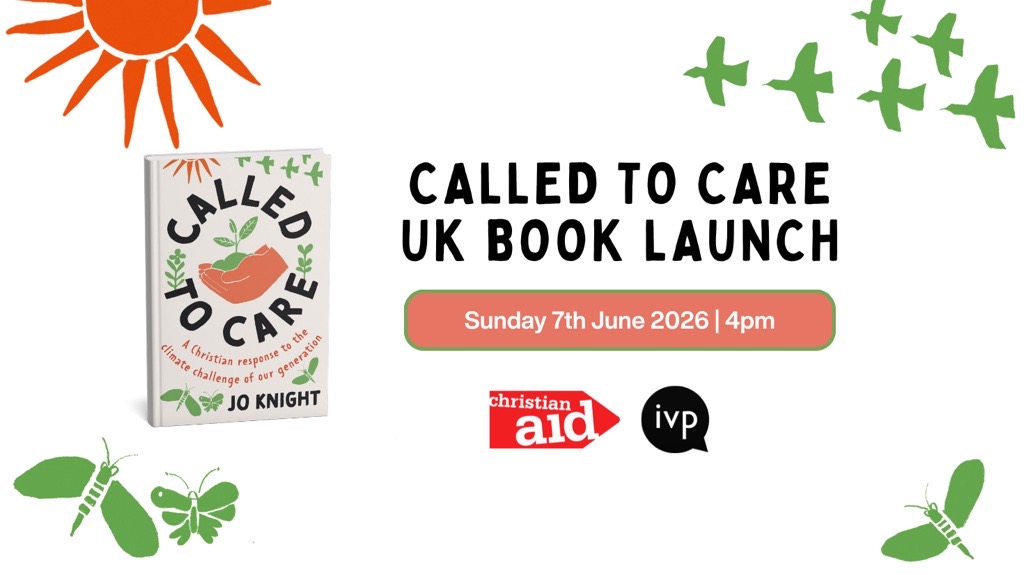
UK Launch of Called to Care by Jo Knight
28 May 2026
3
May New Releases
18 May 2026
Support IVP with your donation
Either donate with a one-off donation or subscribe monthly.
Choose a type of donation
I want to donate
 I want to donate