



 I want to donate
No Place for God? Civility and Cancel Culture
- Tom Creedy
- New Releases
- 6 Jul 2021
-
146views
In the dystopian TV series Black Mirror episode called Hated In The Nation, people who are hated online get given the hashtag #DeathTo. Each day the person with the most mentions on that hashtag is killed by tiny automated drone insects. It’s a gripping and chilling 89 minute episode and - true to the series name - a dark reflection of our cancel culture.
The rise of cancel culture and the decline of civil discourse has had knock-on effects for the church and specifically the church’s witness. An insightful piece of research by the BARNA group in the US identified that whilst the younger generation (Millennials) of Christians are just as passionate about seeing people coming to know Christ as previous generations (94% believing that believing in Jesus is the best thing that could happen to someone), 47% of them believe that sharing their faith is wrong - significantly higher than previous generations. Why the reluctance you may ask? The overwhelming reason is that 40% of them believe that if someone disagrees with you they are judging you, compared to 22% for Gen X and only 9% of Baby Boomers.[1]
In other words, cancel culture (or at least the fear it promotes) seems to be cancelling out gospel witness.
I’d suggest that to overcome cancel culture we need to do more than roll our eyes or swing to an overstated reaction, instead we need to understand what is driving it so that our gospel witness can engage with it. After all, as many commentators have pointed out, cancel culture manifests as a modern equivalent of the honour/shame dynamics that were prevalent in the first century when the gospel first took root.
So what are some of the factors driving cancel culture and how can we engage with them? Here are four areas to reflect on, each needing further unpacking in time.
1. A Recategorizing Of Truth
The Oxford English Dictionary (OED) word of the year in 2016 was ‘post-truth’. This is frequently misunderstood. It does not mean that people are ‘over’ truth and think everything is just opinions. What it does mean is that the locus for truth is now grounded in the individual. In previous generations we listened to institutions, or experts, or looked to the ‘facts’ of a situation to determine truth, but now ‘objective facts are less influential in shaping public opinion than appeals to emotion and personal belief’ (OED definition).
This has played a significant part in the fragmentation of public discourse, which in turn has led to a breakdown in civility. If the locus of truth lies in every individual then shared foundations are rare and it is difficult to disagree well and maintain relationships where little common ground exists.
2. The Narrative of Power
As the grounds of truth have shifted so the discourse of power has become more and more influential. The secular underpinnings of so much modern social theory can tend to reduce everything to power. Religion, politics, law and even the arts all become about getting and maintaining power.
This breeds a culture of suspicion because when someone says they are talking about (for example) the ‘truth of the bible’, thinkers like Foucault have taught the West that it is actually a mask for their real agenda to manipulate and control. Ultimately then, the appeal of ‘cancelling’ someone derives from this because what better way to take away someone’s power than to deny them any platform or representation in society at large.
3. The Breakdown Of Family
The first two points have related to more abstract ‘idea level’ issues. However, it would be wrong to think that culture is driven by ideas alone. Our lived experience is absolutely fundamental to culture shaping, particularly in our formative years. In that regard across the West the breakdown of the family is deeply significant, particularly in the UK. In Britain only two thirds of all children under the age of 15 live with both parents and an estimated 450 of 1000 children will experience the breakup of their parents by their 16th birthday.[2] [3]
If family is a foundational context where people learn to exchange opinions constructively, have discussions, disagree, sometimes fall-out, apologise and make-up, then if a large minority of children in their formative years are seeing that disagreements lead to parents breaking up, this is bound to impact how negatively they view disagreements in the future.
4. Social Media And The Decline Of Listening
Echo chambers have always existed but perhaps what is particularly challenging in this cultural moment is the hiddenness of our echo chambers. Media and social media, due to the drive for profit, overwhelmingly categorise people into ‘preference communities’. Much of this categorising though is unseen. This means that views, opinions, products, and preferences are all pushed to your feed without it being obvious that these are being tailored for you. It’s easy to think then that listening to a feed full of your own biases is the whole show.
Not only that but since the sensational, overstated and pithy tends to get many more shares and comments then the measured, nuanced and long. This also has a big effect on public discourse. Why would I slow down and listen carefully to the other side of a debate when a putdown and snappy hashtag gets so many more likes? Is there any wonder that when all this is put in a melting pot online that it results in people not listening, speaking over one another and cancel culture?
Redeeming Cancel Culture
Truth, power, the family, and listening, these are just some of the dynamics fueling culture (if I had space I’d love to explore the political and economic dynamics too). Thankfully, these are four things that the Bible has plenty to teach us about.
- Truth: Think of how Jesus describes himself as full of grace and truth (John 1:14). This both locates truth ‘in him’ as the source of all truth, but it also gentles truth for a generation that fears truth claims are power plays.
- Power: Think of how Jesus doesn’t deny the importance of power, after all he is Lord - transparently a power claim. But he does subvert our worldly power narratives by showing that real authority comes through sacrifice even to death on a cross, and real strength is strong enough to be weak in the service of God and others.
- Family: Think of what the potentially healing effects could be of the church ‘family’ to a generation too familiar with family breakdown. How compelling could the witness of the gospel be to this generation when it is grounded in a context of a loving and counter-cultural community that treats one another as family?
- Listening: Finally, let’s live out Jesus’ call to listen ‘whoever has ears let them hear’ (Matthew 11:15 NIV) as we listen carefully to God, week by week devoting ourselves to the Scriptures, and as we listen to one another especially those who disagree with us. It has become painfully clear recently that the church feels overwhelmed by ideologies like Critical Race Theory, Social-Marxism, Transgender ideology, but the tendency to put our fingers in our ears and lunge to the political extreme for safety has significantly hampered our witness. Careful listening requires people secure enough in the love of God and his promise that the gates of hell will not prevail against the church, to slow down, form meaningful relationships with those who don’t know Christ, hear their questions and viewpoints, and share life with them as we also share with them the gospel (1 Thessalonians 2:8).
[1] Barna group. Almost Half of Practicing Christian Millennials Say Evangelism Is Wrong. Feb 2019.
[2] Why Family Matters Centre for Social Justice report. March 2019.
[3] UK high on OECD’s family breakdown table https://www.bbc.co.uk/news/uk-20863917 29th December 2012.
Pete Nicholas is the author of A Place for God: Navigating timeless questions for our modern times, and coauthor with Ed Brooks of Virtually Human: Flourishing in a digital world. You can find him on Twitter @peteinspire and on Instagram @peternicholas13
Related Posts
Categories
Recent Posts
3
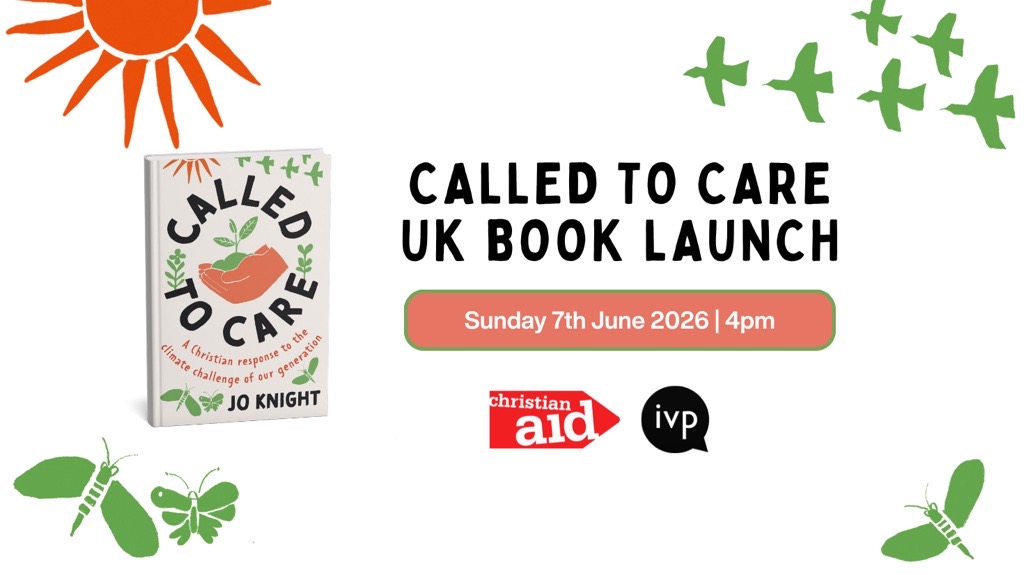
UK Launch of Called to Care by Jo Knight
28 May 2026
4
May New Releases
18 May 2026
Support IVP with your donation
Either donate with a one-off donation or subscribe monthly.
Choose a type of donation
I want to donate
 I want to donate