


 I want to donate
Nations Under God?
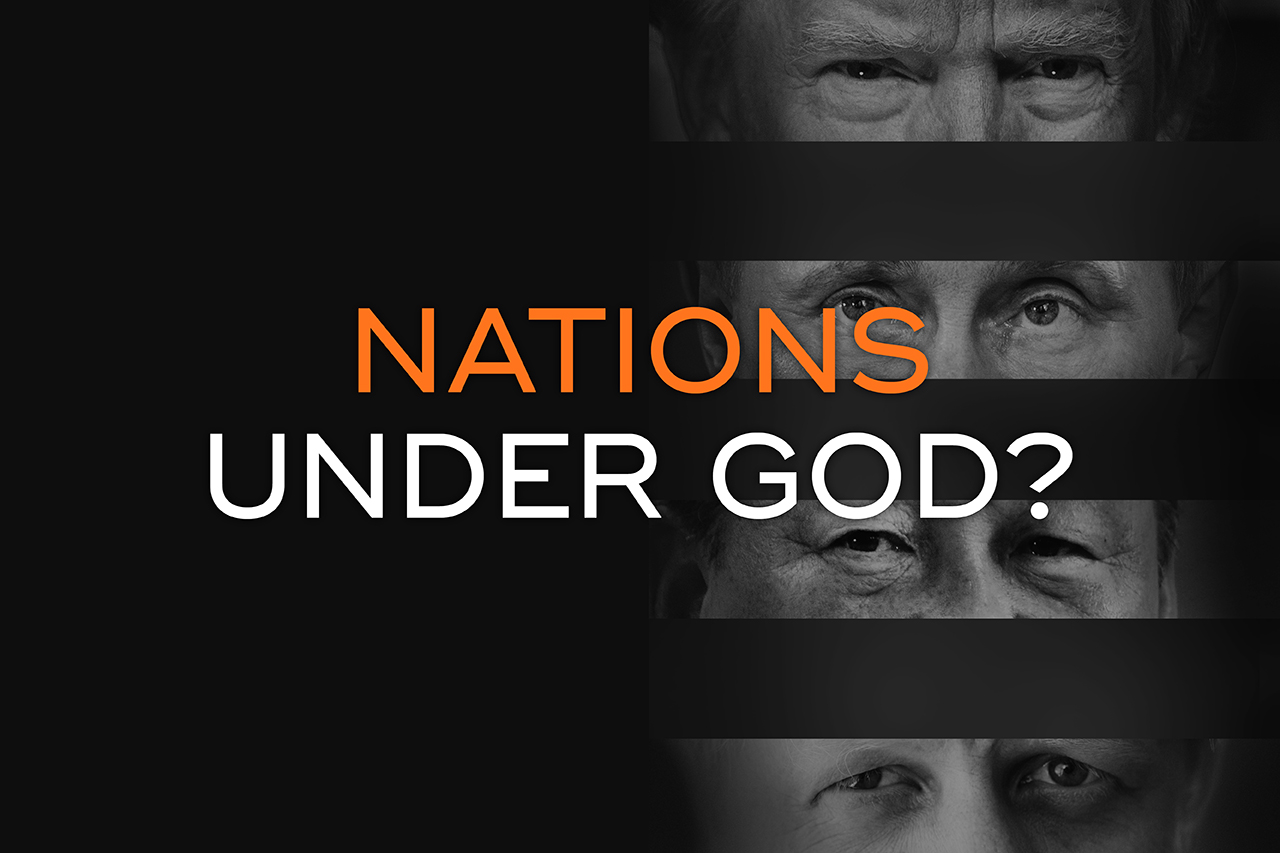
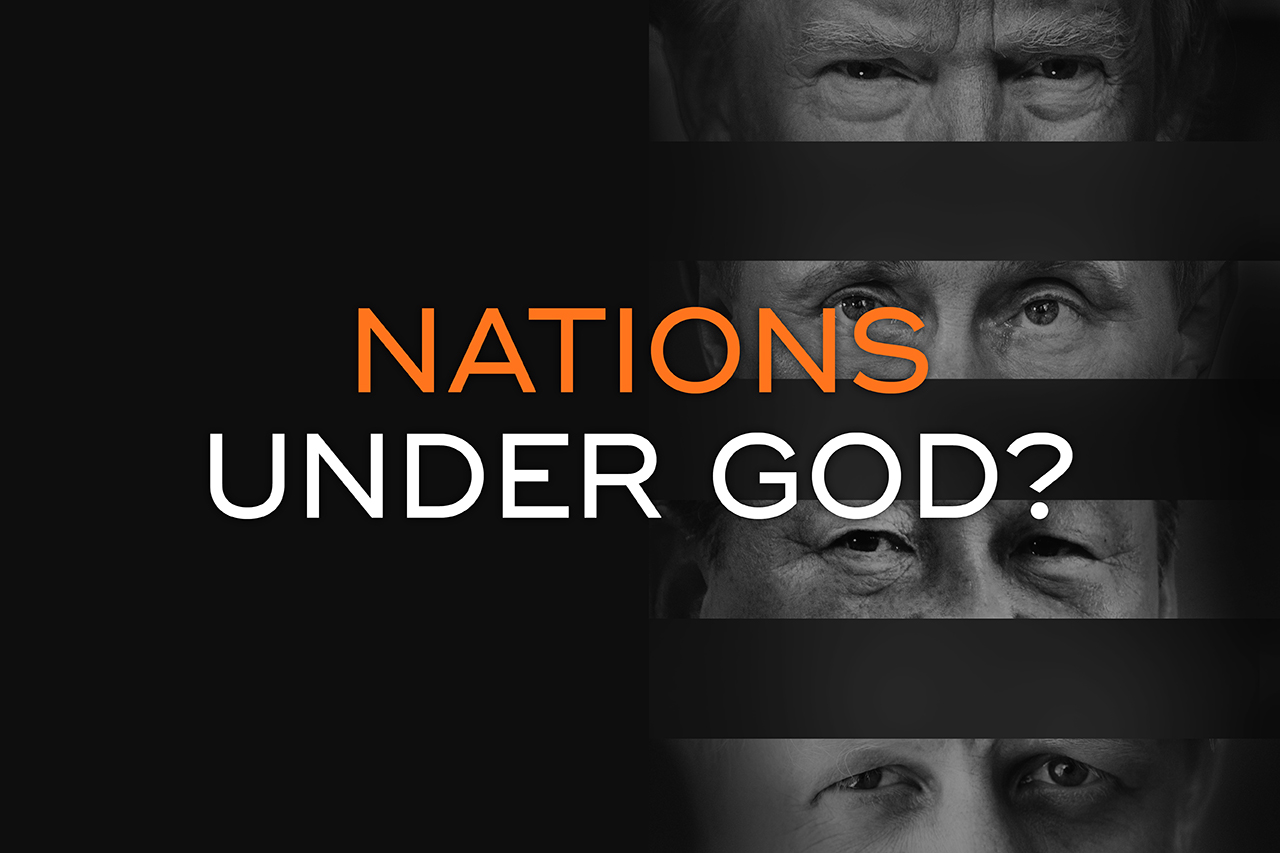
One of the horrendous blasphemies of the modern West has been the ease of using the name of God in association with national aggrandization. It is well known that both major protagonists in the cataclysmic destruction of the First World War claimed “God is on our side.” Genocides in South Africa, North America, and Australia have been given theological divine sanction. “One nation under God” and “In God we trust” are relatively recent inventions giving somewhat ironic expression to American identity and setting religiously sanctioned capitalism against atheistic communism. “For God and Ulster” was paraded on banners that I remember in my homeland, Northern Ireland, to bolster the tribal identity and political hegemony of Protestants.
Moving back from the prophets to Psalm 115, the psalm that most sharply declares the human origin of idols, it is noticeable again that the polemical context is between Israel and the nations. The familiar opening verse of the psalm also takes on greater significance in the light of our discussion thus far. If the gods of a nation are in fact the collective human construct of that nation’s pride, then the glory of a god is identical to the glory of its nation and vice versa. To glorify a nation’s god usually meant praising that nation’s military might. The Israelite psalmist denies that this can be any part of the motivation for praising Yahweh the God of Israel. On the contrary, he says, with double emphasis, “Not to us, Lord, not to us but to your name be the glory, because of your love and faithfulness” (Ps 115:1).
That is to say, to give glory to Yahweh must never be construed as just another way of giving glory to his people Israel. On the contrary, Yahweh must be praised for his own distinct identity and character, not just as a symbol or cipher for the people’s own self-congratulation (a confusion that is as seductive as it is rampant among modern nations that claim to honor “God” in national ceremonies, or sloganize a pious-sounding “God bless America” in otherwise blatantly political speeches).
The worst manifestation of gods as the work of human hands is when humans claim to be their own gods or to be the divine source of their own power. The quip about “the self-made man who worships his creator” is recognized in the Old Testament, and even comes in for the same kind of grim humor in the process of unmasking the absurdity and deception of such arrogance. Yet again, it is usually the vice of kings and emperors.
Ezekiel exposes the self-divination of the king of Tyre and the inevitable judgment it brings on him and his empire:
In the pride of your heart
you say, “I am a god;
I sit on the throne of a god
in the heart of the seas.”
But you are a mere mortal and not a god,
though you think you are as wise as a god. . . .
Will you then say, “I am a god,”
in the presence of those who kill you?
You will be but a mortal, not a god,
in the hands of those who slay you. (Ezek 28:2, 9)
Similarly, Ezekiel pointedly expresses the arrogance of the pharaoh of Egypt who imagines himself to be the source of his own prosperity, claiming the divine power of creation over the Nile that itself provides the wealth of Egypt.
I am against you, Pharaoh king of Egypt,
you great monster lying among your streams.
You say, “The Nile belongs to me;
I made it for myself.” (Ezek 29:3)
What insane arrogance and self-deception fuel such an absurd claim!
Yet it is echoed in the idolatrous worship of Mammon that characterizes contemporary global capitalism. Is there not an ugly irony in the selfstyled and semiblasphemous “masters of the universe” as a term for those making massive and almost instant fortunes in clever deals in the financial markets? It is also evident in the way individuals who have accumulated vast amounts of wealth in business (with or without effective scrutiny) are lauded as assumed experts in other quite unrelated fields of human interaction—politics, for example. Mammon rules in both spheres, as the extent of corruption by corporate lobbying and the eyewatering scale of money spent on getting elected (or not) exposes. We seem content to be ruled by the “best” government money can buy. Even megachurch pastors whose wealth may have come from spiritually dubious sources are “idolized” as celebrities of great wisdom and their published words revered like Delphi oracles of old.
God is not opposed, of course, to God’s own mandate for humans to use the resources of the earth to prosper, trade, and create and share wealth. But when people claim to be the sole source of their own wealth, or indeed the sole owners of the creational resources on which their wealth depends, then God’s clear warning pricks the bubble of such pride. “You may say to yourself, ‘My power and the strength of my hands have produced this wealth for me.’ But remember the Lord your God, for it is he who gives you the ability to produce wealth” (Deut 8:17-18).
If this sort of talk is challenging or offensive to you, you might like to check out Chris Wright's new book 'Here Are Your Gods!', which publishes at the end of September. If you can't wait that long, here are a few other books and resources that could help you think further about the issues and texts raised here.
Related Posts
Categories
Recent Posts
4

UK Launch of Called to Care by Jo Knight
28 May 2026
5
May New Releases
18 May 2026
Support IVP with your donation
Either donate with a one-off donation or subscribe monthly.
Choose a type of donation
I want to donate
 I want to donate