




 I want to donate
Key Themes in Job
- Tom Creedy
- New Releases
- 19 Jul 2021
-
573views


Outline
The prologue
1:1-5 Job is introduced
1:6–2:10 The testing of Job’s integrity
2:11-13 Job’s three friends come to comfort him
The first cycle of speeches
3:1-26 Job’s lament for his situation
4:1–5:27 Eliphaz
6:1–7:21 Job’s reply
8:1-22 Bildad
9:1–10:22 Job’s reply
11:1-20 Zophar
12:11–14:22 Job’s reply
The second cycle of speeches
15:1-35 Eliphaz
16:1–17:16 Job’s reply
18:1-21 Bildad
19:1-29 Job’s reply
20:1-29 Zophar
21:1-34 Job’s reply
The third cycle of speeches
22:1-30 Eliphaz
23:1–24:25 Job’s reply
25:1-6 Bildad
26:1-14 Job’s reply
27:1–31:40 Job’s concluding speech
The four speeches of Elihu
32:1-5 Elihu is introduced
32:6–33:33 Elihu’s first speech
34:1–37 Elihu’s second speech
35:1–16 Elihu’s third speech
36:1–37:24 Elihu’s fourth speech
The divine intervention
38:1–40:2 God’s first speech
40:3-5 Job’s reply
40:6–41:34 God’s second speech
42:1–6 Job’s reply
Epilogue
42:7-9 God rebukes Job’s friends
42:10-17 Job’s final vindication
Background and setting
We do not know who wrote the book of Job, nor do we know when the book was written. It is possible that an ancient folk tale was picked up and woven into this masterly epic poem, and scholars suggest that the book dates from between the seventh and the second centuries BC. Job’s own homeland is depicted as northern Arabia; his story is probably set in a distant patriarchal age; and Job himself does not know God by his distinctive Israelite name, Yahweh (the Lord). It is likely that the book’s author is an Israelite; however, even though it is obvious that the influences on his thought and literary style are Hebrew through and through, he wants to suggest the universal character of Job’s questions. The book of Job falls into three clear sections. It starts (chapters 1–2) with a prose prologue in which the scene is set, and in which earthly and heavenly realities are placed side by side. Matching this, the book ends with a prose epilogue (42:7-17) which serves a particular purpose at the end of the story. In between there is the body of the book, a long poem (3:1–42:6) in which Job and his friends try to argue out the situation, and in which eventually Job hears the voice of God.
Themes and relevance
The book of Job poses many problems and asks many questions. But there is precious little that will count in the way of an ‘answer’ as we usually understand that term. We are face to face with a good and godly man who suffers – suffers intolerably and seemingly endlessly. He catches us up into his pain, into his misery, into the injustice of it all. He envelops us in his plea to God to tell him what on earth, or what in hell, is going on. He covers us with his sense of abandonment – by family, by friends, by God himself. And there is nothing that we can say to ease his plight; there is nothing we can do which makes things any better.
The major theme of the inscrutable mystery of innocent suffering is one which all of us who are not blind to the world in which we live, or whose heads are not blissfully buried in the sand, have to encounter. The question presses on us in the abuse by which some children’s lives are blighted; in the hurricane which sweeps away a house and a family within it; in an earthquake which takes the lives of thousands; or in the death of innocent people in a terrorist bomb. In some of these we may see the hand of sinful men and women, and perhaps blame them for the innocent suffering they have caused. In others, we can see only the hand of God. Are we then to blame him? And why does God seem so capricious in his care? Why will he heal one person’s illness, but not another’s? Why be concerned with one person’s illness in any case, when he seems inactive in the face of the deaths of millions in gas chambers? These are questions we have all asked. The book of Job will not give us easy answers. But it will open up for us ways into the struggle for women and men of faith. In this sense, the book as a whole is more about how we suffer than about explaining why we suffer. It will show us how one man at the end of the day was enabled by grace to live with his questions.
The book of Job also confronts us with failure, and with suffering for which there is no explanation. It faces us with the inadequacy of ministry; with the inappropriateness of some forms of preaching; with a God who seems silent, callous, unfair and remote. We are forced to rethink our prejudices; rethink our theology; rethink the meaning of pastoral care in the face of injustice and suffering; rethink what we say about God. And though the book brings us back eventually to the all-sufficiency of divine grace, and stands out among the Wisdom literature in the Bible as a plea to see things from a divine and not a human perspective, there is a long, painful and arduous path to climb before we hear the Lord speaking, as he does at the end of the book, from the whirlwind. Thus the book asks us to walk with Job right through the depths of his struggle, for only so will we catch the significance of the Lord’s gracious voice at the story’s end.
This blog post is extracted from the study notes of the NIV BST Bible, ahead of the publication of Piercing Leviathan: God's Defeat of Evil in the Book of Job, by Eric Ortlund, the latest title in NSBT series. Below you'll find some resources to help you dig into Job.
Related Posts

Categories
Recent Posts
2
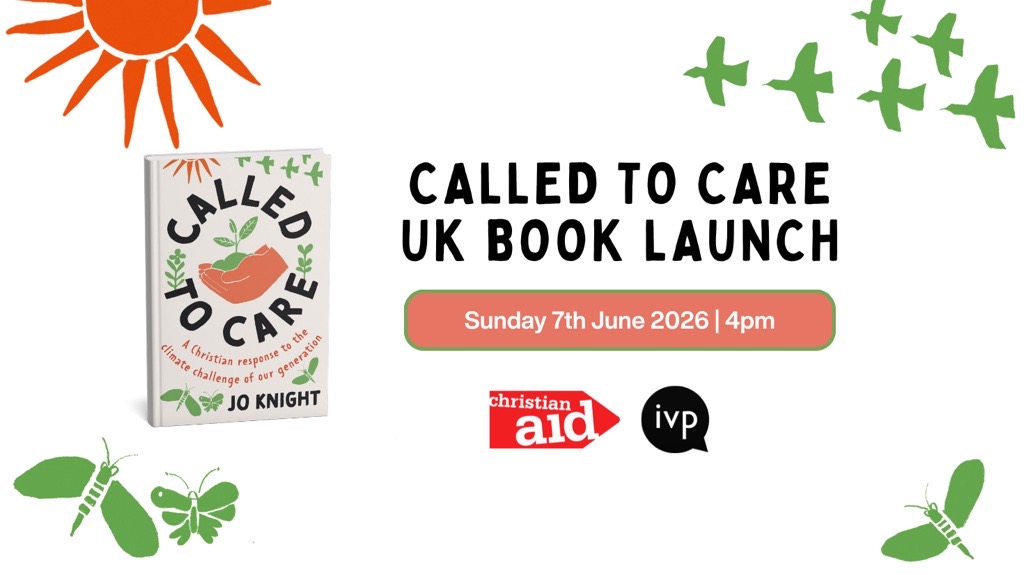
UK Launch of Called to Care by Jo Knight
28 May 2026
3
May New Releases
18 May 2026
Support IVP with your donation
Either donate with a one-off donation or subscribe monthly.
Choose a type of donation
I want to donate
 I want to donate