


 I want to donate
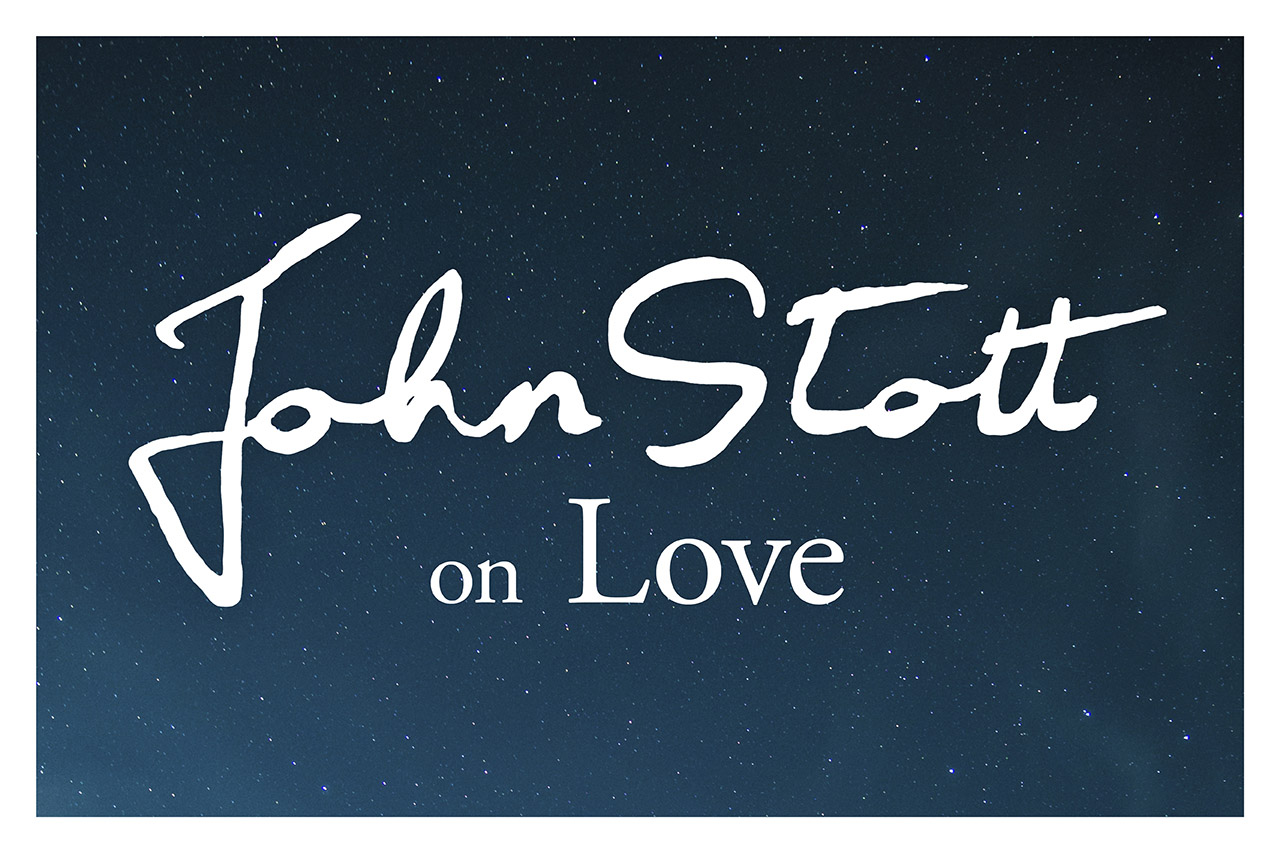
John Stott on Love

Working with John Stott for many years as director of the London Institute for Contemporary Christianity, I learnt to appreciate how his writing, preaching and thinking were reflected in his daily attitudes and behaviour. This was very evident in his understanding of love.
For John, love had its roots utterly in God. He once observed that people who did not believe in God must be in a real dilemma when they encountered love. For how could they experience the fullness of its reality, when they denied its very source? John saw God’s love evident throughout creation. It was disclosed in God’s intimate care for the birds which John enjoyed endlessly in journeys across the world. Yet it was God’s love for the human creation which had captured his heart and inspired his preaching. John believed love to be the central, defining characteristic of God’s relationship with us; the source of the infinite grace and generosity poured over us. For him, the ultimate explanation for the Incarnation, the Cross and Resurrection was simply that ‘God so loved the world….’
Love is experienced by all human beings as part of our identity as image of God.
Although it is spoiled by sin, love still defines who we are. For John, love was never simply an emotion or feeling. It was first and foremost an act of Christian obedience, a response to God’s love for us. We are to love the Lord our God with all our heart, mind, soul and strength, and our neighbour as ourselves. We receive God’s love with open, empty hands, and direct our love outwards in the service of others.
I enjoyed John’s persistence in separating the biblical injunction to love, from both self-love and self-hatred.
The popular argument - that Jesus really taught us to love ourselves - held little persuasion for him. He insisted Jesus did not give us three commandments – to love God, our neighbour and ourselves. ‘He spoke only of the first great commandment and of the second which was like it.’ [i] . Self-hatred is not avoided by the cult of self-love. It is compounded by it. Self-love misdirects us from concern for neighbour to concern for self, and leads to indulgence and narcissism. Self-loathing is resolved only by accepting God’s love.
Love therefore needs to be woven through every aspect of our Christian lives.
We can never subtract it without causing damage. Doctrine without love becomes brittle or formulaic, law without love becomes legalistic or judgmental, and fellowship without love creates a hotbed for dispute and self-service. Love’s touchstone is truth, and the two must go together in our walk before God. John maintained in his Commentary on 2 John, ‘Our love grows soft if it is not strengthened by truth and our truth grows hard if it not softened by love.’ [ii]
John lived a disciplined Christian life where love was expressed in action and service. On one occasion he phoned the Institute late at night to leave a message on the phone for me the next morning. Unfortunately, I was still there. We were temporarily without an accountant, and the audit was almost due. John was shocked to find this task had landed on my plate, and urged me to go home to bed. A few days later an envelope arrived from him. It contained a generous gift of five theatre tickets to compensate the family for an overworking mother!
Friendship-love was very important to John and crossed ethnic, age and class barriers.
His respect and affection for friends was evident as was his openness and honesty in relationships. He didn’t shirk from pointing out things he felt to be wrong, believing we have a mandate to speak the truth in love. Christian integrity was more important to John than affirmation! Public shows of emotion were not part of his temperament, yet he could be strongly moved by the emotions of others. The pediatrician, Professor John Wyatt was part of our small team of lecturers on training weekends. Listening to his poignant accounts of parents bringing their tiny children for life-saving surgery, John Stott remarked (with some envy) on the empathetic way Wyatt was able share his feelings publically with such great warmth and love.
Family-love was also important to John.
He had made his decision not to marry, as a young man, challenged by St Paul’s comment that a married man is concerned about the affairs of this world and how to please his wife (1 Corinthian 7 33). He believed he was called to a single-minded vocation. He acknowledged in later life that this had indeed been a sacrifice for him. Yet he had found another way of enjoying family life. His invitation to many from younger generations to call him ‘uncle’ was more than a formal gesture. It was a way of being enveloped within a worldwide Christian family, and enjoying their claim on his affection.
Through many years of working with John, I came to realize that God’s love was the central motivation of his life and ministry. Love and service undergirded his evangelism and social action, his relationships and public life, his prayer and worship. I was so grateful for the privilege of serving with him, and sharing his vision. He expressed it himself, better than I can:
‘We love. We go. We serve. And in this we have (or should have) no ulterior motive….Love has no need to justify itself. It merely expresses itself in service, wherever it sees need.’ [iii]
Related Posts
Categories
Recent Posts
4
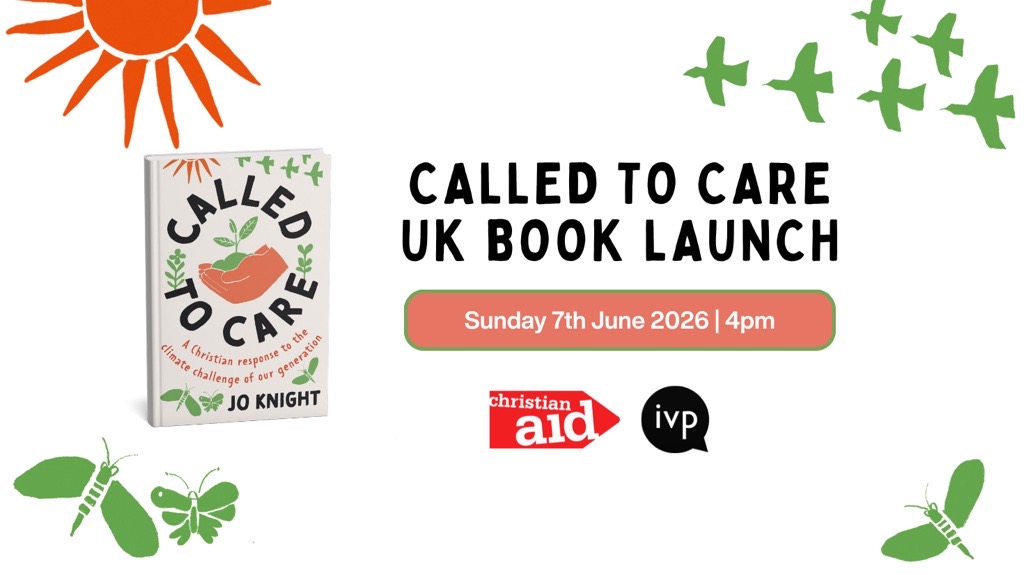
UK Launch of Called to Care by Jo Knight
28 May 2026
5
May New Releases
18 May 2026
Support IVP with your donation
Either donate with a one-off donation or subscribe monthly.
Choose a type of donation
I want to donate
 I want to donate