


 I want to donate
John Stott: British Evangelical Theologian of the Twentieth Century
- Tom Creedy
- Blog
- 25 Apr 2022
-
285views
In his entry on John Stott in the Biographical Dictionary of Evangelicals, J. P. Greenman writes [slightly edited for length]:
Alister McGrath has suggested that the growth of post-war English evangelicalism was attributable more to Stott to than any other person; he ‘became a role model for a younger generation of evangelical ordinands in England’.
As Stott’s worldwide ministry grew, in 1970 Michael Baughen assumed primary pastoral responsibility for All Souls’ as vicar, while Stott remained as rector with reduced everyday duties that allowed him to travel extensively overseas. In 1975 Baughen became rector, and Stott took the honorary role of rector emeritus. His travel throughout Africa, Asia, the Middle East and South America for over thirty years was dedicated mainly to evangelistic missions, preaching tours and clergy conferences (and almost always included a little birdwatching). His pastoral warmth, capacity for friendship, biblical commitment and theological acumen encouraged and influenced many pastors and leaders, who commonly refer to him affectionately as ‘Uncle John’. At the same time, continued fellowship with Christians in the developing world heightened Stott’s sensitivity to issues of poverty and injustice, helping him to develop his increasingly holistic understanding of the gospel. A strategic concern to equip Christian leaders in the developing world, especially teachers at theological colleges and future writers, led Stott to found the Langham Trust (now Langham Partnership International), which provided scholarships for ‘Langham Scholars’ to pursue advanced theological degrees (usually in Europe or North America) and distributed evangelical literature to pastors and theological libraries. In his later years, Stott gave priority to this work. After his eightieth birthday, he handed over the direction of the Langham Partnership to Christopher Wright, a respected biblical scholar and educator.
A hallmark of Stott’s vision has been the necessity and urgency of relating the gospel to the needs and concerns of the contemporary world. This led him to establish the London Institute for Contemporary Christianity in 1982; he served as its first director, then as president from 1986. It was designed as ‘neither a theological college nor a missionary training college, but a lay institute’ and was modelled to a certain degree on Regent College, Vancouver, where Stott had lectured on several occasions. Stott wrote that its purpose was ‘to help students become more complete Christians in their personal and home life, and more effective Christians in their professional and public life’ so that ‘integrated Christians’ would ‘penetrate the secular world with a more integrated gospel’. Likewise, a commitment to biblical faithfulness in contemporary life prompted him to initiate a series of Bible expositions aptly called ‘The Bible Speaks Today’, to which he contributed volumes on Galatians, 1 Timothy, 2 Timothy and Titus, Ephesians, Acts, Thessalonians, Romans and the Sermon on the Mount. Stott’s own approach to preaching was articulated in his book I Believe in Preaching (North American title Between Two Worlds). Stott advocated the practice of expository preaching rooted in a ‘double listening’ to the text of Scripture and to current needs, in order to ‘build bridges’ between the ancient and contemporary worlds. One of Stott’s distinctive themes was the challenge of ‘drawing out’ the meaning of Scripture rather than imposing one’s own mind upon the Bible, so that the Scriptures themselves speak authoritatively. His concern for the application of biblical principles to every area of society and a range of moral issues was expressed in Issues Facing Christians Today, published in North American as Involvement. In The Cross of Christ, which some theologians consider his magnum opus, he argues that ‘the cross transforms everything. It gives a new, worshipping relationship to God, a new and balanced understanding of ourselves, a new incentive to give ourselves in mission, a new love of our enemies, and a new courage to face the perplexities of suffering.’ He offers a ‘personal plea’ and ‘spiritual legacy’ in Evangelical Truth, and his consistent focus on the gospel is encapsulated in The Incomparable Christ. Also among his later writings is the fruit of his lifelong fascination with birdwatching, The Birds Our Teachers, which includes meditations on various types of birds as well as over 150 photographs by the author. In recognition of his ‘services to the Church as Theologian and Author’, Stott was awarded the Lambeth Doctor of Divinity degree by the Archbishop of Canterbury, Robert Runcie, in 1983.
Stott declined the opportunity to become a bishop (several times), archbishop (of Sydney, Australia), theological college lecturer (at several institutions) and principal (of Wycliffe Hall, Oxford) and organizational executive (President of the World Evangelical Fellowship). Like his chief historical mentor, Charles Simeon of Cambridge, he continued to be based at a single church throughout his entire career. He devoted his energies to supporting existing movements and organizations from All Souls’, while using his strategic vision to establish new ones. As a scholarly pastor rather than academic scholar, whose teaching and writing were grounded in an ongoing engagement in the church’s biblical exposition and evangelism, Stott became, according to the historian Adrian Hastings, ‘one of the most influential figures in the Christian world’ who was ‘the recognized senior theologian and thinker of world evangelicalism’.
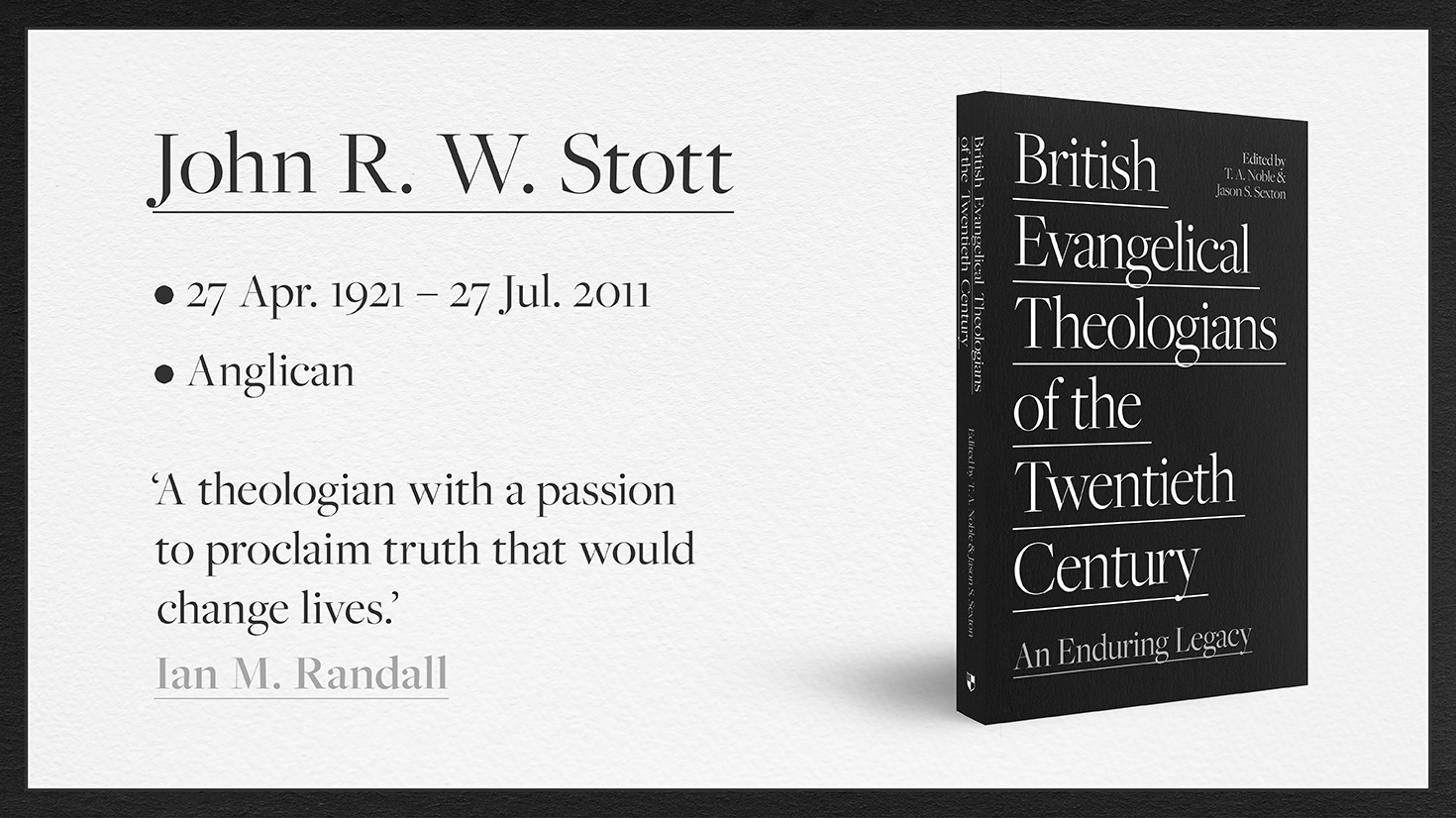
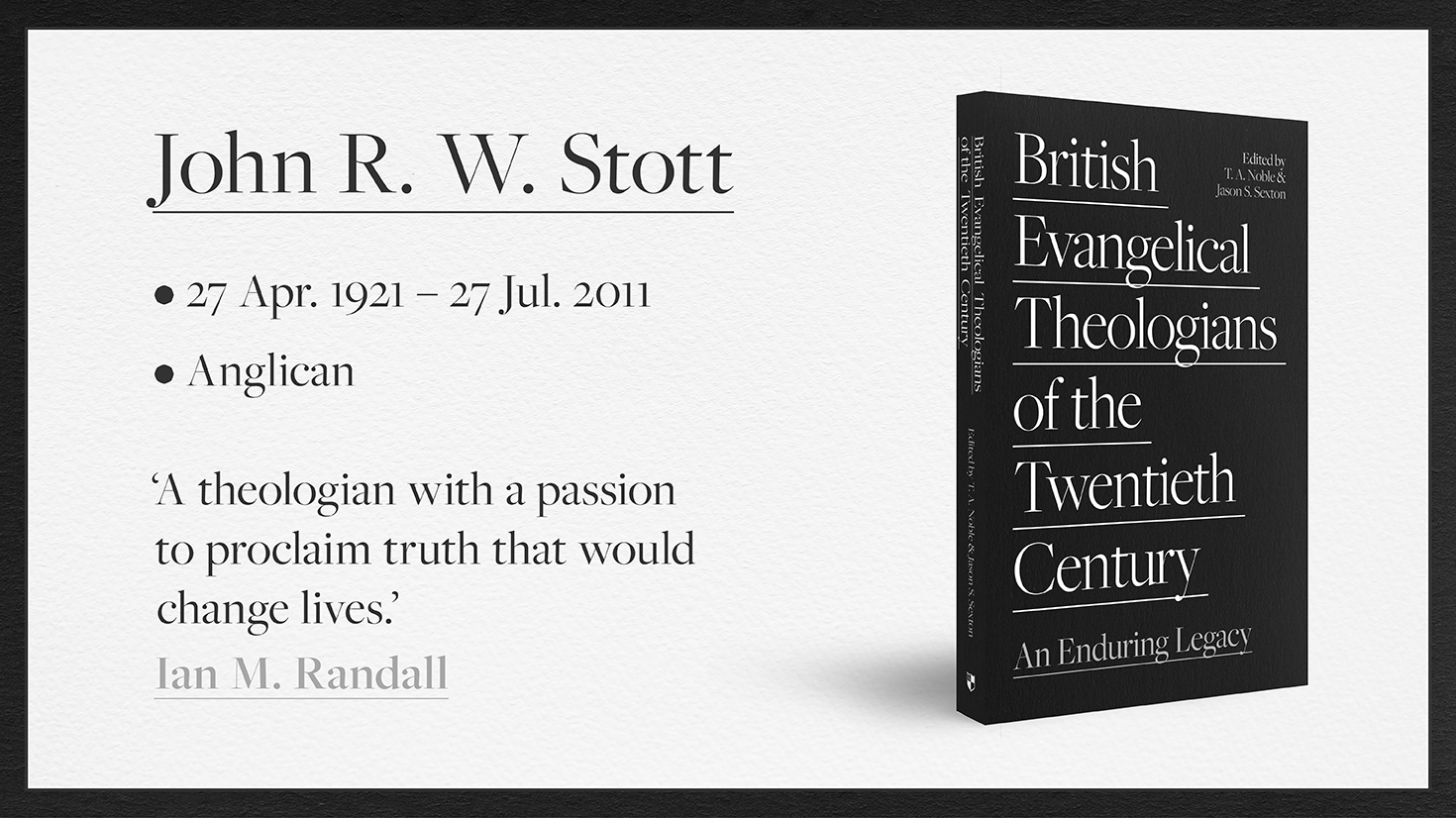
Known as many things, the theological aspect of Stott's influence is well worth reflecting on. Ian M Randall's chapter in British Evangelical Theologians of the Twentieth Century, edited by T. A. Noble and Jason S. Sexton, is a good place to start. You can order your copy in paperback or ebook now.
Related Posts

Categories
Recent Posts
2
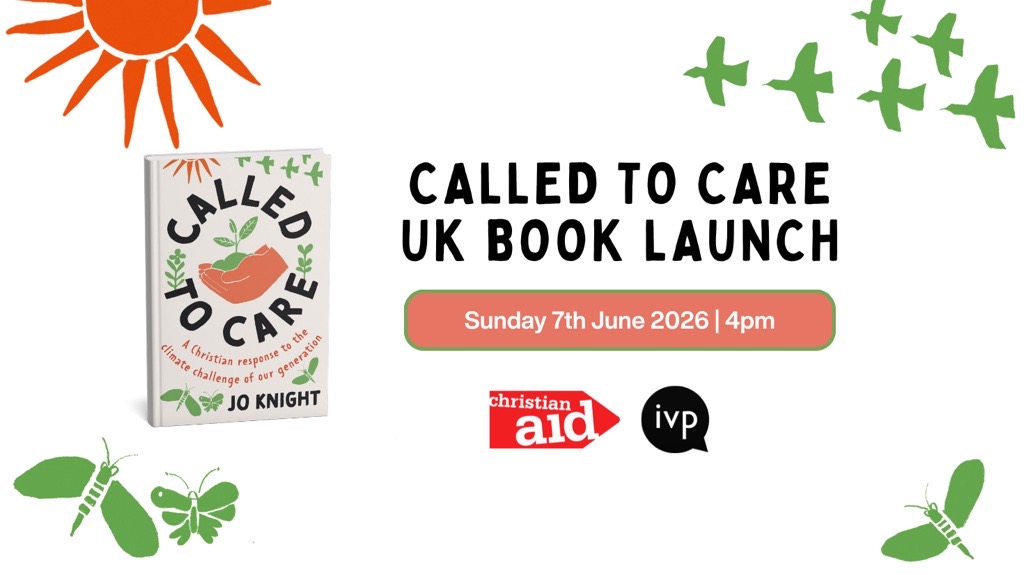
UK Launch of Called to Care by Jo Knight
28 May 2026
3
May New Releases
18 May 2026
Support IVP with your donation
Either donate with a one-off donation or subscribe monthly.
Choose a type of donation
I want to donate
 I want to donate