



 I want to donate
Guest Post: Can Women be Trusted in Leadership?
- Tom Creedy
- General
- 13 Dec 2022
-
200views

‘Deceived Eves?”: Do Women Make Untrustworthy Leaders?
Can women at the top be trusted? Can women at the top be trusted to be as good as men? Or is it as the BBC article pertinently quotes, a problem with the male gaze? “’If you’ve been accustomed to being at the top – if that’s what you’ve known, how you’ve been socialised, and what history has taught you – then it is not unreasonable for you to start assuming that, ‘We’re supposed to be at the top’”[1]
Where should women even seek to lead, (if you follow some areas of thinking)?
Western focused research suggests that fear, resentment, growing social and cultural conservatism, expectations created during Lockdowns about a woman’ place, plus negative social media campaigns and even Trumpism are the cause.
And yet, personally I wonder if the cause is the visibility of women themselves – in that as more women become leaders, become prominent, they are not allowed to fail on equal terms, yet. In the criticism of Prime Minister Sanna Marin of Finland for dancing at a party with friends, the focus seemed to be much more personal than that say of UK Prime Minister Boris Johnson, who seemed to survive all manner of inappropriate and un-ministerial behaviours with personal reputation somehow intact. Whilst the nature of the party and the friends around the Finnish Prime Minister may bring into question the leader’s personal integrity and honesty in terms of choice of location and activities, the criticism seemed to point to a wider agenda – ‘can we trust you as a female leader?’ Is Western culture somehow expecting women leaders to fail, to be ineffective and waiting for the reveal, to confirm ‘I told you so’? Are we now fighting for equal rights to fail like a man?
At the same time, personally I was disappointed by Liz Truss’s seemingly endless ‘u-turns’ as a short-lived British Prime Minister, not to mention the harshness of of Priti Patel’s policies. Yet is my disappointment in part because I expect women to lead differently, to be different, to be better somehow? Am I expecting more of my sex, rather than equally comparing them with male leaders?
Contrastingly, although personally criticised for not smiling enough, the late Queen Elizabeth II is now lauded as a leader – for subtle diplomacy, working alongside local and global political leaders of all persuasions and faithfully doing her part. Whilst not perfect, the Queen certainly did her duty – even to the end, balancing family and national responsibilities and trying to serve her people as best she could, and won the respect of her opponents.
Again, I wonder if we need to look wider than our Western gaze – in many African nations’ women leaders are a given, not an unexpected challenge to the patriarchy. In giving health care or other educational training to women (such as micro start-ups), it is recognised that at a local and regional level, women will be the leaders in the community and the ones to move change forward in their families and with their neighbours.
Not to mention, Mia Mottley, Prime Minister of Barbados; the celebrated former Liberian President Ellen Johnson Sirleaf who turned a whole war-broken nation around; and dynamic First Ladies in Suriname and Arya Ali who have promoted campaigns for female entrepreneurship, mental health care and female education.[2] Most importantly, it was a Ukrainian female soldier who became an unlikely symbol of protest against Russian invasion (not to mention that mythical grandmother and her drone destroying jar of pickles or tomatoes, depending on what you read). It is Iranian women now who are spearheading the protests against a tyrannical regime, standing up for women; initiating protests and now working in partnership with men to fight injustice. In Israel, women serve in the army – without fuss, alongside men. I would suggest that we’re looking in the wrong direction for our ideas about female leadership and need to go wider, not only increasingly diverse – but global. Get more Wakandan! (And I haven’t even gone closer to home to discuss the success of Jacinda Ardern, Prime Minister of New Zealand).
Whilst it’s hard to compare the spiritual and the secular, from Genesis onwards, God calls both men and women to lead, to serve and protect the creation he’s made for us, to work together for good. Intriguingly it is a woman who’s entrusted with carrying and caring for Messiah, and it is women who are first entrusted with the message of Jesus’s resurrection; women lead the praise in the Exodus (and no-one shushes them); not to mention the many female followers of Jesus who are shown opening their homes to hold fellowship meetings and supporting the ministries of Jesus, Paul and other Apostles. Paul, the supposed ultimate Incel hero, frequently praises women in his greetings at the end of his letters, thanking them for their faithful support and service in helping him and faithfully fostering the embryonic Christian church. I don’t know how we’ve turned him into an alleged hater of women when he’s actually, if you read him all the way through, so female promoting and praising.
So, the question is really not should women lead or are women suitable trustworthy leaders – but to give women in leadership the same parameters of judgement as their male counterparts. Let women at the top succeed or fail on the same terms, rather than having to be more than or better than all the time…(and to lose our narrow Western cultural/social bias).
Susan Tailby is a thinking Christian woman who enjoys all aspects of arts and culture, including writing about it! Read more here at: Susan Tailby – Medium or Cultural Capital | Susan | Substack
[2] https://www.theguardian.com/global-development/2022/jan/21/female-leadership-is-good-for-the-world-just-look-at-barbados
Wherever you land on the question of women in leadership, we are confident that the Bible is good news for women - just as Jesus is! At IVP we've recently published a range of books that explore this, and related issues - picking up on themes in this guest post. Check them out below for inspiration - we think 'Forty Women' would be a particularly interesting one to read with a non-Christian friend!
Related Posts
Categories
Recent Posts
4
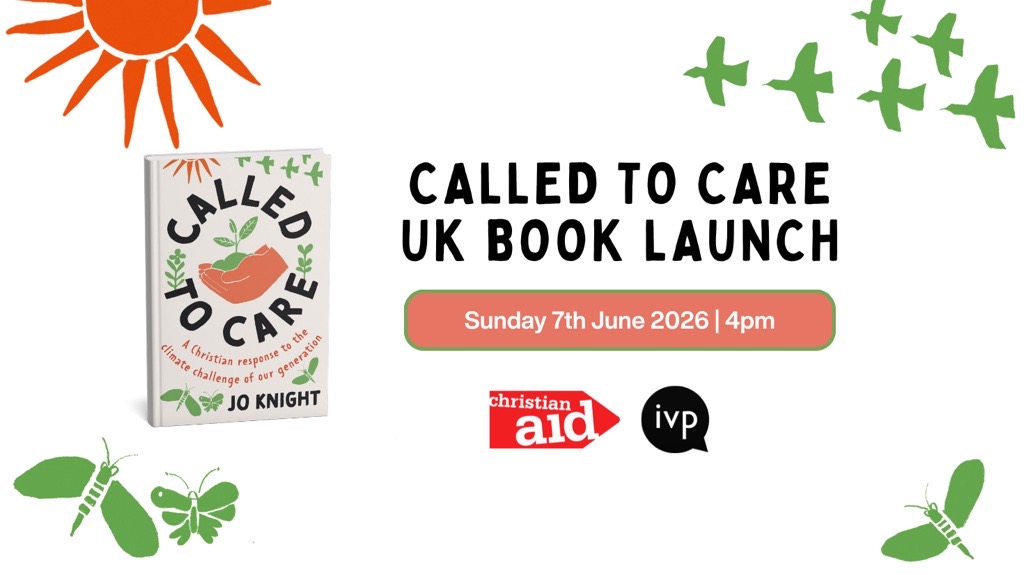
UK Launch of Called to Care by Jo Knight
28 May 2026
5
May New Releases
18 May 2026
Support IVP with your donation
Either donate with a one-off donation or subscribe monthly.
Choose a type of donation
I want to donate
 I want to donate