


 I want to donate
Grief and Hope in a time of coronavirus
Grief and hope in a time of coronavirus
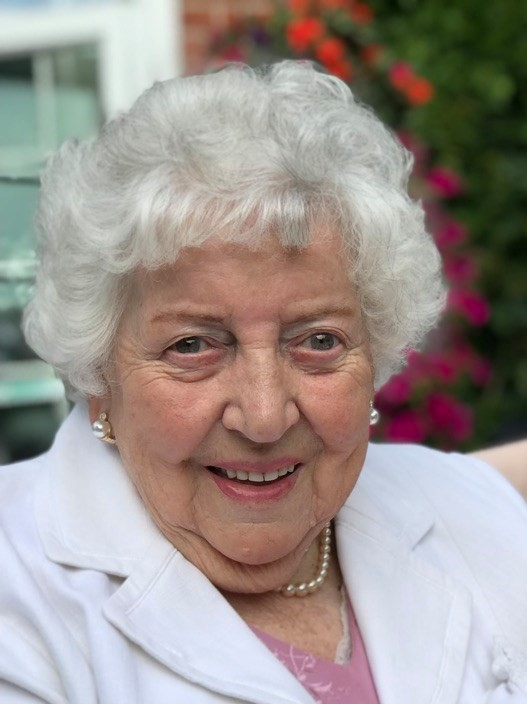 On Maundy Thursday, I attended the funeral of my grandmother, Greta Woodbridge. She was 88 years old - a wonderful, loving grandma who never knowingly underfed any visitors! But like all aspects of life, our grieving is disrupted by the coronavirus crisis.
My Grandma didn’t die from COVID-19, but it cast its shadow as the funeral service was a small number of close family only at the graveside, observing social distancing. The most natural thing of all at a time like this is to want to comfort one another with an embrace, with being close together, but that just wasn’t possible. I found the pain and tears of losing her all the harder for not being able to share physical signs of comfort through hugs and touch.
Fighting the spread of the virus means giving up some of the most basic habits of human interaction - meeting together, shaking hands, talking face to face, sharing food and drink together. In my Grandma’s last days when the family might otherwise have rushed to gather around her, we were being asked to stay home to protect the NHS and save lives.
I believe that I myself have had a mild case of COVID-19, though it still left me very weak and ill over several weeks. I can’t know for certain until wider testing is available, and must still behave as if I can catch it and spread it, but I’ve been through the fear and uncertainty of being ill with coronavirus symptoms, as well as the grief and worry over whether I may have been spreading it before I knew what was wrong.
Coronavirus has shown up the fragility of human life, not to mention our economy and supposed safety nets for those in need and vulnerable. There’s no going back to the old normal, and it’s not clear yet what the new normal might be, how long it will take to get there, and how many lives or livelihoods will be lost along the way.
But my Grandma had hope. It’s a hope that I share, as do many of my family, and one that’s tied to this time of Easter.
Grandma believed that 2000 years ago, the power of death was defeated when Jesus died on the Cross and rose again that first Easter Sunday. Because of that, she was confident that when she died, she would go to be with Jesus, and one day be raised to life again in her body made new when Jesus returned to restore all things.
This same hope can help us now as we face coronavirus. When I say “believe” and “hope”, I’m not talking about wishful thinking or fuzzy feelings of blind optimism. I want to invite you to consider that the resurrection of Jesus is backed up by facts of history, and that there are rational, evidence-based grounds for believing that Jesus defeated death. The four Gospel accounts in the Bible are biographies witnessing to the events that Jesus’ disciples had seen. Somehow they became convinced that Jesus was the crucified and risen Messiah, and spent the rest of their lives giving up everything to spread this good news.
How does this help us now? If it is true that Jesus died and rose again, what difference does it make?
As human beings, we actually have a more pressing and serious problem than the need for a coronavirus vaccine, as serious as that is. We are suffering from another disease, a spiritual one. The coronavirus crisis has highlighted some of the symptoms.
Symptom number one is the way we are dangerously exploiting the planet, living out of harmony with it. This virus probably originated with bats, possibly spreading to humans when an infected animal was prepared for eating in a seafood market in Wuhan. As we push ever more intrusively into previously undisturbed habitats, driven by greed and short-sighted exploitation of natural resources, we risk unleashing dormant viruses by our recklessness.
Symptom number two of our spiritual malaise has been the selfish and short-sighted ways humans have treated one another as we’ve tried to deal with the virus, making things far worse. We see the infection of self-centredness in the reluctance of the fit and healthy to inconvenience themselves by staying at home to protect the vulnerable. We see it in a willingness to let the old and vulnerable die for the greater good of the economy. We see it in the unjust economic and social structures that mean that the poorest are hardest hit, as well as black and minority ethnic groups. While we’ve also seen much bravery and kindness in human behaviour, especially from those key workers on the frontline in fighting it, a natural disaster is made worse by a sickness in human nature that gets everywhere.
But if the symptoms of our spiritual sickness are our broken relationships with one another, and with the natural world, what’s the root cause?
The Bible calls our spiritual sickness “sin”, and at its root is our broken relationship with God. God made us to know and love him, caring for the world and for one another under him. Humans weren’t meant to die, but to enjoy God’s life-giving presence - in Genesis, this is pictured by being in God’s garden and eating from the tree of life, and so living forever. But we are all infected with sin, a turning away from love of God and others, towards self-centredness and pride. The reason we die, because we are out of harmony with God, the giver and sustainer of life.
Just as we have to socially distance from one another because of coronavirus, we are distanced from God because of sin. This isn’t because God could be infected and is keeping to himself. Rather, with our sinful, infected hearts, we can’t stand to experience his pure love and goodness without being destroyed. But it is also more than a disease - we bear moral responsibility for our selfish hearts and actions. God in his justice and goodness must punish and remove sin, to restore the world to justice and harmony. We need to be cleaned from the infection of sin, so we can know God again and live forever in relationship, and be part of the world made whole again.
Jesus wasn’t just a good man or wise teacher, but God himself stepping into this sin-infected world as a human being to cure and restore it. We rightly admire the NHS workers who risk their lives to heal others of COVID-19, and celebrate the sacrifice of those who died in the process. What they did is a picture of Jesus’ sacrifice on the Cross. He experienced the pain and penalty of sin for us, dying in our place. But because he was the perfect son of God, death couldn’t hold him - he defeated death, rising to life again.
Through Jesus, we can be forgiven for our selfish hearts, changed on the inside, brought into relationship with God, and made ready to be part of the new creation, when Jesus comes back to raise the dead and make the whole world new again.
That’s my hope. That’s the hope that my Grandma shared, and Christians down through the ages have celebrated each Easter. Perhaps you have always assumed that this hope isn’t for you. But I encourage you to read the Bible accounts of Jesus’ death and resurrection, investigate their authenticity and truth, and place your trust in this same hope.
The Bible doesn't give direct answers to the practical problems facing us with coronavirus, but gives us a bigger hope that goes beyond the grave. The hope of Easter is that death is not the end but the gateway to resurrection life with Jesus when he makes all things new. Knowing this equips us to face the challenges of the coronavirus crisis with faith and love and hope, even in the face of death.
We hope you found this longer blog post thought-provoking. Below you'll find some recommended reading, including 'The Worry Book', which is currently free to download as an ebook.
Related Posts
Categories
Recent Posts
4
Support IVP with your donation
Either donate with a one-off donation or subscribe monthly.
Choose a type of donation
I want to donate
 I want to donate