



 I want to donate
Colin Gunton: British Evangelical Theologian of the Twentieth Century
- Tom Creedy
- Blog
- 6 May 2022
-
321views
In his entry on Colin Gunton in The New Dictionary of Theology: Historical and Systematic, S. R. Holmes (Who also edited the Dictionary!) wrote:
Colin Ewart Gunton was the leading English systematic theologian of his generation, perhaps of the twentieth century. Taught by Robert Jenson, he pioneered a theological style that was seriously interested in dogmatic questions, and basically conservative and Reformed in orientation. His early work explored the doctrine of God (his doctoral thesis, comparing Karl Barth and Charles Hartshorne, published as Becoming and Being), Christology (Yesterday and Today, a profound defence of classical Christology), and the doctrine of reconciliation (The Actuality of Atonement, an exploration of theological method and how it affected what was said about the atonement). It was meeting John Zizioulas on the British Council of Church’s Study Commission on the Trinity that enabled Gunton to develop his mature voice. In The Promise of Trinitarian Theology, he developed a nuanced social trinitarianism, stressing the personhood of the three hypostases, and the relationships between them, but without collapsing it so bluntly into an account of society, as some recent trinitarian theology has done. This was increasingly allied to a stress on the gospel history as the primary locus of God’s revelation – the primary triune relations were to be understood and interpreted through the narratives of the Jewish man Jesus of Nazareth, and his relationship with the God he called Father. This led to a sustained interest in the nature of particularity (hinted at already in his work on Christology), and questions of the mediation between God and creation.
Building from these basic insights, he produced incisive social commentary (particularly in his Bampton Lectures, The One, the Three and the Many) and profound constructive theology. Books on revelation (A Brief Theology of Revelation, his Warfield lectures), creation (The Triune Creator) and the divine attributes (Act and Being) all showed how a focus on the Trinity might reshape these doctrines. At the same time a regular flow of essays, a one-volume summary of Christian doctrine, The Christian Faith, and a projected three-volume Dogmatics hinted at how the approach might develop in other areas also.
Gunton maintained a lifelong interest in English theology, particularly in its nonconformist forms (he himself was a convinced Congregationalist, and a minister of the United Reformed Church; two books of his sermons have been published). Amongst his essays, attempts to re-ignite theological interest in such figures as Samuel Taylor Coleridge, Edward Irving or John Owen testify to this. He also encouraged research students to work and publish on these, and similar, figures. His interest in English theology was not confined to its history; he served the churches and the academic theological community cheerfully and tirelessly in a variety of ways.
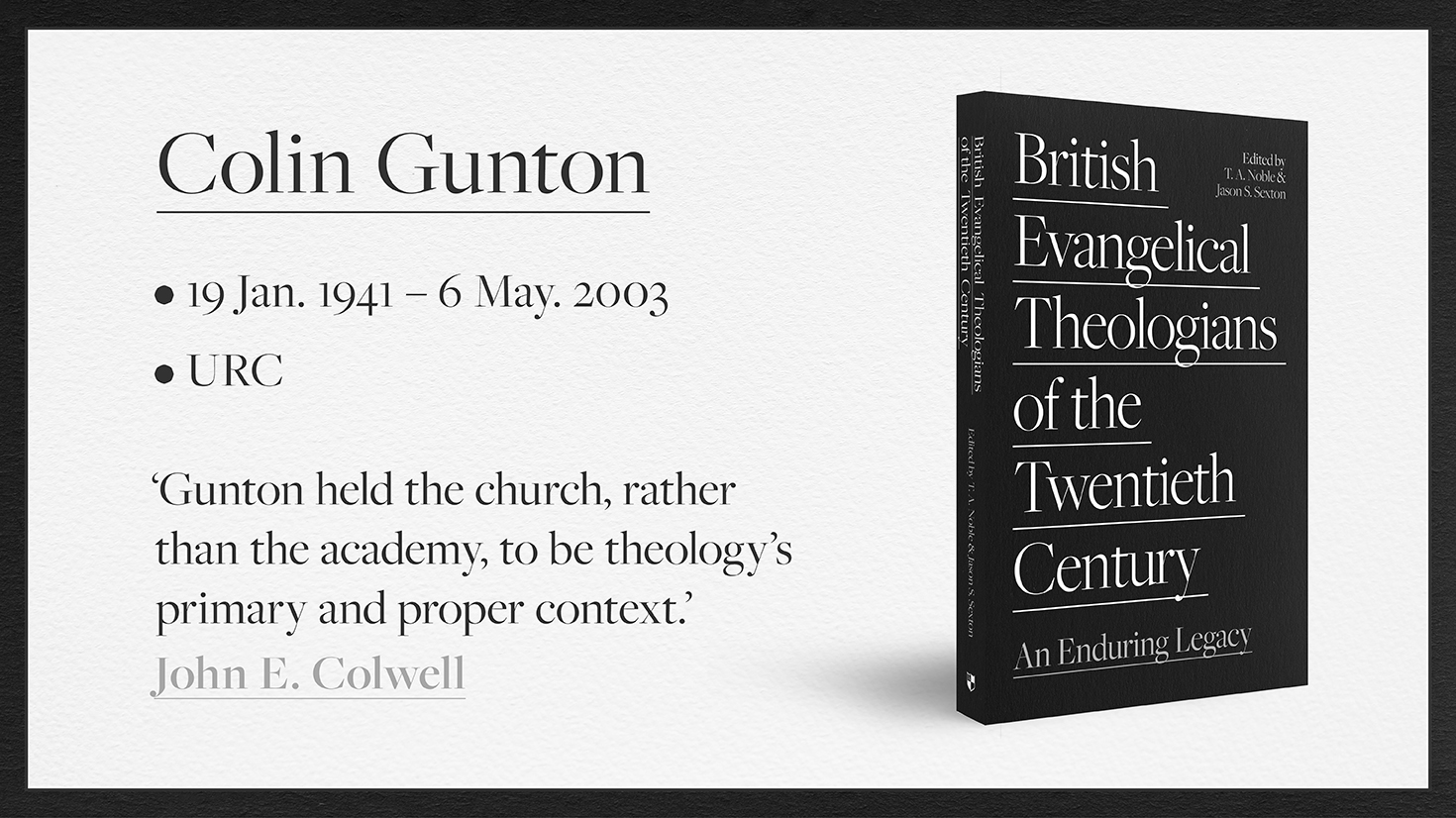
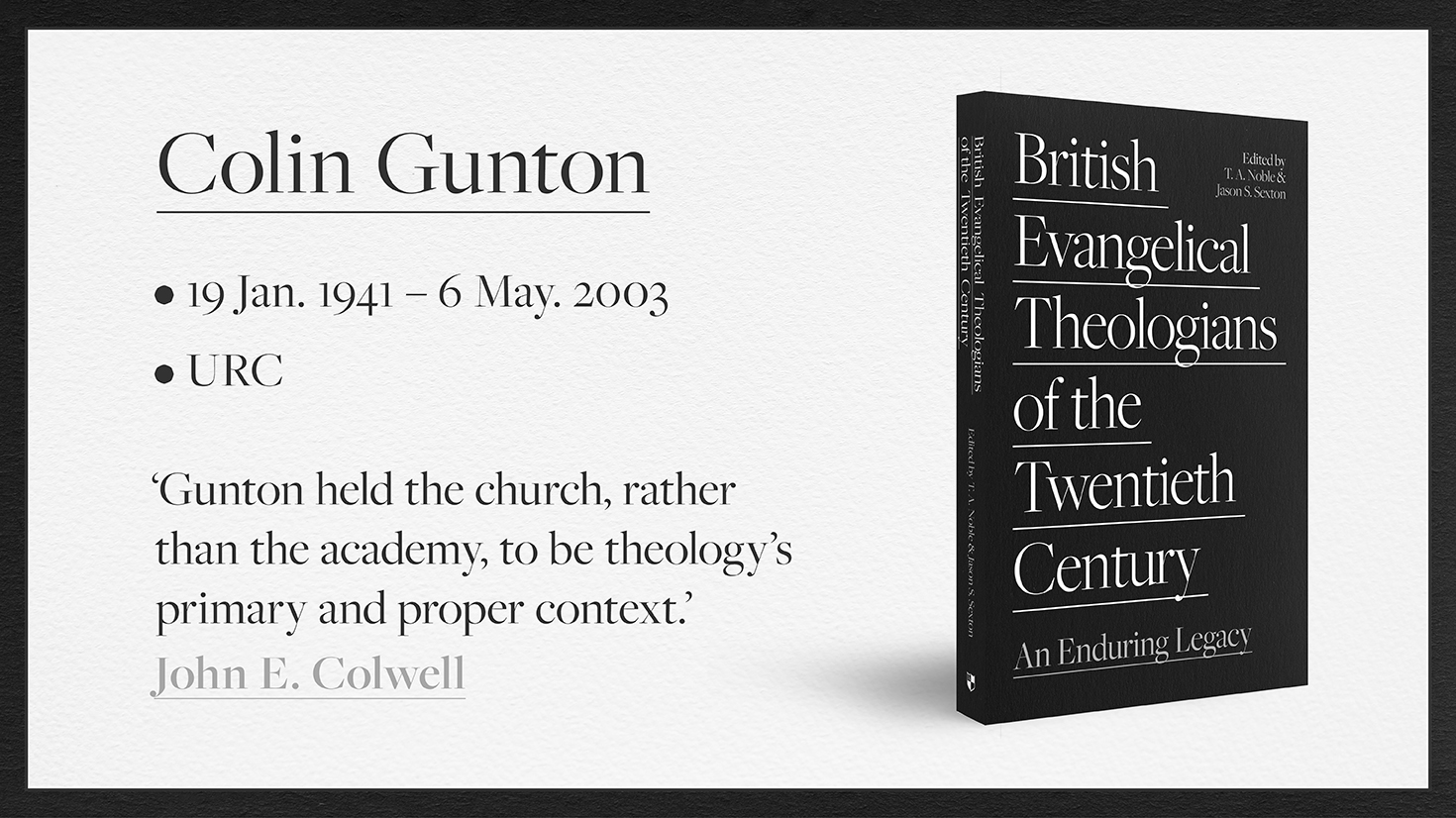
As one of the British Evangelical Theologians from the earlier part of the Twentieth Century, Orr's influence is well worth reflecting on. John E Colwell's chapter in British Evangelical Theologians of the Twentieth Century, edited by T. A. Noble and Jason S. Sexton, is a good place to start. You can order your copy in paperback or ebook now.
Related Posts
Categories
Recent Posts
4
UK Launch of Called to Care by Jo Knight
28 May 2026
5
May New Releases
18 May 2026
Support IVP with your donation
Either donate with a one-off donation or subscribe monthly.
Choose a type of donation
I want to donate
 I want to donate