



 I want to donate
Called to Care: A Conversation with Jo Knight on Faith, Justice & Creation Care
- Rochelle Owusu-Antwi
- Blog
- 18 Nov 2025
-
247views
In her new book Called to Care, Jo Knight invites Christians to confront one of the most urgent discipleship challenges of our time: how to respond faithfully to a world in the midst of a climate crisis. Drawing on her experience as CEO of Anglican Overseas Aid, as a leader in global Christian climate justice movements, and as someone who has worked alongside communities already living with the harshest impacts of climate change, Jo offers a deeply biblical and hope-filled vision for loving our global neighbours. In this Q&A, she reflects on the stories, convictions, and Scripture passages that shaped her message—showing how creation, justice, and faith are inseparable. Whether you are exploring climate justice for the first time or longing for practical ways to live out holistic discipleship, Jo’s insights offer both challenge and encouragement for Christians today.
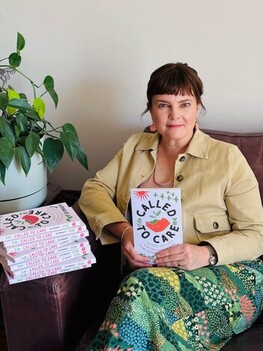
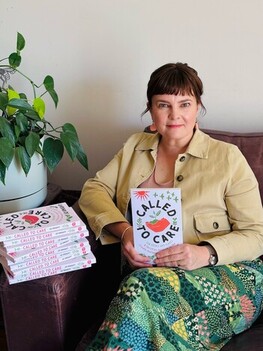
Meet Jo Knight
Jo Knight is passionate about creative collaborations that lead to social change.
As CEO of Anglican Overseas Aid, she draws on two decades of championing Christian responses to poverty and climate justice across the Australian and global Church, committed to advocacy that transforms both people and planet.
Jo has been instrumental in forging the Church's response through global movements like Renew Our World and the Australian Micah coalition, where she continues to serve in governance. A lawyer by training, Jo built her foundation working with refugees and supporting people-powered responses to poverty.
1. Can you tell us a bit about your new book and what led you to write it?
I wrote Called to Care out of a deep concern for our hurting, warming world and a conviction that the Church must step fully into its calling. As a mother, I reflect on the legacy we're building for my sons in a world that needs to reach net-zero by 2050. The time for transformation is now.
My work in international development and with the global Church shows me firsthand the pain of poverty and climate injustice, but also the inspiring, holistic ways communities are responding. In high-consumption contexts like mine, I see a need for the Church to embrace this bigger, more holistic vision—one that is good for the world and good for us.
The book is an accessible, hopeful call to grapple with what we are saved for: to love our global neighbours and play a part in God's kingdom. It’s structured in three parts—a Call and Response—grounding us in biblical values, listening to the cries of the poor, and then tuning into our own unique callings for action. It’s a tool for connecting faith, creation, justice, and action.
2. What is the central message or biblical truth you hope readers will take away?
The central message is a challenging question: What if we took God’s call to care for people and our planet seriously?
The biblical truth that underpins it is the vast scope of God's love and redemptive plan. The book invites readers to see how their faith calls them to care for both God’s people and all of creation. This isn't just another book about climate; it’s a compelling invitation to see that in a world where climate change deepens poverty, we have both an opportunity and a responsibility to respond with hope and action. Ultimately, it clarifies our role as God’s image-bearers, inspiring us to play our part in God’s kingdom of justice and flourishing.
3. Was there a particular passage of Scripture or moment in your walk with God that sparked this book?
The spark came from a growing conviction over many moments these past 25 years that our understanding of the gospel simply must be broader. This journey is best summed up by plumbing the depth and implications of Colossians 1:19-20:
“For God was pleased to have all his fullness dwell in him, and through him to reconcile to himself all things, whether things on earth or things in heaven, by making peace through his blood, shed on the cross.”
When I let the meaning of Christ's reconciliation of "all things" on "earth" fully reframe my thinking, it places a different value on this world and our Creator's intention for it. It profoundly convicts me of the part I must play to lovingly care for all creation—both people and the planet. My journey of expanding this vision, coupled with my involvement in the Renew Our World movement, compelled me to write this book and show others what is possible when the Church works together.
4. How do you hope this book will speak into the current cultural or spiritual climate?
We have to face a hard truth: the Western / Global North Church is often complicit in global economic and climate injustice, or it dismisses creation care as an irrelevant cultural or partisan issue. This silence, or even hostility, is damaging discipleship and perpetuating harm.
Called to Care speaks into this by calling for an awakening. Drawing strength from Jesus’ words, “As the Father has sent me, I am sending you,” I hope this book will break the silence and reposition creation care and justice as an integral expression of faith. It creates a space to listen to the Holy Spirit and see things anew. By listening to the cries of those on the front lines, we can stop focusing on surface-level charity and instead address the root causes of injustice. This movement of conviction is growing, and this book serves as a persuasive and practical tool to activate more people to respond to God's call to transform whole systems and our ways of life.
5. Who do you hope will pick this book up - and how do you hope it will encourage or challenge them?
I hope this book will be picked up by any Christian who is concerned about the impact of climate change and is seeking a faith-based response.
It’s for those who yearn for the Church to embrace the need for structural justice and environmental action.
The challenge is to confront the hard truths of complicity and complacency in affluent societies, and to allow the example of the global Church (especially those from the Global South) to expand our vision of discipleship.
The encouragement is the immense hope found in God’s plan and the powerful stories of resilience and innovation shared within the book. It’s an invitation to grow as disciples, to find like-minded people, and to be equipped with simple, manageable next steps to step into a movement of love and transformation.
6. What was it like writing this book - did God teach you anything unexpected during the process?
Writing Called to Care was, honestly, incredibly challenging. But also a labour of love. While I absolutely enjoyed the flow and the deep opportunity to articulate this crucial message, fitting the work around a busy CEO role and raising a young family was genuinely hard. I quickly realised that progress required more than just squeezing in a few late evening hours; I needed to carve out whole days at a time to truly shift gears into that creative and deeper thinking space.
It was a slow process that demanded constant choices about time and priorities, requiring me to humbly accept the limitations of my schedule and make difficult trade-offs. Ultimately, the experience deepened my understanding of stewardship—not just of the planet, but of my own energy and time. I am absolutely thrilled it is finished and that this hopeful, practical message is now out in the world.
7. How does this book build on or differ from your previous writing or ministry experience?
This book is an extension of my life's work as an advocate and leader, particularly my two decades championing Christian responses to poverty and climate justice within the Church. It builds directly on my experience as CEO of Anglican Overseas Aid, where I work at the interface of these issues.
The difference is in the depth and reach. While my ministry has involved advocacy at international forums and leading movements, this book is an opportunity to articulate the underlying theological conviction for a broader audience. It synthesises my legal training, work with refugees, leadership in global movements, and my personal journey as a Christian mother and pastor’s wife. These experiences combine to offer a fully holistic and practical framework for creation care and justice: a framework that I have dedicated my life to forging and now humbly share.
8. How has writing this book shaped or deepened your own faith?
Writing the book was certainly a shaping spiritual journey. It forced me to delve into the depths of my theological convictions, particularly around God's incredible plan and our part in it. While it took me to a place of deeper lament over the harm done to our world and people living in poverty, it ultimately confirmed that true discipleship must be holistic, embracing counter-cultural values of simplicity and justice.
And honestly? Writing this has filled me with a joyful impatience! I am now impatient to see what God will do in and through the Church. My greatest hope is that this message will catch like fire and spark a widespread movement of conviction and action. The process has only deepened my belief that the smallest actions and choices—even those around the consumption patterns of my own family—truly matter to God's big vision for the world. I'm ready to see the Church step up. That's all of us!
9. Are there personal stories or testimonies in the book that were particularly meaningful for you to share?
The book is powered by stories because I believe facts alone are not enough to drive action. We need narratives to activate conviction.
The most profound stories for me are those of resilience and ingenuity from our neighbours in the so-called Global South, who are already facing the harshest realities of the climate crisis. These accounts—such as indigenous approaches to faith and the theological insights from leaders I’ve met through my work—were incredibly humbling and transformative for me. By including them, I hope to bring these wise, faith-filled people to new audiences and allow their witness to challenge our 'Western' assumptions.
Equally meaningful was the choice to be vulnerable and share my own journey. This was a significant step, especially given my analytical and cerebral training as a lawyer! Sharing my own story of my calling to care was particularly meaningful, for instance how becoming a mum profoundly amplified my sense of urgency. My fierce desire for my sons to inherit a climate-safe world was a powerful catalyst that cemented the personal changes I've had to make.
The most unforgettable story I share is my encounter with Felistar in Kenya in the midst of drought and famine. That experience was raw and deeply challenging, but it is a story that simply must be told. I hope I have honoured her account and successfully amplified her voice, because the suffering and resilience of our global neighbours are what ultimately move us out of complacency and into faithful action.
10. What’s next for you - in writing, ministry, or your own spiritual journey?
My ministry leading Anglican Overseas Aid in Australia remains my focus, enabling me to continue working at the intersection of poverty and climate impacts. I will continue to advocate at high levels—with governments, decision-makers and through the Church—while championing and fundraising for the incredible, high-quality work of our local partners in Africa, the Pacific and beyond. In my own journey, I’m committed to continuing to catalyse conviction and practical responses, ensuring people deeply care from a biblical foundation and that our actions lead to meaningful, systemic, and local change.
11. How can readers connect with you, your teaching, or your ministry beyond the book?
Readers can best connect with me through Anglican Overseas Aid. This is where you will find updated resources, news, and information about the ongoing work that continues to inform my teaching and ministry.
12. What Christian book (besides the Bible!) has had the biggest impact on your faith?
While books like John Stott's and C.S. Lewis's filled my childhood home, and as I grew older, I included N.T. Wright and others, the most profound shapers of my faith have been the voices of Christians in the Global South. For instance, CB Samuel in India played an incredibly influential role when I was a young volunteer with Tearfund, learning about integral mission and holistic community development. He and leaders like him, who are not necessarily book writers, reshaped my Western lens on faith and the role of the Church in God’s kingdom, tuning me into God’s call to the poor and to justice.
If I must choose a book, one that has stayed with me since childhood for its unique perspective is C.S. Lewis’s The Screwtape Letters. Its creative storytelling and dramatic angle had a powerful way of reframing perspective, reminding me that if our heart is not moved, our head will not be convicted, and our hands will not act.
13. If a church or small group were to read your book together, what conversations or changes do you hope it might spark?
I would be absolutely delighted for groups to read Called to Care together! My prayer is that it generates new conviction, sparks conversation, and leads to powerful collective action. When we confront these challenges as a community, we can truly pool our resources and act powerfully to bring about change—that's us!
I hope group conversations would quickly move beyond if we should respond to the climate crisis, to how we, as a local expression of God's kingdom, can make a difference. Specifically, I hope groups would:
- Discuss what holistic discipleship looks like for their context, moving their focus beyond simple charity to advocating for systemic change.
- Identify simple, manageable next steps they can take together—whether that involves changes in their church's practices, their community outreach, or amplifying their collective voice to local leaders.
- Pray with greater conviction for our global neighbours and the healing of creation.
To facilitate this crucial move from conversation to purposeful living, the Appendix is designed as a practical "how-to" guide and planning space. I encourage every group to use it to plan for lifestyle change in their personal lives and to create action plans for the change you want to see in the world.
Jo Knight’s call is unmistakable: caring for God’s creation and responding to climate injustice are not optional side concerns but central expressions of Christian faith and discipleship. Called to Care combines biblical teaching, global stories, and practical tools to help readers move from awareness to action—whether through lifestyle changes, prayer, community engagement, or advocating for justice. We hope this conversation has stirred your imagination for what it means to follow Jesus in a warming world, especially as we listen to the experiences and wisdom of our global neighbours. To explore these themes more deeply and to discover practical next steps, we invite you to engage with Jo’s book and join the growing movement of Christians responding to God’s call to love, justice, and creation care.
Related Posts
Related Products
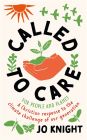
Called to Care
From £11.99
Categories
Recent Posts
3

IVP Authors at Keswick Convention 2026
18 Jul 2026
Support IVP with your donation
Either donate with a one-off donation or subscribe monthly.
Choose a type of donation
I want to donate
 I want to donate