


 I want to donate
An Interview with Gerald Bray
- Tom Creedy
- New Releases
- 2 Jul 2021
-
199views


Who are you, and how did you come to write this book?
My book is the fruit of many years of teaching and research on the history of British and Irish Christianity. Years ago I found myself teaching the English Reformation to Anglican ordinands and I realised that I did not know much about it, having never been taught it at theological college myself. So I got into it, and have never looked back.
A few years ago (2018, I think) Alan Mordue, who was then at SPCK, asked if I could write a book for them, and I said that this was my dream project. He agreed, and after some twists and turns I landed up with Apollos, which is now a part of the wider SPCK group, and the book is the result of that.
Why do you think this book needed to be written?
This is a book that needed to be written for several reasons. In the past generation there has been a vast outpouring of scholarly literature on the subject of British and/or Irish Christianity, which has transformed our understanding of the subject. Unfortunately, this literature is highly specialised, often limited to particular areas or denominations, and beyond the reach of ordinary people. Hence the need for abridging book that can connect the average reader to the scholarship that has been taking place.
Another reason for writing this book is that many Christians know little or nothing about the way in which our faith has been preached and projected over the centuries. Most people know something about Martin Luther, Henry VIII and William Wilberforce, perhaps, but beyond that they get a bit vague. The richness and variety of their heritage just passes them by.
A third reason for writing a book like this is that Christianity is under threat in the British Isles to a degree that has never been the case before. We need to understand how this had come about and draw on our inherited resources to combat it.
Why don't you think this sort of book has been attempted by an Evangelical before?
It is hard to say why Evangelicals have not attempted this sort of book before. There are some very good historians of Evangelicalism, lie David Bebbington, Bruce Hindmarsh and Andrew Atherstone, but they do not range more widely than that. There used to be some great Evangelical writers on the Reformation and Puritan periods, but they seem to be harder to find nowadays. Other parts of our history have largely been ignored by Evangelicals, perhaps because they have been regarded as irrelevant. This book aims to step in where Evangelicals have feared to tread and put a different perspective on who we are and where we have come from.
How do you think understanding our history can inform our theology and practice now?
History can always inform our theology and practice now. What we learn is that there is a solid bedrock of doctrinal orthodoxy that keeps being attacked by various forces that are hostile to it but that always resurfaces and sweeps its challengers aside. We learn that it is when the church is faithful to its mission that it speaks to the nation and that people respond to its message. We also learn, and this is most important, that revival usually springs from humble origins and in unexpected places, which should encourage us to persevere and pray that God will honour our obedience to him.
What surprised you as you explored the history of Christianity in Britain and Ireland?
The thing that surprised me most about the history of Christianity in Britain and Ireland is the way that God has raised up faithful witnesses and used them to serve his people in unexpected ways. Right back to St Patrick, who was taken off into slavery in Ireland and ended up becoming the patron saint of that country, the improbable has become the motor for growth. Think of John Bunyan, who rose from nothing to become perhaps our greatest spiritual writer. Or Mary Jones, whose lonely quest for a Welsh Bible led to the founding of the modern Bible Society. God uses the foolish things of this world, as the Apostle Paul put it, to shame the wise, and the history of British Christianity is there to prove how right he was. I have also been impressed by the way in which faithful clergymen of the established churches in England and Scotland have been at the heart of Christian evangelism – Charles Simeon, Thomas Chalmers, John Stott, William Still, Dick Lucas. They have all laboured in a context that they found uncongenial in many ways, but the fruits of their endeavours are there for all to see.
What's next for you/how can IVP readers be praying for you?
My next project is a commentary on the Book of Common Prayer, which is long overdue and much needed. Our theology and our devotional life have to be brought back together, as has a sense that we are labourers together in the Lord’s vineyard and not isolated enthusiasts doing our own thing. Pray for me as I try to work that out and get that message across to the upcoming generation.
You can find some of Gerald's books below, and his (many!) others from other publishers are available online and in bookshops.
Related Posts
Categories
Recent Posts
2
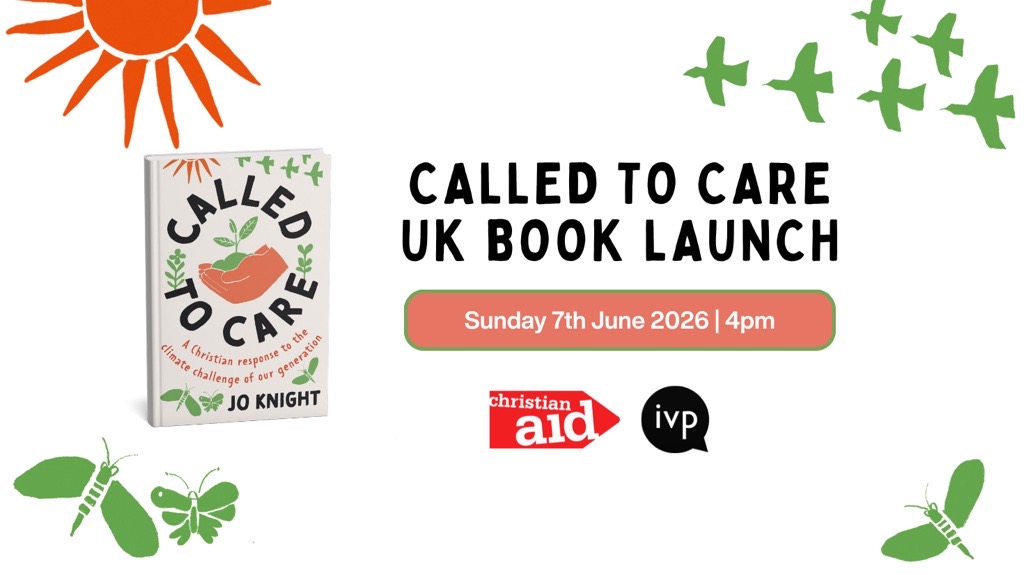
UK Launch of Called to Care by Jo Knight
28 May 2026
3
May New Releases
18 May 2026
Support IVP with your donation
Either donate with a one-off donation or subscribe monthly.
Choose a type of donation
I want to donate
 I want to donate