

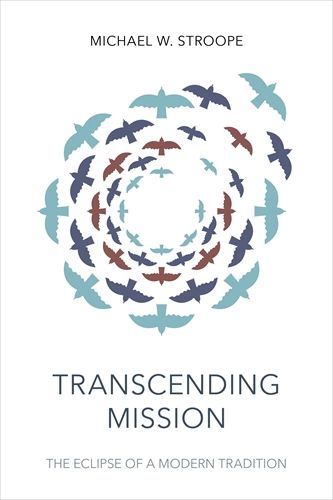
Transcending Mission
The Eclipse Of A Modern Tradition
An in-depth examination of the origins and development of the language and understanding of Christian mission
In stock
ISBN-13
9781783595525-grouped
From £29.99
Associate Professor of Christian Missions and the M. C. Shook Chair of Missions at Truett Theological Seminary, Baylor University. Previously served for twenty-one years as a missionary. Appointed in 1977 by the International Mission Board and has served in Sri Lanka, England, Germany and Hong Kong. Has also taught as an adjunct professor at Golden Gate Theological Seminary, Southeastern Baptist Theological Seminary and Southwestern Theological Seminary.
All the main churches of the UK have 'mission' high on the list of their priorities at the moment -- mostly in the sense of 'missional church' or 'evangelization'. So Michael W. Stroope's findings that 'mission' is a late usage -- unsupported by the Bible and premodern Christian literature -- will certainly provoke. Nevertheless, when so much is invested in mission, this in-depth and insightful interrogation of the discourse and rhetoric is essential reading for scholars and practitioners alike.
Above everything else, it is a well argued, well thought through and well written piece of iconoclasm . . . if you’ve read Bosch, Wright’s Mission of God, Bevans and Schroeder or any other serious missiology book, then you must read this one, too.
I think this is a brilliant book. It is meticulously researched, cogently argued, and utterly convincing. It should become a standard textbook in mission courses, though those courses will probably now need be called something different! It must surely take its place as one of the seminal arguments in the rehabilitation of a truer form of gospel living as the church emerges out of modernity.
About
Whether you are thinking of stepping out in your community, or in the world at large, Transcending Mission will provide you with the theology to better guide you on your journey. Its thorough approach and critical eye will help you go go out equipped, ready to serve and ready to share God with people yet to discover him.
Mission, missions, missional, and all its linguistic variations are part of the expanding vocabulary and rhetoric of the contemporary Christian missionary enterprise. Its language and assumptions are deeply ingrained in the thought and speech of the church today. Christianity is a missionary religion and faithful churches are mission-minded. What's more, in telling the story of apostles and bishops and monks as missionaries, we think we have grasped the true thread of Christian history.
But what about those odd shapes, those unsettling gaps and creases in the historical record? Is the language of mission so clearly evident across the broad reaches of time? Is the trajectory of mission really so explicit from the early church to the present? Or has the modern missionary enterprise distorted our view of the past?
As with every reigning paradigm, there comes a point when enough questions surface to beg for a close and critical look, even when it may seem transgressive to do so. In this study of the language of mission - its origin, development, and application--Michael Stroope investigates how the modern church has come to understand, speak of, and engage in the global expansion of Christianity. There is both surprise and hope in this tale. And perhaps the beginnings of a new conversation.
Mission, missions, missional, and all its linguistic variations are part of the expanding vocabulary and rhetoric of the contemporary Christian missionary enterprise. Its language and assumptions are deeply ingrained in the thought and speech of the church today. Christianity is a missionary religion and faithful churches are mission-minded. What's more, in telling the story of apostles and bishops and monks as missionaries, we think we have grasped the true thread of Christian history.
But what about those odd shapes, those unsettling gaps and creases in the historical record? Is the language of mission so clearly evident across the broad reaches of time? Is the trajectory of mission really so explicit from the early church to the present? Or has the modern missionary enterprise distorted our view of the past?
As with every reigning paradigm, there comes a point when enough questions surface to beg for a close and critical look, even when it may seem transgressive to do so. In this study of the language of mission - its origin, development, and application--Michael Stroope investigates how the modern church has come to understand, speak of, and engage in the global expansion of Christianity. There is both surprise and hope in this tale. And perhaps the beginnings of a new conversation.
Author
Associate Professor of Christian Missions and the M. C. Shook Chair of Missions at Truett Theological Seminary, Baylor University. Previously served for twenty-one years as a missionary. Appointed in 1977 by the International Mission Board and has served in Sri Lanka, England, Germany and Hong Kong. Has also taught as an adjunct professor at Golden Gate Theological Seminary, Southeastern Baptist Theological Seminary and Southwestern Theological Seminary.
Reviews
All the main churches of the UK have 'mission' high on the list of their priorities at the moment -- mostly in the sense of 'missional church' or 'evangelization'. So Michael W. Stroope's findings that 'mission' is a late usage -- unsupported by the Bible and premodern Christian literature -- will certainly provoke. Nevertheless, when so much is invested in mission, this in-depth and insightful interrogation of the discourse and rhetoric is essential reading for scholars and practitioners alike.
Above everything else, it is a well argued, well thought through and well written piece of iconoclasm . . . if you’ve read Bosch, Wright’s Mission of God, Bevans and Schroeder or any other serious missiology book, then you must read this one, too.
I think this is a brilliant book. It is meticulously researched, cogently argued, and utterly convincing. It should become a standard textbook in mission courses, though those courses will probably now need be called something different! It must surely take its place as one of the seminal arguments in the rehabilitation of a truer form of gospel living as the church emerges out of modernity.






Mission, missions, missional, and all its linguistic variations are part of the expanding vocabulary and rhetoric of the contemporary Christian missionary enterprise. Its language and assumptions are deeply ingrained in the thought and speech of the church today. Christianity is a missionary religion and faithful churches are mission-minded. What's more, in telling the story of apostles and bishops and monks as missionaries, we think we have grasped the true thread of Christian history.
But what about those odd shapes, those unsettling gaps and creases in the historical record? Is the language of mission so clearly evident across the broad reaches of time? Is the trajectory of mission really so explicit from the early church to the present? Or has the modern missionary enterprise distorted our view of the past?
As with every reigning paradigm, there comes a point when enough questions surface to beg for a close and critical look, even when it may seem transgressive to do so. In this study of the language of mission - its origin, development, and application--Michael Stroope investigates how the modern church has come to understand, speak of, and engage in the global expansion of Christianity. There is both surprise and hope in this tale. And perhaps the beginnings of a new conversation.