

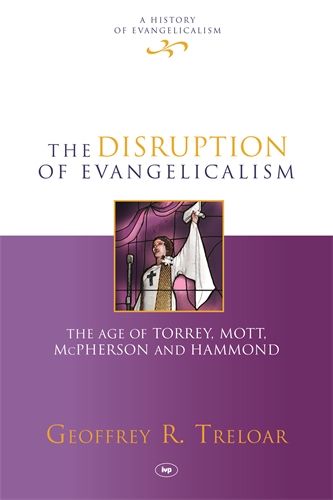
The Disruption of Evangelicalism
The Age Of Torrey, Mott, Mcpherson And Hammond
Completes the five-volume A History of Evangelicalism series (edited by Mark Noll and David Bebbington).
In stock
ISBN-13
9781783594320-grouped
From £19.99
Director of Learning and Teaching at the Australian College of Theology and Visiting Fellow in History in the School of Humanities and Languages at the University of new South Wales. Author or editor of numerous books, most notably Lightfoot the Historian (Mohr Siebeck).
this was a huge and challenging undertaking and Geoff Treloar has carried it off remarkably well
If you are at all interested in Protestant history, or if you would like to understand some of the tensions within contemporary (American) evangelicalism, you really need to read this book.
About
The Disruption of Evangelicalism is the first comprehensive account of the evangelical tradition across the English-speaking world from the end of the nineteenth to the mid-twentieth century.
It offers fresh perspectives on conversionism and the life of faith, biblical and theological perspectives, social engagement, and mission. Tracing these trajectories through a period of great turbulence in world history, we see the deepening of an evangelical diversity. And as events unfold, we notice the spectrum of evangelicalism fragments in varied and often competing strands.
Dividing the era into two phases-before 1914 and after 1918-draws out the impact of the Great War of 1914-18 as evangelicals renegotiated their identity in the modern world. By accenting his account with the careers of selected key figures, Geoffrey Treloar illustrates the very different responses of evangelicals to the demands of a critical and transitional period. The Disruption of Evangelicalism sets out a case that deserves the attention of both professional and arm-chair historians.
It offers fresh perspectives on conversionism and the life of faith, biblical and theological perspectives, social engagement, and mission. Tracing these trajectories through a period of great turbulence in world history, we see the deepening of an evangelical diversity. And as events unfold, we notice the spectrum of evangelicalism fragments in varied and often competing strands.
Dividing the era into two phases-before 1914 and after 1918-draws out the impact of the Great War of 1914-18 as evangelicals renegotiated their identity in the modern world. By accenting his account with the careers of selected key figures, Geoffrey Treloar illustrates the very different responses of evangelicals to the demands of a critical and transitional period. The Disruption of Evangelicalism sets out a case that deserves the attention of both professional and arm-chair historians.
Author
Director of Learning and Teaching at the Australian College of Theology and Visiting Fellow in History in the School of Humanities and Languages at the University of new South Wales. Author or editor of numerous books, most notably Lightfoot the Historian (Mohr Siebeck).
Reviews
this was a huge and challenging undertaking and Geoff Treloar has carried it off remarkably well
If you are at all interested in Protestant history, or if you would like to understand some of the tensions within contemporary (American) evangelicalism, you really need to read this book.






It offers fresh perspectives on conversionism and the life of faith, biblical and theological perspectives, social engagement, and mission. Tracing these trajectories through a period of great turbulence in world history, we see the deepening of an evangelical diversity. And as events unfold, we notice the spectrum of evangelicalism fragments in varied and often competing strands.
Dividing the era into two phases-before 1914 and after 1918-draws out the impact of the Great War of 1914-18 as evangelicals renegotiated their identity in the modern world. By accenting his account with the careers of selected key figures, Geoffrey Treloar illustrates the very different responses of evangelicals to the demands of a critical and transitional period. The Disruption of Evangelicalism sets out a case that deserves the attention of both professional and arm-chair historians.