

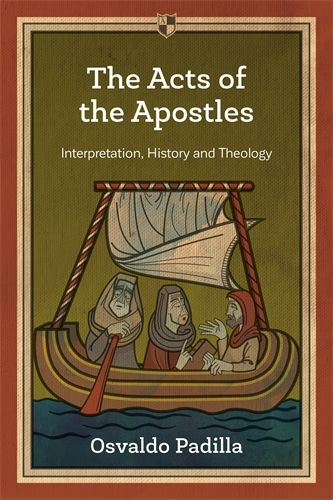
The Acts of the Apostles
Interpretation, History And Theology
A new, advanced introduction to the study of the New Testament book
In stock
ISBN-13
9781783594276-grouped
From £23.99
Osvaldo Padilla is Associate professor of New Testament at Beeson Divinity School, Birmingham, Alabama. Author of The Speeches of Outsiders in Acts: Poetics, Theology, and Historiography, and articles and reviews for Themelios, Bulletin for Biblical Research, New Testament Studies and Ex Auditu. Previously taught New Testament at Trinity Evangelical Divinity School and served as pastor of Jesus el Buen Pastor, a Hispanic congregation in the Chicago area.
This study of the book of Acts presents Luke not only as author but also as exemplary
historian, storyteller and theologian. Luke’s three-stranded cord of authorial discourse is on conspicuous display in his composition of Peter’s, Stephen’s, Philip’s and Paul’s speeches. Where other textbooks often focus on the narratives in Acts (e.g. Pentecost) and the practices of the early church, Padilla highlights the speeches in Acts and their continuing significance, going beyond the call of New Testament duty by dialoguing with postliberal theologians and asking whether they can do justice to the speeches in Acts and in particular their truth claims. The result is an introductory text that not only illumines the book of Acts, but also encourages Christians today to “act out the acts of the apostles! (John Donne), to speak out their speech acts.
It is rare to find a work that blends epistemological, hermeneutical and historiographic
sophistication with mature handling of the extensive primary and secondary literature, but this is such a work. Padilla’s introduction to questions of the authorship and genre of Acts and the character of its speeches is a superbly informed and trustworthy guide.
The final chapter is a tour de force of engagement with culture and an excellent defence of the place of proclamation of the Christian message in a hostile environment. I will probably be stealing bits of this for years to come! ... I would expect that undergraduate and post-graduate students who are studying Acts would make reading this book a high priority and I would be delighted if anyone preparing an expository series on Acts took the time to invest in what is a rich and informative work.
an accessible treatment of the hermeneutical problems involved in the study of Acts
About
The book of Acts is a remarkable fusion of the historical and theological, and its account of the early church has fascinated theologians and biblical scholars for centuries. Just who was the author of this work? And what kind of book did he write? How do we classify its genre?
The Acts of the Apostles provides an advanced introduction to the study of Acts, covering important questions about authorship, genre, history and theology. Osvaldo Padilla explores fresh avenues of understanding by examining the text in light of the most recent research on the book of Acts itself, philosophical hermeneutics, genre theory and historiography. In addition, Padilla opens a conversation between the text of Acts and postliberal theology, seeking a fully orbed engagement with Acts that is equally attuned to questions of interpretation, history and theology.
The Acts of the Apostles provides an advanced introduction to the study of Acts, covering important questions about authorship, genre, history and theology. Osvaldo Padilla explores fresh avenues of understanding by examining the text in light of the most recent research on the book of Acts itself, philosophical hermeneutics, genre theory and historiography. In addition, Padilla opens a conversation between the text of Acts and postliberal theology, seeking a fully orbed engagement with Acts that is equally attuned to questions of interpretation, history and theology.
Author
Osvaldo Padilla is Associate professor of New Testament at Beeson Divinity School, Birmingham, Alabama. Author of The Speeches of Outsiders in Acts: Poetics, Theology, and Historiography, and articles and reviews for Themelios, Bulletin for Biblical Research, New Testament Studies and Ex Auditu. Previously taught New Testament at Trinity Evangelical Divinity School and served as pastor of Jesus el Buen Pastor, a Hispanic congregation in the Chicago area.
Reviews
This study of the book of Acts presents Luke not only as author but also as exemplary
historian, storyteller and theologian. Luke’s three-stranded cord of authorial discourse is on conspicuous display in his composition of Peter’s, Stephen’s, Philip’s and Paul’s speeches. Where other textbooks often focus on the narratives in Acts (e.g. Pentecost) and the practices of the early church, Padilla highlights the speeches in Acts and their continuing significance, going beyond the call of New Testament duty by dialoguing with postliberal theologians and asking whether they can do justice to the speeches in Acts and in particular their truth claims. The result is an introductory text that not only illumines the book of Acts, but also encourages Christians today to “act out the acts of the apostles! (John Donne), to speak out their speech acts.
It is rare to find a work that blends epistemological, hermeneutical and historiographic
sophistication with mature handling of the extensive primary and secondary literature, but this is such a work. Padilla’s introduction to questions of the authorship and genre of Acts and the character of its speeches is a superbly informed and trustworthy guide.
The final chapter is a tour de force of engagement with culture and an excellent defence of the place of proclamation of the Christian message in a hostile environment. I will probably be stealing bits of this for years to come! ... I would expect that undergraduate and post-graduate students who are studying Acts would make reading this book a high priority and I would be delighted if anyone preparing an expository series on Acts took the time to invest in what is a rich and informative work.
an accessible treatment of the hermeneutical problems involved in the study of Acts






The Acts of the Apostles provides an advanced introduction to the study of Acts, covering important questions about authorship, genre, history and theology. Osvaldo Padilla explores fresh avenues of understanding by examining the text in light of the most recent research on the book of Acts itself, philosophical hermeneutics, genre theory and historiography. In addition, Padilla opens a conversation between the text of Acts and postliberal theology, seeking a fully orbed engagement with Acts that is equally attuned to questions of interpretation, history and theology.