

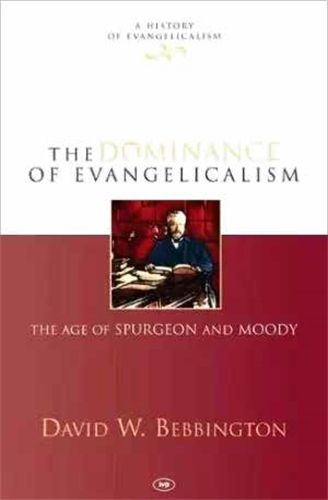
The Dominance of Evangelicalism
The Age Of Spurgeon And Moody
In stock
ISBN-13
9781844740703
£24.99
David Bebbington has served since 1976 at the University of Stirling, where he is Professor of History. His books include Evangelicalism in Modern Britain: A History from the 1730s to the 1980s (1989), The Mind of Gladstone: Religion, Homer and Politics (2004) and The Dominance of Evangelicalism: The Age of Spurgeon and Moody (2005).
About
This volume provides a comprehensive, thematic survey of the leading traits of worldwide evangelicalism between the 1850s and the 1890s.
The discussion covers such topics as commonalities across denominational diversity; expression of faith in spirituality, worship, mission and social involvement; the legacy of the Enlightenment and the influence of Romanticism; and theological trends. The book argues that the movement was marked by a strong sense of global unity.
It surveys a range of the era's best-known figures, including Charles Haddon Spurgeon, Dwight L. Moody, Ira D. Sankey, Lord Shaftesbury, David Livingstone, George MAller, Andrew Murray, James Hudson Taylor, and William and Catherine Booth.
The discussion covers such topics as commonalities across denominational diversity; expression of faith in spirituality, worship, mission and social involvement; the legacy of the Enlightenment and the influence of Romanticism; and theological trends. The book argues that the movement was marked by a strong sense of global unity.
It surveys a range of the era's best-known figures, including Charles Haddon Spurgeon, Dwight L. Moody, Ira D. Sankey, Lord Shaftesbury, David Livingstone, George MAller, Andrew Murray, James Hudson Taylor, and William and Catherine Booth.
Author
David Bebbington has served since 1976 at the University of Stirling, where he is Professor of History. His books include Evangelicalism in Modern Britain: A History from the 1730s to the 1980s (1989), The Mind of Gladstone: Religion, Homer and Politics (2004) and The Dominance of Evangelicalism: The Age of Spurgeon and Moody (2005).



Related Titles







The discussion covers such topics as commonalities across denominational diversity; expression of faith in spirituality, worship, mission and social involvement; the legacy of the Enlightenment and the influence of Romanticism; and theological trends. The book argues that the movement was marked by a strong sense of global unity.
It surveys a range of the era's best-known figures, including Charles Haddon Spurgeon, Dwight L. Moody, Ira D. Sankey, Lord Shaftesbury, David Livingstone, George MAller, Andrew Murray, James Hudson Taylor, and William and Catherine Booth.