

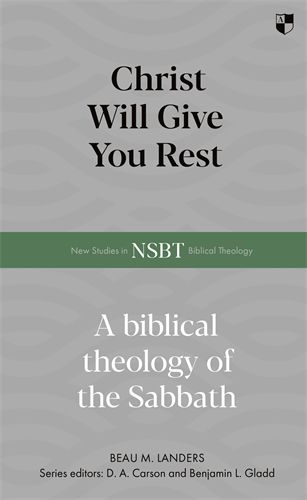
Christ Will Give You Rest
A Biblical Theology of the Sabbath
A progressive covenantal biblical-theological exploration of the Sabbath.
In stock
ISBN-13
9781789754186-grouped
From £23.99
Beau M. Landers serves as Director of Distance Learning and the Equip Network at Southeastern Baptist Theological Seminary. He is a member of Faith Baptist Church in Youngsville, North Carolina, holds four theological degrees, and has served as a teaching pastor for nearly a decade.
"The Sabbath is an important theological strand that runs through the Bible, and Landers handles the material masterfully. He carefully and convincingly demonstrates that the Old Testament Sabbath was neither adopted nor abrogated by the New Testament authors, but was transformed by Christ. The Sabbath typologically anticipated a restored and eternal rest that is available even now to all who believe. Jesus brings the full and final rest to God's people. Landers is to be commended for bringing clarity to this important biblical theme."
"This well-researched study opens with an informative survey and taxonomy of perspectives on the Sabbath from the early church to the present. With perhaps unparalleled exegetical scope, it then traces how the theme of Sabbath progresses across the biblical canon and climaxes in Christ. Finally, out of this framework it considers the lasting significance of the Sabbath for the church today. This exceptional case study into the relationship of the Old and New Testaments exemplifies why to understand and apply the Scriptures rightly requires carefully considering the person and work of Christ within the progress of the Bible's storyline. Read this book to revel more in the one who has already secured Christians full rest every day of our lives."
"This is the most extensive - and most probably - the best discussion on the theology of the sabbath that I have read in recent years. From Ignatius to Carson and from Genesis to Revelation, Landers pulls together solid historical, exegetical and theological analysis into a coherent and compelling biblical theology of how Christians should interpret and celebrate the sabbath."
"The meaning of the sabbath is the subject of considerable debate. Landers steps back and provides an in-depth biblical-theological study of the sabbath, working carefully through the canon of Scripture. Landers shows that the sabbath points to our sabbath rest in Christ, our enjoyment of God's presence today and forever. Whatever one's view of the sabbath (and I think Landers is on target), this study must be taken into account in any study of the subject."
"The last generation or so has seen a rise in the study of the biblical-theological significance of the sabbath. Much has been written, but Landers' new work is now the high point. And doubtless, his work will prove to be a major point of reference for some time to come. No study of the sabbath will be complete without consulting this essential work."
"In our fast-paced, fragmented world we desperately need rest and the right kind of rest at that. In his new book, Christ Will Give You Rest, Dr Beau Landers provides a trustworthy and insightful biblical theology of rest. Carefully integrating both Testaments, Landers articulates a beautiful biblical vision of the rest God provides in Christ. In light of the personal and pastoral insights throughout, readers will find themselves longing to embrace God's gift of rest both theologically and practically. I suspect they will consider adjusting their priorities to put themselves in a place to receive such treasured rest. Landers is to be commended for offering first-rate evangelical scholarship in an understandable and attractive way for the good of the church and the glory of God. I highly recommend!"
"Christ Will Give You Rest provides clear and comprehensive introduction to the biblical-theological issues involved in sabbath observance. Again and again complex issues are presented in an accessible way. What makes Christ Will Give You Rest distinctive is Beau Landers' focus not simply on the sabbath law itself, but on its original purpose as well as how the wider theme of rest is fulfilled in Christ. The result is a powerful argument for seeing the sabbath as being fulfilled in the rest gifted us in Christ with all days now made holy."
"How one understands how Christ relates to and fulfils the Sabbath is a crucial test case of how one puts together the Bible's entire covenantal story. This is by far the most comprehensive and biblically satisfying treatment of how to do so. A must read for all who want to discover something of the wonder and glory of God's plan centered in our Lord Jesus Christ who alone brings salvation and eschatological rest! Highly recommended."
"The last book-length treatment of the sabbath as fulfilled in Christ was an edited volume by Don Carson over forty years ago. Now, at long last, we have a singly authored work that provides a biblical theology of the sabbath, tracing its meaning throughout all main parts of the Bible and determining its relevance for the church today. Landers strategically guides his readers into the clear knowledge that a transformed sabbath transcends one twenty-four hour day, and indeed, remains available both now and into eternity for all those seeking rest from terminal restlessness. This could become a classic."
About
Is the Sabbath still required for Christians?
Opinions range from indifference to strict observance, yet few explore the question across the whole sweep of Scripture.
In this thoughtful and accessible study, Beau M. Landers traces the theme of Sabbath from the Old Testament to its fulfilment in Christ. Beginning with the Sabbath as a sign of the Mosaic covenant, Landers examines how it tested Israel's loyalty and pointed to God's sanctifying work. The heart of the discussion lies in Jesus' declaration that he fulfils the Law (Matt. 5:17).
By following the biblical-theological thread to its climax in Christ, readers are invited to reconsider the meaning of Sabbath and its implications for faithful Christian living today.
Opinions range from indifference to strict observance, yet few explore the question across the whole sweep of Scripture.
In this thoughtful and accessible study, Beau M. Landers traces the theme of Sabbath from the Old Testament to its fulfilment in Christ. Beginning with the Sabbath as a sign of the Mosaic covenant, Landers examines how it tested Israel's loyalty and pointed to God's sanctifying work. The heart of the discussion lies in Jesus' declaration that he fulfils the Law (Matt. 5:17).
By following the biblical-theological thread to its climax in Christ, readers are invited to reconsider the meaning of Sabbath and its implications for faithful Christian living today.
From the Blog
Author
Beau M. Landers serves as Director of Distance Learning and the Equip Network at Southeastern Baptist Theological Seminary. He is a member of Faith Baptist Church in Youngsville, North Carolina, holds four theological degrees, and has served as a teaching pastor for nearly a decade.
Reviews
"The Sabbath is an important theological strand that runs through the Bible, and Landers handles the material masterfully. He carefully and convincingly demonstrates that the Old Testament Sabbath was neither adopted nor abrogated by the New Testament authors, but was transformed by Christ. The Sabbath typologically anticipated a restored and eternal rest that is available even now to all who believe. Jesus brings the full and final rest to God's people. Landers is to be commended for bringing clarity to this important biblical theme."
"This well-researched study opens with an informative survey and taxonomy of perspectives on the Sabbath from the early church to the present. With perhaps unparalleled exegetical scope, it then traces how the theme of Sabbath progresses across the biblical canon and climaxes in Christ. Finally, out of this framework it considers the lasting significance of the Sabbath for the church today. This exceptional case study into the relationship of the Old and New Testaments exemplifies why to understand and apply the Scriptures rightly requires carefully considering the person and work of Christ within the progress of the Bible's storyline. Read this book to revel more in the one who has already secured Christians full rest every day of our lives."
"This is the most extensive - and most probably - the best discussion on the theology of the sabbath that I have read in recent years. From Ignatius to Carson and from Genesis to Revelation, Landers pulls together solid historical, exegetical and theological analysis into a coherent and compelling biblical theology of how Christians should interpret and celebrate the sabbath."
"The meaning of the sabbath is the subject of considerable debate. Landers steps back and provides an in-depth biblical-theological study of the sabbath, working carefully through the canon of Scripture. Landers shows that the sabbath points to our sabbath rest in Christ, our enjoyment of God's presence today and forever. Whatever one's view of the sabbath (and I think Landers is on target), this study must be taken into account in any study of the subject."
"The last generation or so has seen a rise in the study of the biblical-theological significance of the sabbath. Much has been written, but Landers' new work is now the high point. And doubtless, his work will prove to be a major point of reference for some time to come. No study of the sabbath will be complete without consulting this essential work."
"In our fast-paced, fragmented world we desperately need rest and the right kind of rest at that. In his new book, Christ Will Give You Rest, Dr Beau Landers provides a trustworthy and insightful biblical theology of rest. Carefully integrating both Testaments, Landers articulates a beautiful biblical vision of the rest God provides in Christ. In light of the personal and pastoral insights throughout, readers will find themselves longing to embrace God's gift of rest both theologically and practically. I suspect they will consider adjusting their priorities to put themselves in a place to receive such treasured rest. Landers is to be commended for offering first-rate evangelical scholarship in an understandable and attractive way for the good of the church and the glory of God. I highly recommend!"
"Christ Will Give You Rest provides clear and comprehensive introduction to the biblical-theological issues involved in sabbath observance. Again and again complex issues are presented in an accessible way. What makes Christ Will Give You Rest distinctive is Beau Landers' focus not simply on the sabbath law itself, but on its original purpose as well as how the wider theme of rest is fulfilled in Christ. The result is a powerful argument for seeing the sabbath as being fulfilled in the rest gifted us in Christ with all days now made holy."
"How one understands how Christ relates to and fulfils the Sabbath is a crucial test case of how one puts together the Bible's entire covenantal story. This is by far the most comprehensive and biblically satisfying treatment of how to do so. A must read for all who want to discover something of the wonder and glory of God's plan centered in our Lord Jesus Christ who alone brings salvation and eschatological rest! Highly recommended."
"The last book-length treatment of the sabbath as fulfilled in Christ was an edited volume by Don Carson over forty years ago. Now, at long last, we have a singly authored work that provides a biblical theology of the sabbath, tracing its meaning throughout all main parts of the Bible and determining its relevance for the church today. Landers strategically guides his readers into the clear knowledge that a transformed sabbath transcends one twenty-four hour day, and indeed, remains available both now and into eternity for all those seeking rest from terminal restlessness. This could become a classic."





Opinions range from indifference to strict observance, yet few explore the question across the whole sweep of Scripture.
In this thoughtful and accessible study, Beau M. Landers traces the theme of Sabbath from the Old Testament to its fulfilment in Christ. Beginning with the Sabbath as a sign of the Mosaic covenant, Landers examines how it tested Israel's loyalty and pointed to God's sanctifying work. The heart of the discussion lies in Jesus' declaration that he fulfils the Law (Matt. 5:17).
By following the biblical-theological thread to its climax in Christ, readers are invited to reconsider the meaning of Sabbath and its implications for faithful Christian living today.