

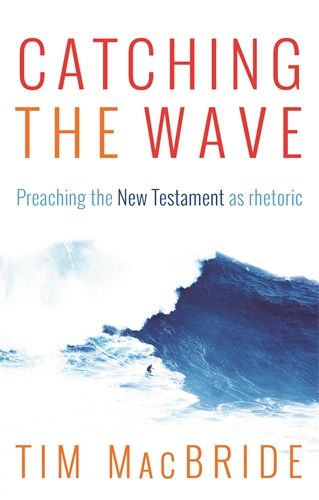
Catching the Wave
Preaching The New Testament As Rhetoric
In stock
ISBN-13
9781783594368-grouped
From £13.99
Tim MacBride is Lecturer in New Testament and Preaching and co-chair of Homiletics at Morling College, Sydney, Australia. Previously he served on the pastoral team at Narwee Baptist Church, in the areas of teaching and creative ministries.He is the author of Preaching the New Testament as Rhetoric (Wipf & Stock) and a contributor to Into All the World (Eerdmans).
When one wants to ride a wave all the way to shore, one must catch the wave at its apex, just before it begins to break, and then get on top of the wave for the ride of your life. Readers are in for just such an experience if they will get on board with Tim MacBride's new book Catching the Wave, and stay on board all the way to the conclusion. No one I know does a better job of translating the ancient rhetoric of the New Testament for 21st century listeners, showing how the ancient art of persuasion can provide us with models not only for understanding but also for preaching the New Testament. Tim has indeed caught the wave of modern rhetorical studies of the NT at precisely the right moment and time and provided his audience with a means of understanding and applying the New Testament is fresh ways. Highly Recommended!
Catching the Wave is not a work residing in the lofty atmosphere of the abstract: rather it is a concrete compendium for the immediate use of its intended readership. It will be a homiletic shower for the parched and needy academy and church. MacBride believes sermons need to be informative and transformative. He advocates a reunion of what the text says (exposition) and what the text does (function) in an effort to prevent stylistic sermons with little informative or transformative value. I recommend Catching the Wave with the highest confidence.
About
How can preachers make sermons not only say but also do?
In the case of New Testament epistles, this question can be answered by using the tools of rhetorical criticism – that is, understanding how the epistles function as written-down speeches that follow the rules of the ancient rhetorical handbooks.
Tim MacBride shows beginning and seasoned preachers alike how to harness the rhetorical power inherent in the New Testament text, so that they might ‘catch the wave’ rather than swim against the current.
MacBride explains the concepts and introduces rhetorical jargon in a less formal and more practical way, making the subject more accessible for non-specialists. He includes extensive examples, summary tables and sample full-text sermons, as well as short exercises at the end of each chapter to enable readers to practise these new skills.
This lively volume will be of value and interest not only to preachers but also to all who wish to read and apply the New Testament today.
In the case of New Testament epistles, this question can be answered by using the tools of rhetorical criticism – that is, understanding how the epistles function as written-down speeches that follow the rules of the ancient rhetorical handbooks.
Tim MacBride shows beginning and seasoned preachers alike how to harness the rhetorical power inherent in the New Testament text, so that they might ‘catch the wave’ rather than swim against the current.
MacBride explains the concepts and introduces rhetorical jargon in a less formal and more practical way, making the subject more accessible for non-specialists. He includes extensive examples, summary tables and sample full-text sermons, as well as short exercises at the end of each chapter to enable readers to practise these new skills.
This lively volume will be of value and interest not only to preachers but also to all who wish to read and apply the New Testament today.
Author
Tim MacBride is Lecturer in New Testament and Preaching and co-chair of Homiletics at Morling College, Sydney, Australia. Previously he served on the pastoral team at Narwee Baptist Church, in the areas of teaching and creative ministries.He is the author of Preaching the New Testament as Rhetoric (Wipf & Stock) and a contributor to Into All the World (Eerdmans).
Reviews
When one wants to ride a wave all the way to shore, one must catch the wave at its apex, just before it begins to break, and then get on top of the wave for the ride of your life. Readers are in for just such an experience if they will get on board with Tim MacBride's new book Catching the Wave, and stay on board all the way to the conclusion. No one I know does a better job of translating the ancient rhetoric of the New Testament for 21st century listeners, showing how the ancient art of persuasion can provide us with models not only for understanding but also for preaching the New Testament. Tim has indeed caught the wave of modern rhetorical studies of the NT at precisely the right moment and time and provided his audience with a means of understanding and applying the New Testament is fresh ways. Highly Recommended!
Catching the Wave is not a work residing in the lofty atmosphere of the abstract: rather it is a concrete compendium for the immediate use of its intended readership. It will be a homiletic shower for the parched and needy academy and church. MacBride believes sermons need to be informative and transformative. He advocates a reunion of what the text says (exposition) and what the text does (function) in an effort to prevent stylistic sermons with little informative or transformative value. I recommend Catching the Wave with the highest confidence.






In the case of New Testament epistles, this question can be answered by using the tools of rhetorical criticism – that is, understanding how the epistles function as written-down speeches that follow the rules of the ancient rhetorical handbooks.
Tim MacBride shows beginning and seasoned preachers alike how to harness the rhetorical power inherent in the New Testament text, so that they might ‘catch the wave’ rather than swim against the current.
MacBride explains the concepts and introduces rhetorical jargon in a less formal and more practical way, making the subject more accessible for non-specialists. He includes extensive examples, summary tables and sample full-text sermons, as well as short exercises at the end of each chapter to enable readers to practise these new skills.
This lively volume will be of value and interest not only to preachers but also to all who wish to read and apply the New Testament today.